
- The move comes just two days after the Trump administration repealed Biden-era Title IX sex discrimination regulations and reinstated rules adopted during President Trump’s first term.
- The Democratic Women’s Caucus says these changes have “eroded the processes in place for investigating sexual misconduct.”
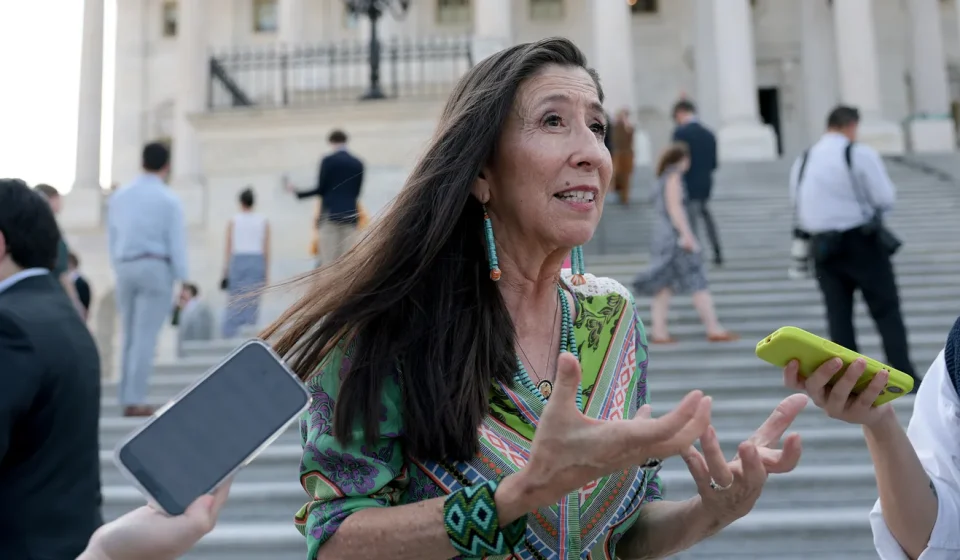
Driving the news: “Her story should be a wake-up call that Republicans cannot ignore: We need stronger protections and systems for survivors, and we must act now,” Democratic Women’s Caucus Chair Teresa Leger Fernández (D-N.M.) and Vice Chairs Emilia Sykes (D-Ohio) and Hillary Scholten (D-Mich.) said in a statement first shared with Axios.
- Lawmakers argue that the Cornell case underscores the need for stronger federal protections and more aggressive enforcement of Title IX, the landmark law prohibiting sex discrimination in federally funded schools and which also governs how schools respond to allegations of sexual harassment and assault.
- They called on the administration and Republicans to “condemn what happened at Cornell, stand in solidarity with Jane Doe, and work with us to better protect survivors and ensure they can seek justice.”
Catch up quickly: A former Cornell University student, referred to as “Jane Doe” in legal documents, is suing the school, seven Chi Phi fraternity members and others over allegations she was drugged and raped at a fraternity house in October 2024.
- Cornell conducted a Title IX investigation after “Jane Doe” reported the 2024 incident that resulted in the expulsion of two of the students and lesser disciplinary action for the other students.
- The prosecutor said criminal charges were not filed because Jane Doe’s initial statement to police did not allege she was gang raped or drugged against her will.
A criminal investigation has been reopened After the complaint was filed earlier this month, New York’s attorney general launched a separate review of the university’s handling of the allegations. No criminal charges have been filed.
- The lack of criminal charges and the university’s handling of the alleged incident have sparked scrutiny of how colleges respond to sexual assault.
- Cornell said last week that the university “investigated and adjudicated the allegations in accordance with university policies,” and said this week that the university supported the prosecutor’s decision to reopen the criminal case. Cornell did not respond to a request for comment from Axios.
Zoom out: The latest Title IX battle in Washington has largely focused on sexual orientation and gender identity, but it is also impacting how colleges handle allegations of sexual misconduct.
- The Biden administration expanded the definition of sexual harassment covered by Title IX and gave colleges more flexibility to investigate sexual misconduct.
- Trump returned to his first-term rules, which narrowed the definition of sexual harassment, required more formal procedures for handling allegations of misconduct and gave schools more flexibility in deciding how much evidence is needed to discipline a student.
- Democrats argue that these requirements create additional obstacles for survivors seeking protection under Title IX.
What we’re looking at: If Cornell’s allegations spark bipartisan interest in strengthening protections against sexual assault on federal campuses.
Gn usa