Independent Costa Rican journalist Camilo Rodriguez, who denounced on social networks alleged links between drug traffickers and politicians, was shot dead on Monday outside the capital San José, authorities announced.
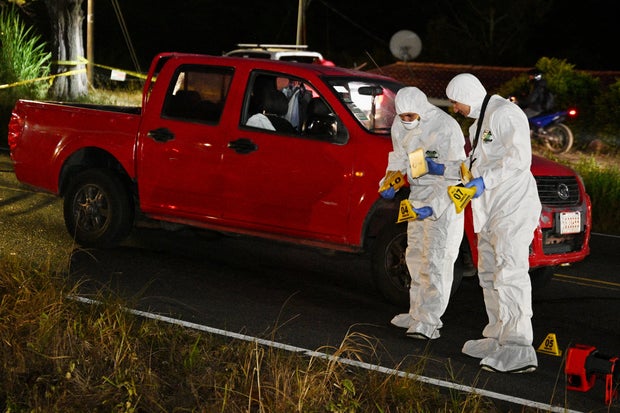
Two men on a motorcycle opened fire on Rodriguez as he drove through the town of Santo Domingo de Heredia, Police Chief Raul Rivera said. Rodriguez was attacked around 3:20 p.m. local time amid heavy traffic on a main highway, Reuters reported, citing the Red Cross.
Rodriguez, 50, said he had received several death threats from drug trafficking groups.
He named drug lords by their full names and claimed to have provided reports to the U.S. Drug Enforcement Administration regarding ties between drug traffickers and influential figures in politics and business.
When President Laura Fernandez ran for office last year, she sued Rodriguez for defamation after he posted a video claiming her house was built with money allegedly provided by a drug trafficker.
“Regardless of the content of his statements, what happened today in our country is a stain on freedom of expression,” Fernandez said in a video released by his office.
Ezequiel BECERRA /AFP via Getty Images 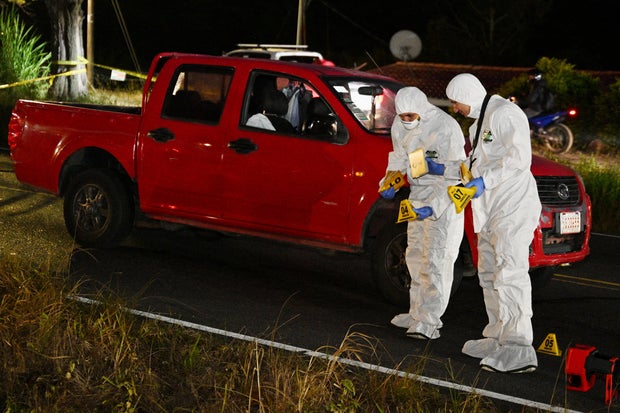
Rodriguez ran for president in 2022, but his nomination was rejected by election authorities on technical grounds.
He also accused his ex-wife of being involved in drug trafficking. She filed a complaint for sexual abuse of their children.
The Costa Rican Journalists Association condemned his assassination and demanded “a rapid investigation”.
“All the evidence so far points to the silencing of a dissident voice in Costa Rica, a person who published information about organized crime in the country,” the association’s president, Yanancy Noguera, told AFP.
In recent years, Costa Rica has gone from being a drug transit point to a logistical hub for trafficking, and has lost its status as one of the safest countries in Central America.
Fernandez, who took office in May, campaigned on a promise to crack down on the crime wave and said she was inspired by the iron fist of Salvadoran President Nayib Bukele.
Fernandez herself said she received intelligence reports showing that imprisoned gang members ordered her killing, the Tico Times reported Monday.
Attorney General Carlo Diaz announced an investigation into the killing, adding that Rodriguez – who had contributed to various Costa Rican print, radio and television outlets and had recently turned to social media – had refused to participate in a witness protection program.
Diaz told local media that the crime scene looked like a commissioned killing, Reuters reported.
“We know he was a communicator who publicly identified people for their alleged ties to drug trafficking,” Diaz said. “Silencing someone who denounces drug trafficking or corruption, in this case a communicator, is a signal that we cannot tolerate in a democratic society.”
According to Reporters Without Borders, more than half of the world’s countries now fall into the “difficult” or “very serious” categories when it comes to press freedom.
Gn world