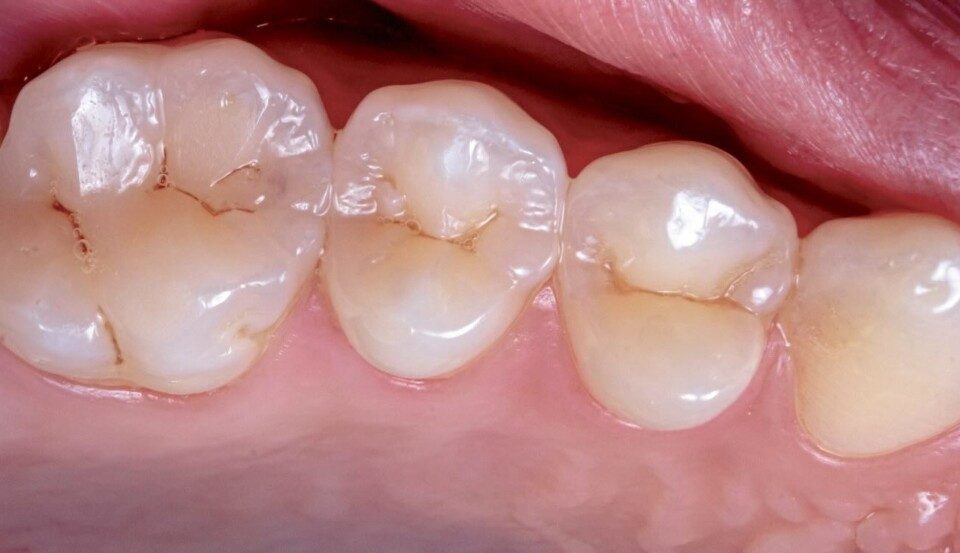
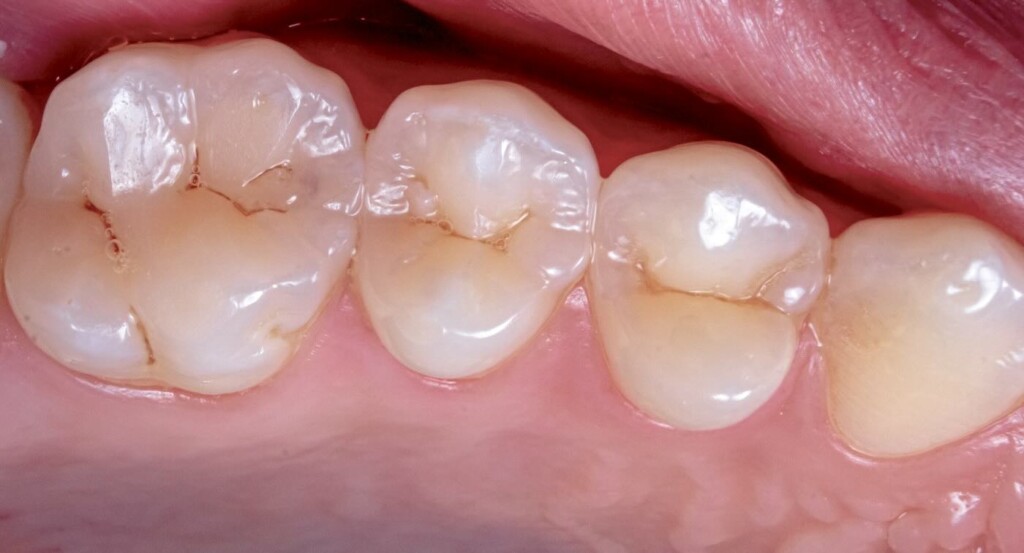
FDA approval may be imminent for a key innovation in dentistry that could save thousands of children from painful pulling, drilling and infections with a simple fluid coating.
Every year, untreated tooth decay sends thousands of young American children to emergency rooms for dental problems that doctors can’t treat.
Many end up having surgery under general anesthesia, while others experience pain and infections.
Now, a simple, inexpensive liquid called silver diamine fluoride (SDF) could save many of these children. Applied to a cavity with a tiny sponge-tipped applicator in about seconds per tooth, SDF stops decay without drilling, injections or sedation.
Dentists have used SDF successfully for decades in many countries, and off-label in the United States since 2014, when it was approved as a medical device to treat tooth sensitivity. However, it lacks the clinical trials in a large U.S. population for efficacy and safety needed for FDA approval as a drug to treat cavities.
Now, a clinical trial led by the University of Michigan has produced this evidence.
Published in JAMA Pediatrics, the Phase III trial enrolled 830 children younger than 6 years old who were recruited from dental offices, pediatric medicine offices, and Head Start and Early Head Start programs in Michigan, New York, and Iowa.
Researchers found that SDF stopped tooth decay in more than half of children’s affected baby teeth when treated at 6-month intervals. Unlike conventional treatment, which removes part of the tooth before placing a filling, SDF is simply painted onto the cavity.
“This is a very effective and safe treatment, even in children as young as 1 year old,” said Margherita Fontana, professor of dentistry at the University of Michigan School of Dentistry and principal investigator of the study.
Tooth decay is the most common chronic childhood disease, affecting more than 40% of American children. If left untreated, cavities can cause severe pain, infections, difficulty eating and sleeping, missed school, and repeated doctor visits.
SDF can be especially helpful for very young children, the elderly, people with developmental or physical disabilities, patients with severe dental anxiety and others who cannot easily tolerate or access conventional dental treatment, Fontana said.
IMPROVE ALL THE TIME: New gel regrows tooth enamel – something humans can’t do – and could revolutionize dental care
Its main drawback is aesthetic, she says. Silver permanently darkens the decayed part of the tooth.
“If we want more children and families to benefit from this treatment, we need rigorous evidence demonstrating both its effectiveness and safety. From a public health perspective, if we want broader implementation across the United States, including in medical settings, we need carefully collected data from American populations, and we have it now,” Fontana said.
“In medicine, clinicians want high-quality evidence before changing practice,” Fontana said. “Having data they can refer to is important because young children often see pediatricians years before seeing a dentist. Wider acceptance could allow many more cavities to be treated during a successful dental referral and before they become painful, infected, or require surgery.”
DENTISTRY SUMMARY: Wisdom teeth contain unique stem cells that can form cartilage, neurons and heart tissue
The study provides the clinical trial data needed for the manufacturer to submit a dental caries drug application to the FDA. The product used in this trial, Advantage Arrest 38% SDF, was provided by Elevate Oral Care.
Amr Moursi, professor of pediatric dentistry at New York University College of Dentistry, said the study provides important data for expanding the use of SDF.
“Our results support FDA approval of SDF to manage tooth decay arrest in young children. Removing SDF from off-label status would be an important innovation that could lead to increased use by providers, improved payments by insurers, and more consistent product quality,” said Moursi, co-principal investigator of the study.
ALSO CONSULT: These micro-robots can clean teeth by transforming into a toothbrush or dental floss
For some children, it is enough to reapply SDF every few months until the baby tooth falls out naturally. For adults, this may serve as a long-term or transitional treatment until the restorative procedure is affordable or practical.
“For almost everyone, it can stop the decomposition and stop the infection and the pain it causes,” Fontana said. “This could benefit many people. »
GIVE your friends a bite of this good news in dentistry…
Gn Health