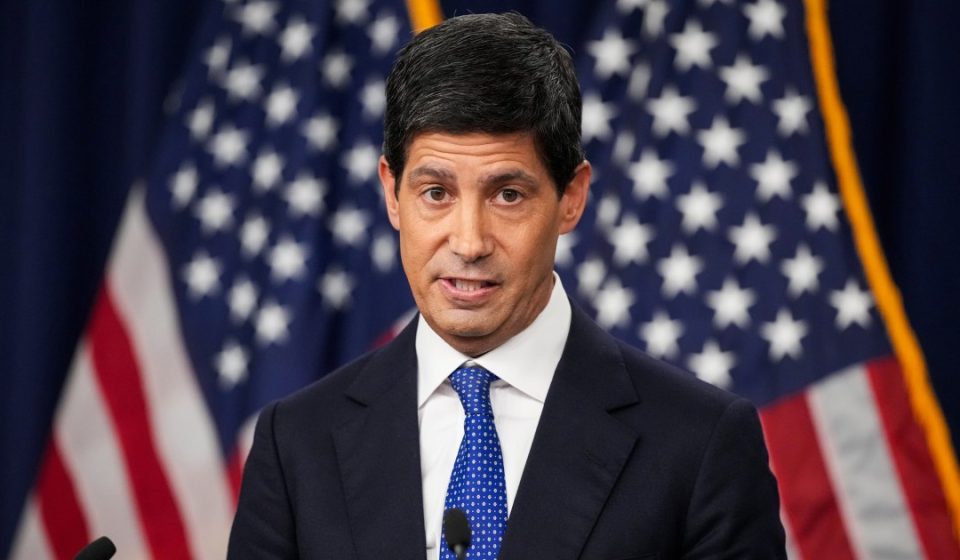
The Federal Reserve plans to eliminate some meetings devoted to setting interest rates over the next two years, Chairman Kevin Warsh said Wednesday.
Starting next fall, the central bank will dedicate one of its eight annual meetings to considering general issues about the economy, rather than voting on interest rates, Warsh said. This number will increase to two in 2028.
The president made the announcement following the release of the central bank’s latest policy announcement, which left rates unchanged.
He explained that the reason for this decision was to devote more time to thinking about long-term issues by diverting attention from the immediate interest rate environment.
“Good policymaking requires assessing short-term developments at timely, regular and information-rich intervals,” he said. “But it is equally important that we reserve time and space as an intellectually diverse group for strategic deliberations, for rethinking big questions, and for looking over longer time horizons.”
Warsh’s announcement marks a major shake-up in the Federal Reserve’s long-standing policy schedule, which is closely watched by investors around the world. The Federal Open Market Committee has held eight scheduled meetings per year since 1981.
Warsh began seriously discussing a reduction in rate-setting meetings in July, according to FOMC meeting minutes, arguing that a longer time between rate-setting meetings would allow the committee to accumulate more data on the economy.
Reducing the number of rate-setting meetings has long been debated over concerns about short-sightedness – but the move was never adopted due to concerns that the Fed would become less nimble in its response to sudden changes in the economy.
This change would make the Fed unique among major central banks, including the Bank of England and the Bank of Japan.
It’s another major change embraced by Warsh, who took the helm of the Fed in May after being appointed by President Donald Trump.
Warsh significantly shortened the FOMC’s post-meeting policy statement. He also refused to release so-called “forward guidance,” which contains predictions about future inflation and unemployment.
Gn bussni