Female-looking AI agents were paid less than men in virtual offices, study finds – The Irish Times

Gender bias in the workplace can be replicated in interactions with artificial intelligence, according to new research from the University of Limerick (UL).
The study examined whether the way AI assistants are presented influences how people treat them in the workplace.
It was co-authored by Dr Mary Hausfeld of UL’s Kemmy Business School.
The researchers placed 189 workers in a virtual reality office and asked them to complete work-related tasks with different AI assistants, including human-like agents presented with a male or female appearance.
Participants were then given real money to share between themselves and the AI assistant for completing the tasks, allowing the researchers to “recreate a real transaction and examine how much people were willing to pay the AI for its work.”
According to the study, female-looking AI agents were paid less than their male counterparts, despite using the same underlying technology.
The AI agents had the same underlying capabilities, but participants treated them differently depending on how they were presented.
The male presenting AI agent, Johan, received higher monetary rewards than the female presenting agent, Johanna. The male agent was also perceived as more human.
Johanna was paid 10.25 percent less than Johan for the same work.
The researchers concluded that their results suggest that gender biases familiar to human workplaces could be replicated in interactions with AI.
Hausfeld said the findings raise important questions as AI agents become increasingly part of people’s working lives.
“What’s striking about our findings is that the technology behind these AI agents was exactly the same, but people didn’t treat them the same way.
“We often think of AI as neutral, but the way we design and present these systems can activate the same assumptions and biases that exist in our interactions with other people.
“As AI agents become more common in the workplace, we need to think carefully about the characteristics we give them and the behaviors these choices may encourage. We don’t want to inadvertently replicate existing inequalities in a new technological context.”
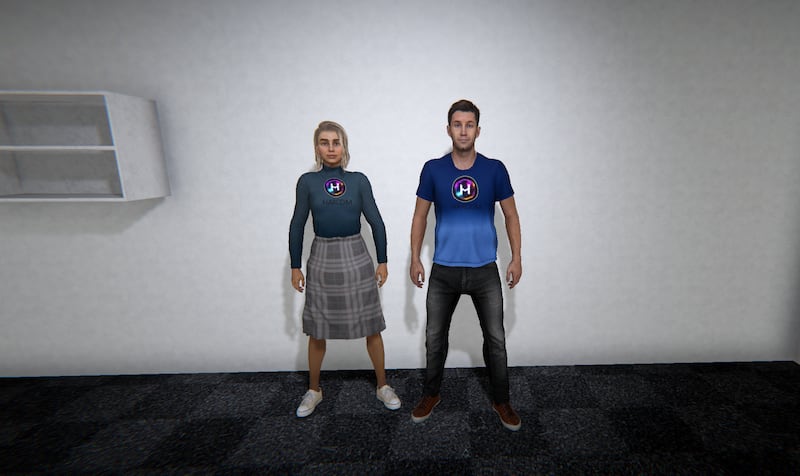
The study was part of a larger investigation into how AI’s human-like appearance influences workplace interactions.
Although the systems were powered by the same underlying AI, participants trusted the human assistants more and gave them more credit for their contribution than the robot.
Participants also suggested that they had no preference for an AI with feminine or masculine attributes, but that “their behavior told a different story.”
The study was led by Isabelle Cuber and Tarek Alakmeh from the University of Zurich, Mary Hausfeld from the University of Limerick, Anand van Zelderen from SKEMA Business School as well as Moritz Jenny, Jochen Menges and Thomas Fritz from the University of Zurich.
Human and masculine? How AI Assistant Design Relations to Trust and Monetary Reward at Work in VR will be presented at the 14th Nordic Human-Computer Interaction Conference in Vaasa, Finland, October 5-7.
It will also be published in the conference proceedings by the Association for Computing Machinery.
Gn tech