
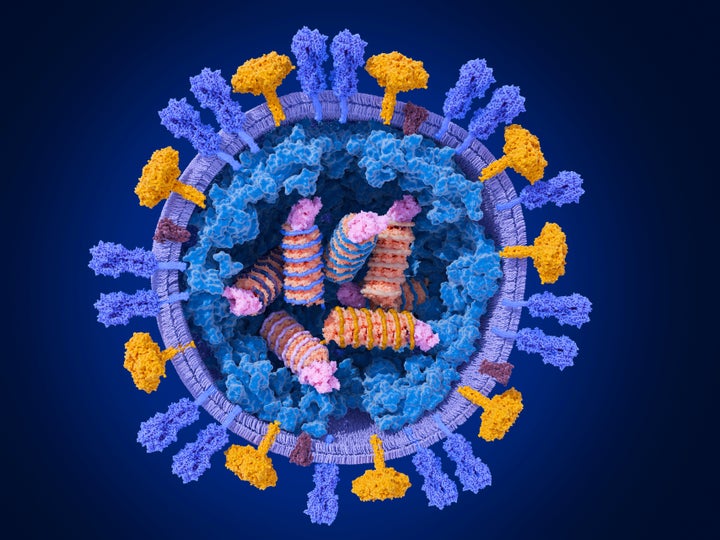

We are entering flu season in the United States, but some areas of the country, including the West Coast, are experiencing an earlier than usual start to the flu season and an earlier than usual increase in cases.
“Certainly in the Pacific Northwest, and … also in California, there was an early increase in flu cases,” said Dr. Helen Chu, a respiratory infection specialist at the University of Washington School of Medicine.
“The flu in the United States traditionally starts in the South and Southeast and then sort of migrates up and then west,” Chu said, meaning the Pacific Northwest and West Coast tend to get the flu last.
This is not the case currently.
“This year it looks like we have a very, very early outbreak of influenza A,” Chu noted.
It’s too early to predict exactly what this flu season will look like, but you can expect to see the flu spread to other states as winter approaches.
“Ultimately, the flu spreads everywhere…it rarely misses a city in the United States,” said Dr. Andrew Pekosz, a professor at the Johns Hopkins Bloomberg School of Public Health in Baltimore.
However, the flu hits different regions at different times, so it’s especially important to pay attention to your local health department to find out what local cases look like throughout the season, he said. This way, if you want to change behaviors (like masking up in crowded spaces or avoiding a busy theater during the height of flu season), you can do so.
The flu is caused by three different viruses: H1N1 and H3N2 (both of which cause influenza A) and the influenza B virus.
“This early season here in the United States, which is, again, primarily focused on the West Coast, is dominated by this H1N1 virus,” Pekosz said.
This early increase in cases received a lot of attention because of the H1N1 strain, Pekosz added. “Because it certainly looks, on paper, like a virus that might be a little easier to spread and maybe infect more people because it’s more effective at evading whatever immunity you have,” Pekosz said.
Again, experts cannot predict what this potentially more contagious flu virus means for the flu season, but prevention remains paramount.
It’s also unclear how effective the vaccine will be against circulating flu strains, but even if the vaccine doesn’t perfectly match the circulating strains, it still provides important protection.
“Studies have also shown that even when the virus doesn’t match the vaccine at all, you can still see protection against severe disease,” Pekosz said.

JUAN GAERTNER/SCIENCE PHOTO LIBRARY via Getty Images
With the early start of flu season, now is the best time to get your flu shot, if you haven’t already.
“I think it probably makes sense to get vaccinated a little bit earlier this year,” Chu said.
Dr. Kaylan Christianer, a primary care physician and assistant professor of medicine at Vagelos College of Physicians and Surgeons at Columbia University in New York, agrees. With the flu going around, “this is a sign that it’s a great time to get a flu shot.” The vaccine takes about two weeks to become fully effective, Christianer added.
The vaccine is recommended for anyone six months and older, Pekosz said, before adding that there are several versions of the vaccine aimed at different groups.
Anyone can receive the standard-dose flu vaccine, but for those aged 65 and older, a high-dose flu vaccine is also available. For adults aged 50 to 64, a new mRNA vaccine is also available, Pekosz added.
But any flu vaccine is better than no flu vaccine. “People shouldn’t wait to find the perfect vaccine, because at the end of the day, the most important thing is to get the flu vaccine,” Christianer said.
There is also an at-home nasal vaccine known as FluMist, ideal for people (or children) who are afraid of needles, Chu said.
Vaccination is the best protection tool, although other hygiene measures can protect you from the flu this fall and winter, Christianer said.
“It’s a lot of things that we do to protect ourselves from any type of respiratory illness, for example, washing your hands, if you’re in crowded places you might consider wearing a mask, if you’re sick, staying home from work or kids staying home from school to help prevent the spread of disease,” Christianer said.
Recent flu seasons have been very severe across the United States, with high rates of infection, hospitalization, and death.
“The vaccination rate is going down, and so we think that might be part of the reason why we potentially have a more severe flu season,” Chu said.
To protect yourself, your loved ones and your community, getting vaccinated against the flu remains the best way to stay healthy and avoid any serious consequences of the flu.
Gn Health