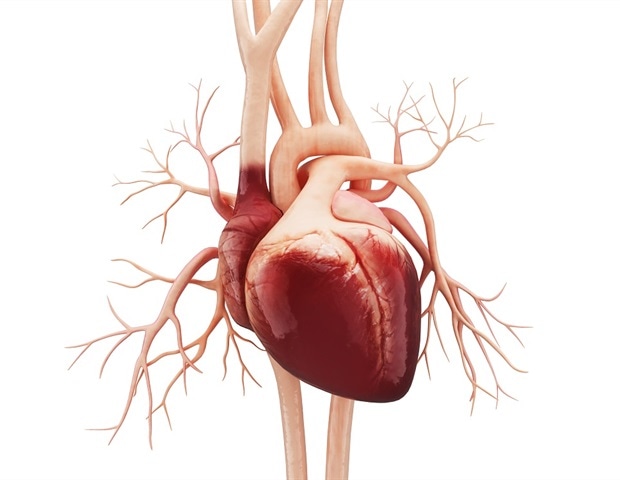
Frequent night work is associated with differences in heart structure and heart muscle function, according to a new study published today in the European Heart Journal – Cardiovascular Imaging.
The team also discovered differences in biomarkers linked to cardiovascular health. The research is the first large-scale study combining detailed cardiac MRI with proteomic and metabolomic profiling in relation to night shift work.
An estimated one in five workers worldwide regularly perform night shift work and previous research has shown that this is associated with an increased risk of cardiovascular disease and cardiovascular mortality.
Although the reasons for this phenomenon are not fully understood, night shift work can repeatedly disrupt the alignment between the body’s circadian rhythm and the normal sleep and wake schedule. This can affect metabolism, inflammation, blood pressure regulation and vascular function.
The new study analyzed data from a prospective cohort of 42,671 men and women from the UK Biobank, with a mean age of 52 at baseline, of whom 1,322 reported frequently working night shifts. The researchers did not include participants with cardiovascular disease at the start of the study.
Using cardiac magnetic resonance imaging, researchers found that people who frequently worked night shifts tended to have slightly thicker heart walls relative to the size of the main pumping chamber, and somewhat smaller heart chambers.
There was also a subtle difference in a measure of how the heart muscle contracts, although the researchers did not observe a significant difference in ejection fraction, a standard measure of the heart’s overall pumping function.
The researchers emphasize that the observed differences correspond to small average differences at the population level and do not mean that all night shift workers will develop heart disease or heart failure.
Study author Dr Muwei Li, from Zhengzhou University, said: “Our study found that frequent night work is associated with a pattern of subtle differences in cardiac structure and function. The research was observational, so we could not establish whether frequent night work directly damages the heart.
“Nevertheless, we suggest that people who regularly work night shifts pay special attention to their cardiovascular health. This includes not smoking, remaining physically active, maintaining a healthy diet and weight, getting enough sleep and maintaining as regular a sleep schedule as possible, as well as having good control of blood pressure, cholesterol, and blood sugar. Physicians may wish to consider night work as part of a patient’s work history and lifestyle, particularly when that person also has established cardiovascular risk factors,” he added.
The study found that frequent night work was associated with differences in certain blood markers. Levels of DHA, an omega-3 fatty acid that supports heart and blood vessel health, as well as some measures related to “good” cholesterol (HDL) were lower. There were higher levels of markers linked to triglycerides, a type of fat that can increase the risk of heart disease when levels are too high, and markers linked to inflammation.
These exploratory results, together with genetic analyzes of selected molecular markers, provide clues to possible biological pathways. However, they do not establish a complete causal link from night work to molecular changes and then to cardiac abnormalities. The researchers say further work is needed to investigate the long-term effects and clinical implications of the differences in biomarkers and heart structure identified by the study.
Our study assessed heart structure and function at a single point in time, so it can’t tell us what would happen if someone reduced or stopped working night shifts. We need to know whether cardiac differences become more pronounced with longer exposure to night work, whether they improve when nighttime exposure is reduced, and whether they are associated with future cardiovascular disease. An important next step would be prospective studies with repeated assessment of nighttime exposure and cardiac imaging.
Dr. Muwei Li, Zhengzhou University
The researchers acknowledge a number of limitations to the study. Although they were adjusted for lifestyle and other variables, the UK biobank population is predominantly made up of healthy, white European volunteers, limiting generalizability to other populations. The researchers also excluded UK Biobank participants for whom information on shift work was not available from the study. These tend to be older and have a higher prevalence of cardiometabolic diseases, so there is a possibility of selection bias.
Source:
European Society of Cardiology
Journal reference:
Gao, Y., and others. (2026). Night work and subclinical cardiac remodeling: a multi-omics CMR study in 42,671 individuals. European Heart Journal – Cardiovascular imaging. DOI: 10.1093/ehjci/jeag268. https://academic.oup.com/ehjcimaging/advance-article-abstract/doi/10.1093/ehjci/jeag268/9072113
Gn Health