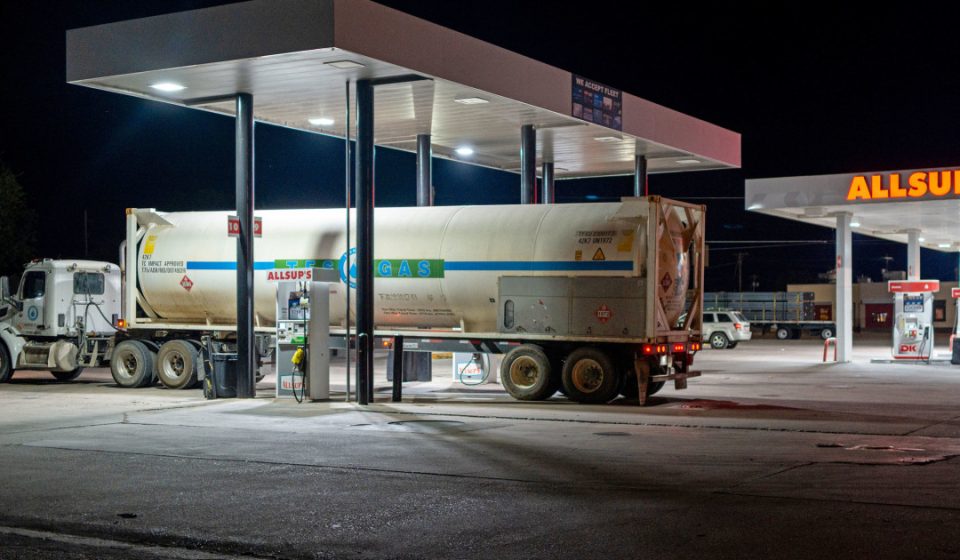

Group of Seven countries agreed Friday to release tens of millions of barrels of diesel fuel and crude oil, the latest step by industrial economies around the world to curb soaring gas prices.
Following a G7 video conference hosted by French President Emmanuel Macron, President Donald Trump said: “Europe has just agreed to release a massive amount of its heavily stockpiled diesel fuel.”
“The process will begin immediately,” Trump said on Truth Social.
Gas prices have soared since the United States and Israel attacked Iran on February 28. But diesel, in particular, saw another surge this summer following the escalation of the war between Russia and Ukraine in July. Since late February, the average price of U.S. diesel has jumped 70% to $6.37 per gallon.
Releases could reach 100 million barrels over a period of four months, the G7 said in a statement. He noted that there would be “a significant release of diesel in the first 20 days.”
The leaders also said they would begin coordinating maintenance schedules for oil refineries in their respective countries, “to avoid simultaneous capacity shutdowns and temporarily increase utilization rates where possible.”
Many U.S. and European refiners are already operating at maximum capacity.
“Our citizens’ concerns about energy prices remain a top priority,” the group said.
Oil analyst Andy Lipow said the release could help ease recent supply disruptions.
“A release of 100 million barrels of diesel fuel over four months would essentially replace Russian exports that have been banned because Ukrainian drone strikes have significantly reduced Russian refining capacity,” said Lipow, president of Lipow Oil Associates.
At the gas pump, he said: “A release of this magnitude could temporarily reduce diesel prices by 25 cents a gallon, but would do little to increase the capacity of refineries to produce more.” »
In March, member countries of the International Energy Agency approved the release of 400 million barrels of crude oil. This helped partially alleviate the energy supply crisis for a while, but prices continued to rise.
On Friday, prices remained sharply high since the start of the war in Iran. Brent crude oil, down 3% in anticipation of the news, was still hovering above $100 a barrel. Since the start of the year, Brent prices are still up more than 60%.
The agreement between the G7 countries also comes after a week-long pressure campaign by the Trump administration on its European allies, notably Germany and France, which hold a significant share of the European Union’s diesel reserves.
“American farmers, truckers and businesses should not shoulder the burden of a global diesel shortage alone,” Treasury Secretary Scott Bessent wrote on X Thursday evening.
Just weeks before the November 3 midterm elections, Republicans are facing a wall of poor results in polls on the economy.
According to the latest NBC News poll, only 41% of registered voters approve of Trump’s handling of the US economy, while 56% disapprove.
Meanwhile, economists say Trump’s policies are fueling inflation, disrupting financial markets and upending global trade.
Against this backdrop, the president and his party were eager to see a development like Friday’s G-7 deal help show the public that they could make progress on a central election issue: sky-high gas prices.
But at the same time that Trump welcomes the release of oil and diesel reserves, he is also openly considering a U.S. ban on diesel exports.
This would hit EU countries, as well as the UK, particularly hard.
Earlier on Friday, the EU said it “totally rejects any ban on diesel”.
“A ban would not benefit anyone,” a European Commission spokeswoman told journalists at a press briefing.
Following the G7 leaders’ announcement, European Commission President Ursula von der Leyen said they “welcome the decision by G7 countries not to impose any export bans on allies and the continued solidarity between partners.”
Gn headline