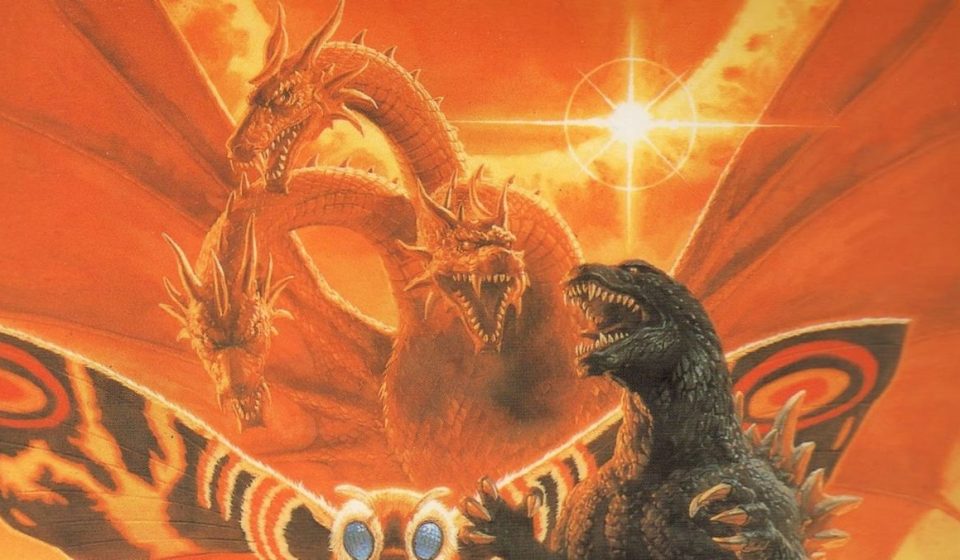
Godzilla minus zerothe long-awaited sequel to director Takashi Yamazaki’s film Academy Award-winning filmhas arrived. Aftermath residents Kaiju Siskel and Ebert, Chris Person and Isaiah Colbert are here to sift through the ruins of Japan’s first film shot entirely in IMAX, assess the damage and decide if it really lives up to being the perfect sequel.
Spoilers, duh.
Isaiah: Have a nice day, Chris. Although I didn’t manage to get a Godzilla popcorn bucket for the express purpose of storing my weed nuggets in its large frame, I did manage to get IMAX tickets with a friend to watch. Minus zero as was planned. After spending two hours and a few changes with other Godzilla fans who cheered when we saw his special IMAX countdown sequence, when my friend asked me what I thought of it, I said I probably wouldn’t see this one again, if ever. I was a little disappointed. And you?
Chris: I didn’t find any buckets of Godzilla popcorn there, but my local AMC still has plenty. Excavator remaining starter buckets. I wonder how many they made. I’m not going to watch this one again; I thought it was a bit average, but I liked the fights themselves.
Isaiah: Even someone whose enthusiasm deflated the moment its second trailer teased the other not-so-secret monster added to the mix, I didn’t even really like the fights. Minus zero is certainly a continuation in the same way each Godzilla the sequel to the franchise runs the risk of being weaker than what came before it. But for me, I just found the film as a whole a little clunky with everything it was trying to deliver. It was a series of diminishing returns that nearly ruined what I even loved about the first film.
Chris: There’s this old Bugs Bunny cartoon where Daffy Duck swallows explosives and blows himself up to impress an audience and dominate Bugs Bunny, and Bugs says “wow, that’s awesome, they want more” and you see Daffy’s soul go to heaven and he says “I know, I know, but I can only do it once”, and that’s kind of how I feel.
One can only make the earnest and heartbreaking melodrama of the post-war period once before the fundamental economic forces that underpin the world. Godzilla the franchise takes shape, toyification sets in and King Ghidorah appears. The second you introduce a second monster for Godzilla to fight, this will happen!
King Ghidorah is a tramp
The kaiju, not the rapper
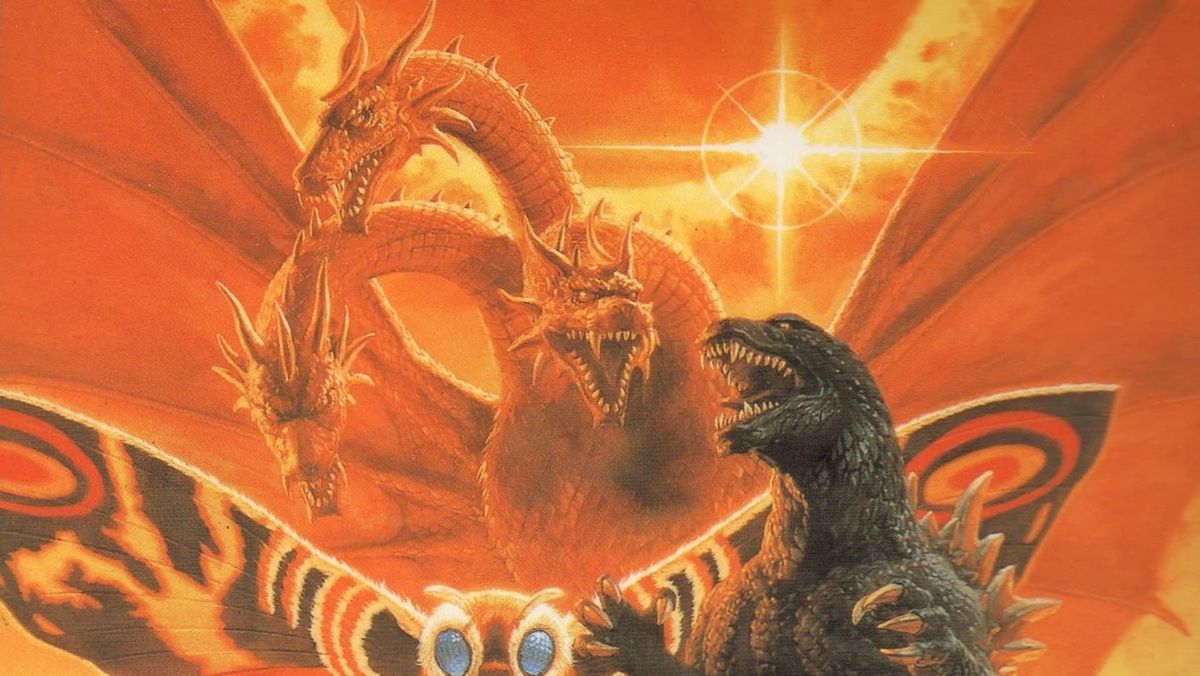
Isaiah: And Ghidorah isn’t just any monster; as Yamazaki attests, using it essentially amounted to putting the Joker as the big bad The Black Knight. Even with my fears about Ghidorah being a bum among the kaiju in Godzilla’s rogues gallery, I can’t blame him for going for it. But even that’s a symptom of what I’m struggling with Minus zero as a film: I’m more interested in the behind the scenes than the actual things the film presents to chew on. It’s a bit like Rockstar publishing a dev diary on the making of Grand Theft Auto VI eclipsing the very expensive game I spent cash on.
Whether it’s Yamazaki’s anecdote about his inspiration, depicting their struggle since watching your own cats fightor the film serving as a promise of reply to Christopher Nolan OppenheimerI find these details and anything else from the behind-the-scenes post-release details of GKIDS at and if and boxed ideas more interesting than what the movie itself did. Like any sequel, it’s indulgent in a fun way, but despite its ambition to remain a melodramatic post-war allegory while also delving into its own Monsterverse spectacle, Minus zero is the closest thing the Reiwa period has to a Heisei style. Godzilla following. It’s a film that presents intriguing and clever ideas that never fully come to fruition because they are relegated to the background.
I guess before we get into that, we should talk about the story of the film.
Chris: Yeah, please.
Toho
Isaiah: Taking place two years after the first film, Minus zero finds Japan in the midst of recovery from World War II and the devastation of Godzilla. Then, of course, a new threat arises in Ghidorah, snatching kamikaze pilot Koichi Shikishima from his new normal with his now-wife, Noriko, and daughter, Akiko, to join sexy, good-haired engineer Kenji Noda in the civilian-led effort to put Ghidorah to rest. Things don’t go well, with Ghidorah being a space monster with regenerative powers. Oh, and Godzilla is back too.
Chris: They didn’t completely kill Godzilla, who could have guessed?
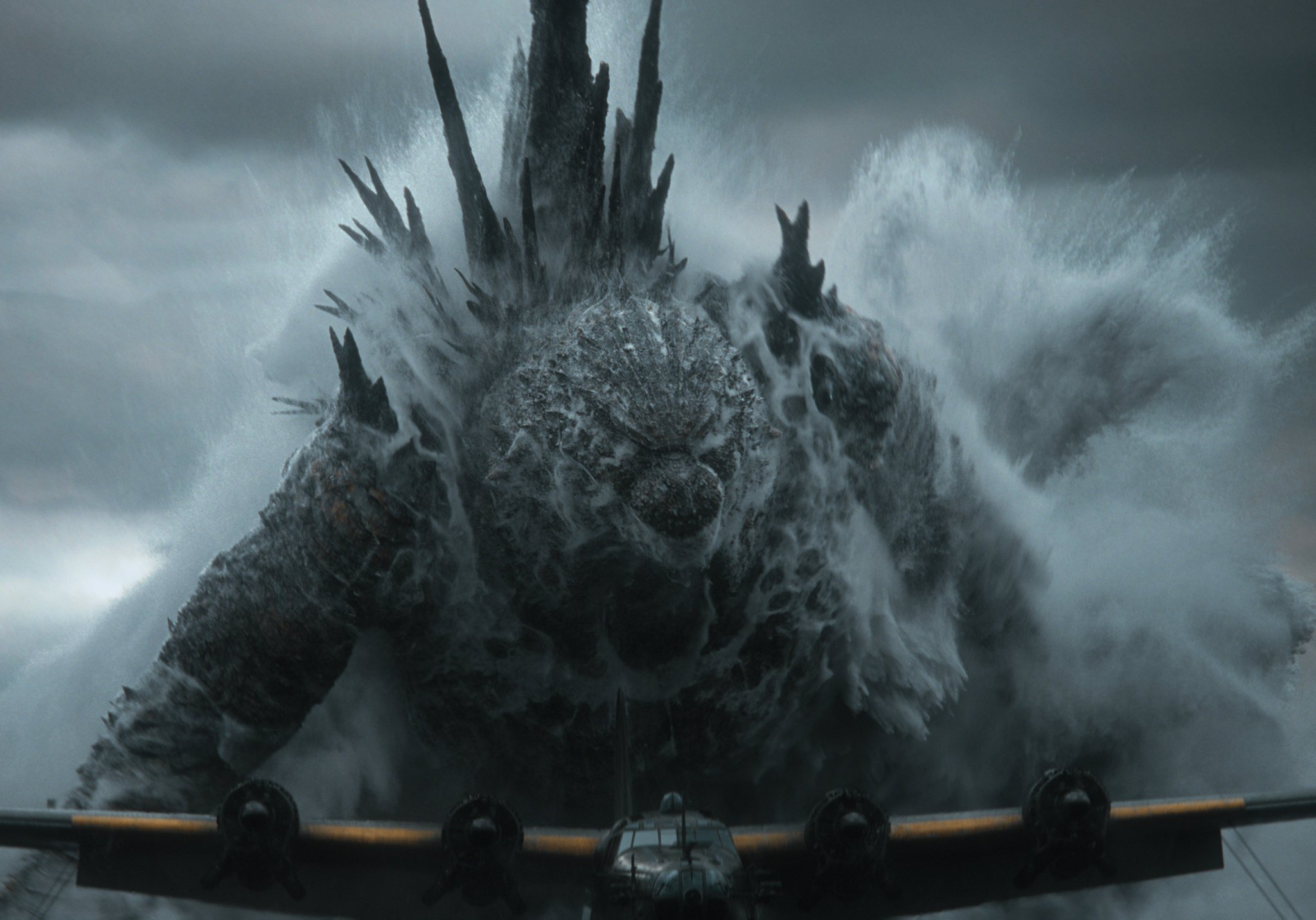
Isaiah: My friend is stubborn. That’s not to say the only new face in the film is Ghidorah. Meteorologist Makoto Aoyama and scientist Kanji Murakami join the human effort alongside some of the most generic US Army types Yamazaki could find to come up with a plan to fly Ghidorah and Godzilla to each other, let them fight, and kill whoever wins.
Chris: Everyone bears various scars from Godzilla but also from the war. Part of the reason Godzilla is back is because he has something called G cells, which is a recurring thing that I believe. Godzilla vs. Biollante established (Criterion has a 4K restoration of it, and it hurts if readers haven’t seen it). G-cells have allowed many victims to regenerate quickly before dying, and Noriko is revealed to be one of those people.
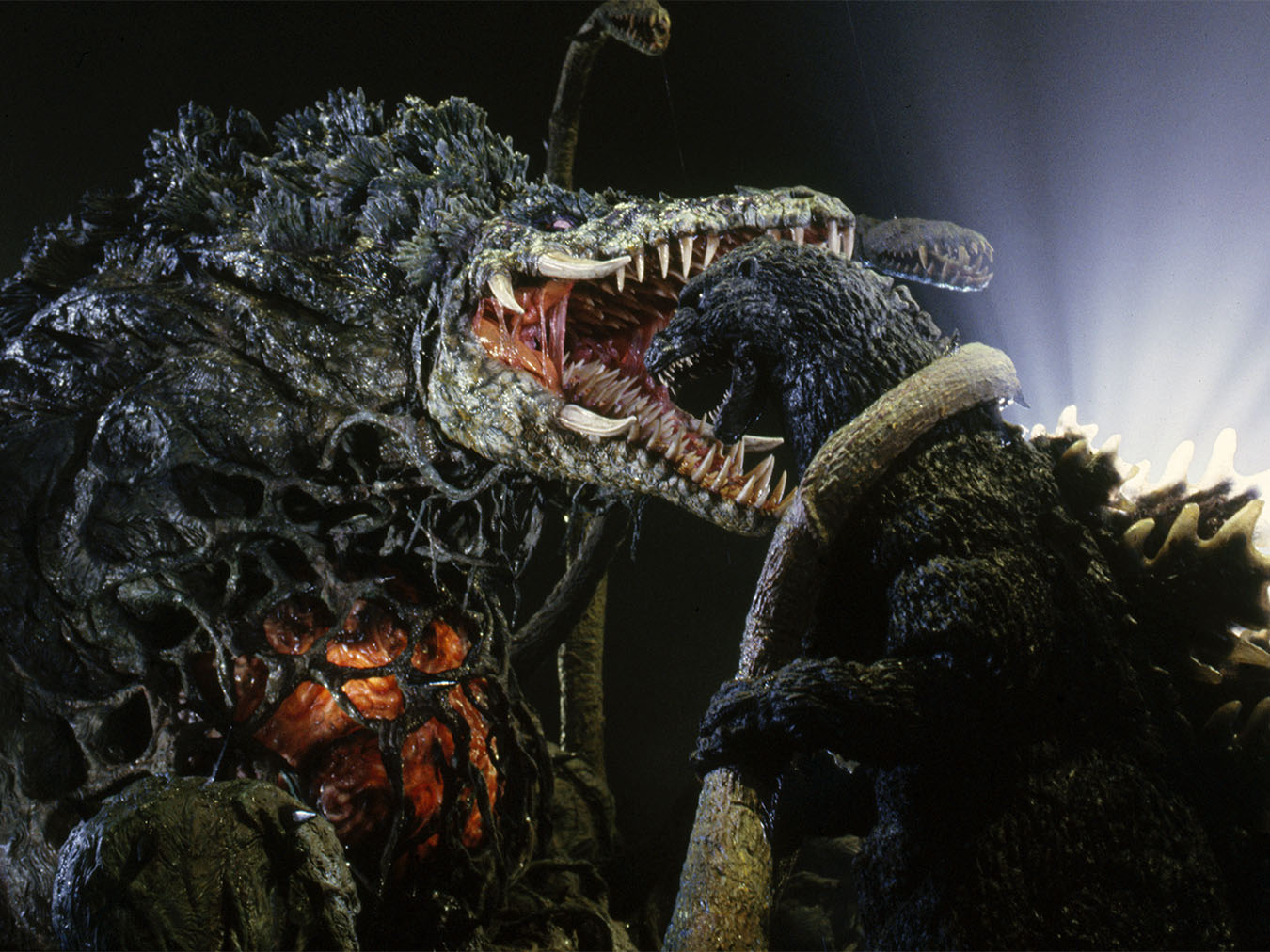
Isaiah: Oh, you bet I saw Biollante. In fact, when the first rumors about this film being made broke out, I cited Biollante as a potential direction this film could have taken in my current affairs article for IGN. Suffice it to say, the wind left my sails when I learned we weren’t doing this, but restoring Ghidorah to his big villain shine.
For all my stomach ache towards Ghidorah, I don’t hate that he’s in the movie. I think this is a pretty smart, if not limiting, escalation for all the sequels that follow, for what the film plays with thematically. As you said earlier, people carry the scars of war, but the scars that Ghidorah bears throughout the film evolve and turn him into a bigger problem.
What bothers me about the movie is that I think it would have been better if the B plot and the A plot had been swapped. Instead of focusing so much on Shikishima and his family being in the crosshairs of everything, the film should have focused on Ghidorah’s involvements and how they fueled Murakami’s secret plot to get revenge on the United States.
Toho
Chris: Yeah, I wish the implications of what America was planning to do were better fleshed out here. If you’re considering making a film about post-war Japan, the continued military presence of the United States is fertile territory. Although I will say that I love having all the generic white actors Japan has available to do the cheesiest possible caricature of the men in the US Army. It’s also very funny that one of them is Jordan Vogt-Roberts, who directed Kong: Skull Island.
Murakami is a survivor of the bombing of Hiroshima and plans to use Godzilla to take revenge on the United States. This leads to an incredibly fucked up dream sequence where Godzilla vaporizes New York, and while it’s technically pretty cool, I find the characterization and his entire arc slightly overwrought.
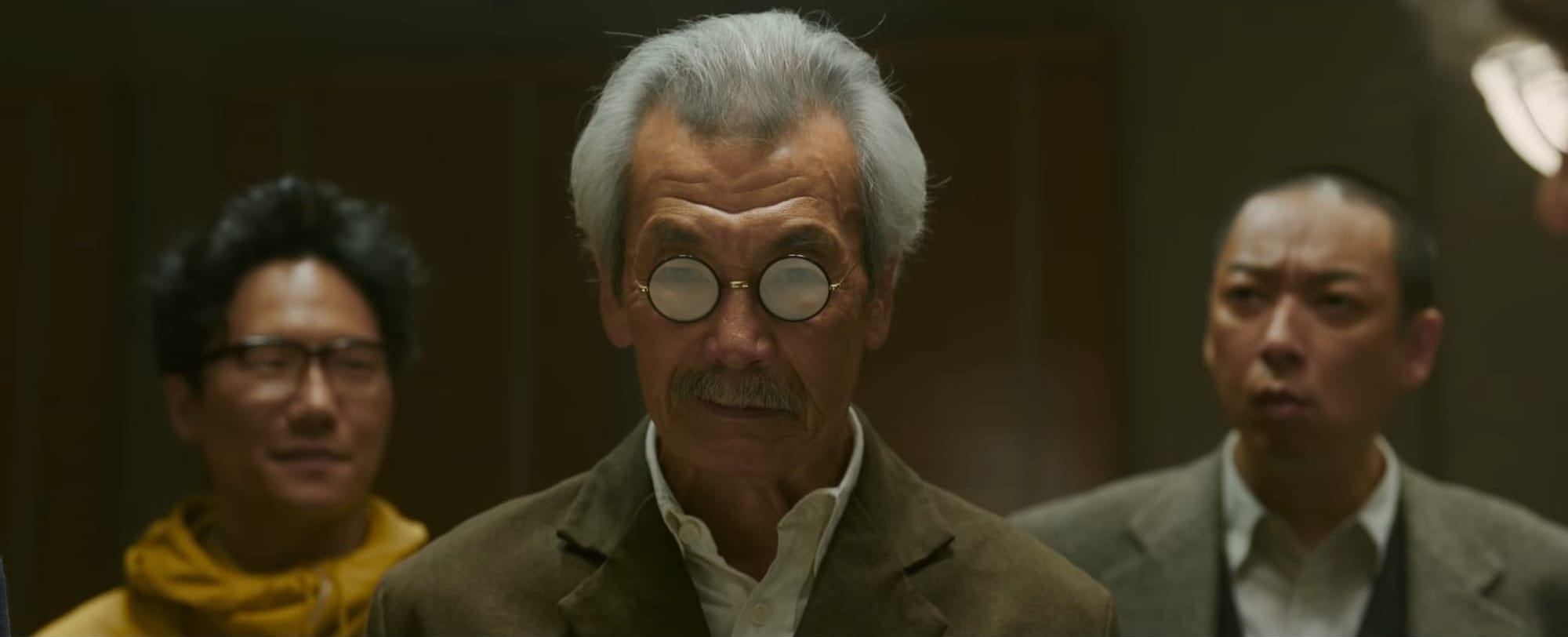
Isaiah: On paper, this whole scene and Murakami are interesting as Godzilla’s protagonist. Like how Minus one was a modern contextualization of the 1954 film, Minus zero also echoes this by making Murakami the inverse of his own scientist, Murakami. In this film, Murakami comes up with a way to kill Godzilla by building an oxygen destroyer. He is so tortured by the potential of his invention to plunge the world into ruin even greater than that of the atomic bomb if it fell into the hands of others, that he assures the blueprints and that he himself will die with it. It would have been very interesting to see Murakami struggle with the weight of his eye-for-an-eye vengeful ambition braided with Ghidorah’s fire-with-fire fight motif. It would have been interesting to see this throughout the film. But Minus zero only fades and disappears from this emotional thread. Instead, the film spends way too much time on the details of how they can MythBusters their path to killing Ghidorah and kiting Godzilla, or about characters who somehow remind you of the stakes they faced in the previous film.
Aside from the dogfight with Ghidorah at the beginning of the film, I had a hard time getting invested in Minus zero. Mainly because it was the only scene where I felt real tension and emotion, uninterrupted. It took me out of the movie in a boring way: I was watching it less as a movie buff and more from Yamazaki’s point of view, trying to string together all these plot points and tones on a cork board. The entire film features choppy entrances and exits from scenes where characters struggle emotionally, only to fade into Ghidorah and Godzilla’s fight to send us home and land the proverbial plane. But I found the combat quite disappointing too, given the potential the film fed me throughout.
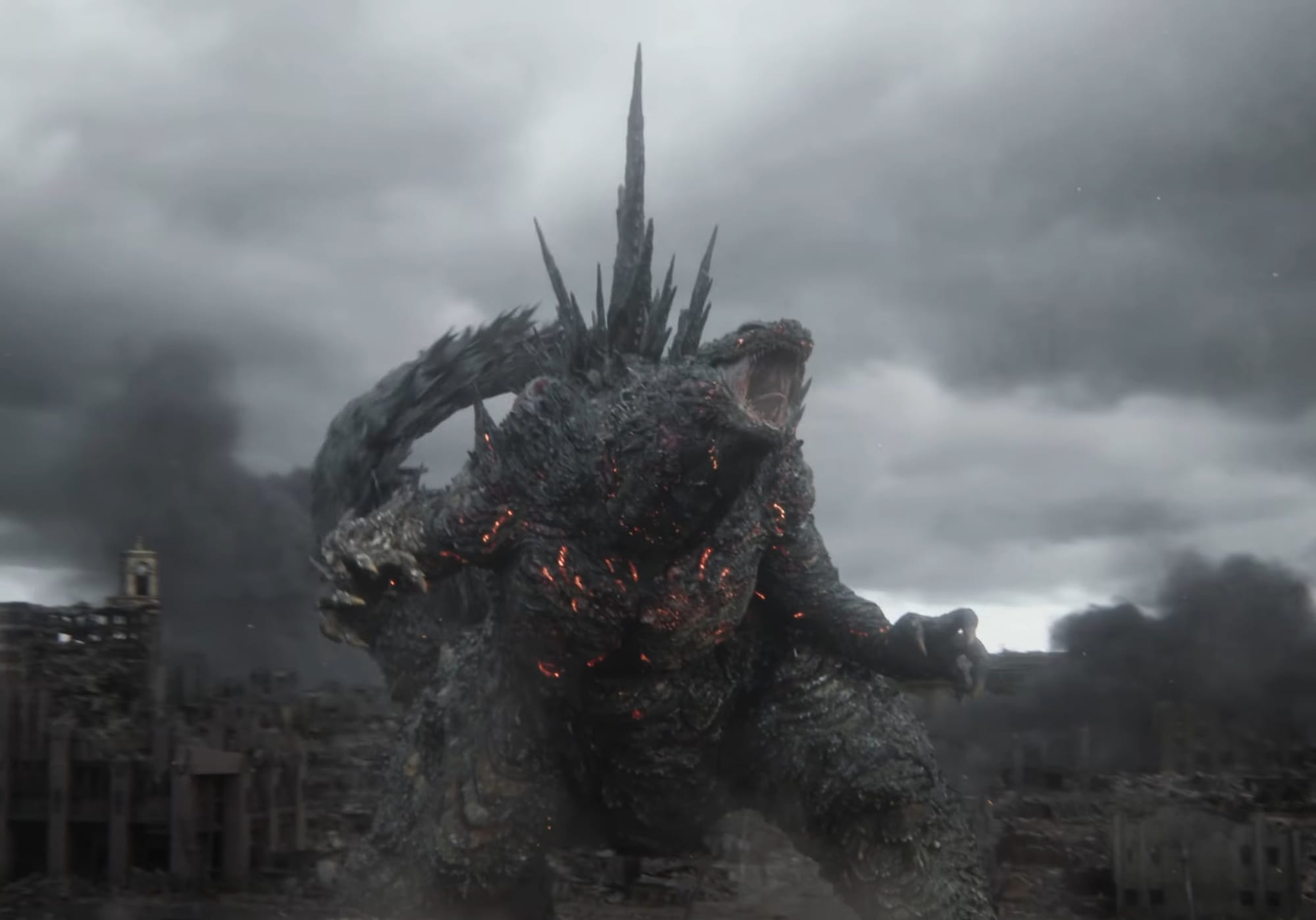
Chris: I will say that there are scenes where Godzilla gets his ass kicked briefly before regenerating in an unhealthy way, and I personally liked those parts, but in your opinion they have to exist in this sort of militarized/sort of non-militarized reality where their main weapon is like five planes and the breakfast machine of The great pee adventure. And again, these scenes need to be supported by drama and the drama, unfortunately, feels a bit like a rerun without the Murakami bits. But more than anything, there’s this biggest problem for me in that the whole thing feels like it’s building up to a more interesting sequel, and that’s a little disappointing.
Isaiah: I enjoyed Godzilla getting his ass beat. After all, he’s never been tapped on the chin before. Humans have destroyed his shit enough that his grand reintroduction…
Gn entert