Skip to content
-
Subscribe to our newsletter & never miss our best posts. Subscribe Now!
Today's News. Tomorrow's Perspective. Today's News. Tomorrow's Perspective.

Deliver fast, factual, and easy-to-understand news covering global events, technology, business, science, AI, health, entertainment, and lifestyle.

Today's News. Tomorrow's Perspective. Today's News. Tomorrow's Perspective.

Deliver fast, factual, and easy-to-understand news covering global events, technology, business, science, AI, health, entertainment, and lifestyle.

  • Home
  • Breaking News
  • Business
  • Sports
  • Health
  • Politics
  • Technology & AI
  • World
  • Home
  • Breaking News
  • Business
  • Sports
  • Health
  • Politics
  • Technology & AI
  • World
Close

Search

Subscribe
Google turns to Blue Origin for a rocket, but its long-term problem remains
Business

Google turns to Blue Origin for a rocket, but its long-term problem remains

jack colman
By jack colman
November 20, 2026 2 Min Read
Comments Off on Google turns to Blue Origin for a rocket, but its long-term problem remains

When announcing Project Suncatcher a year ago, Google said it projected for the mid-2030s, when launch costs are expected to drop to just $200 per kg. The only rocket likely to achieve these costs in the next decade is SpaceX’s Starship vehicle, but in recent months it has become clear that SpaceX will prioritize its own payloads (including Starmind data centers) on Starship. For Google to reach its target price of $200 per kg would likely require a fully optimized Starship V4 (the company currently flies a Starship V3) that achieves a lifting capacity of around 200 tonnes in orbit.

SpaceX has a strong incentive to prioritize its own orbital computing infrastructure, potentially leaving Google dependent on the Starship capacity and pricing that SpaceX is willing to offer to outside customers. So how does Google plan to reach orbit in the 2030s?

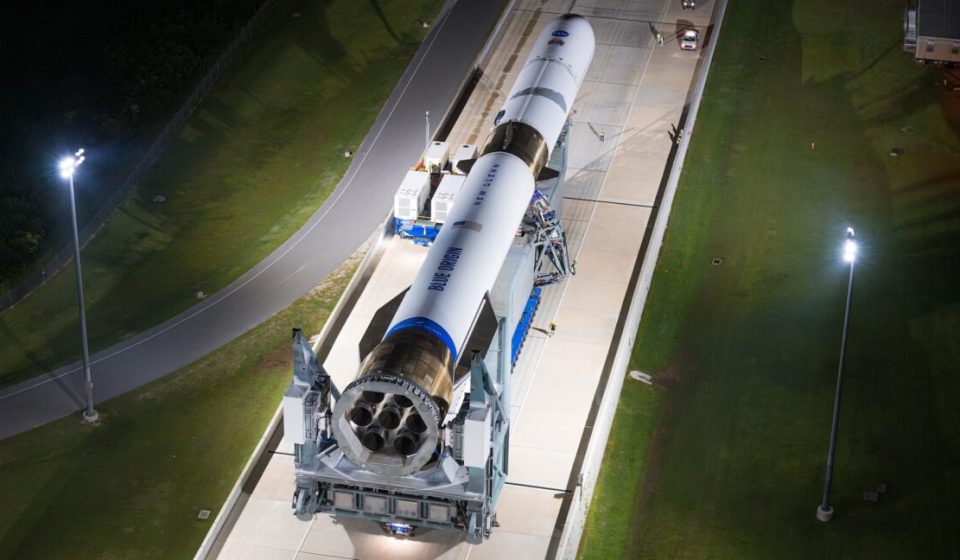
This perhaps explains the new partnership with Blue Origin, which currently covers a single launch but could expand to more. By the 2030s, Blue Origin is expected to fly the larger 9×4 variant of its New Glenn rocket, but that vehicle could face a cost disadvantage compared to a fully reusable high-cadence spacecraft. And Blue Origin is planning its own orbital data center constellation, Project Sunrise. Once again, Google could find itself forced to subsidize a competitor while paying higher launch costs.

Can anyone else do this?

Perhaps another company, like Rocket Lab, Relativity Space or Stoke Space, will then have a larger rocket.

But developing an ultra-heavy rocket requires enormous capital. SpaceX spent more than $15 billion developing Starship, according to its 2026 securities filings, and Blue Origin also invested billions in developing New Glenn. In terms of time, both companies have put more than a decade of work into their big vehicles. For now, all these other U.S. launch companies are working through the growing pains of developing mid-size vehicles.

At this point, Google offers some unattractive options. It may hope that one of the newer U.S. launch companies will side with commercial satellite operators and decide not to pursue its own constellation. He could buy one of these new launch companies. Or Google could hire rocket scientists to start developing powerful rocket engines and start chasing SpaceX and Blue Origin at launch, both of which are 25 years ahead.

Gn bussni

Views: 3
jack colman
Author

jack colman

**Jack** is a staff journalist and digital content writer at **DailyVoxa**, specializing in breaking news, technology, artificial intelligence, business, and global affairs. He is passionate about transforming complex topics into clear, accurate, and engaging stories that help readers stay informed.With a strong focus on fact-based reporting and thorough research, Jack monitors developing events, analyzes reliable sources, and delivers timely news with clarity and context. His work emphasizes accuracy, transparency, and editorial integrity while avoiding sensationalism.At DailyVoxa, every article written by Jack follows the publication's Editorial Policy, Fact-Checking Policy, and Ethics Policy. He is committed to providing trustworthy journalism that empowers readers with reliable information and meaningful insights into the stories shaping the world.

Follow Me
Other Articles
Senate rejects resolution to stop Trump from striking Iran - The Washington Post
Previous

Senate rejects resolution to stop Trump from striking Iran – The Washington Post

Iowans brace for lead dust cloud as military plans to detonate 5 tons of bomb-making chemicals
Next

Iowans brace for lead dust cloud as military plans to detonate 5 tons of bomb-making chemicals

Deliver fast, factual, and easy-to-understand news covering global events, technology, business, science, AI, health, entertainment, and lifestyle.
  • About Us
  • Accessibility Statement
  • Advertise With Us
  • AI Usage & Transparency Policy
  • Contact us
  • Cookie Policy
  • Corrections Policy
  • Meet Our Team
  • Privacy Policy
    • Disclaimer
    • DMCA & Copyright Policy
    • Editorial Policy
    • Ethics Policy
    • Fact-Checking Policy
  • Terms and Conditions
Copyright 2026 — Today's News. Tomorrow's Perspective.. All rights reserved.