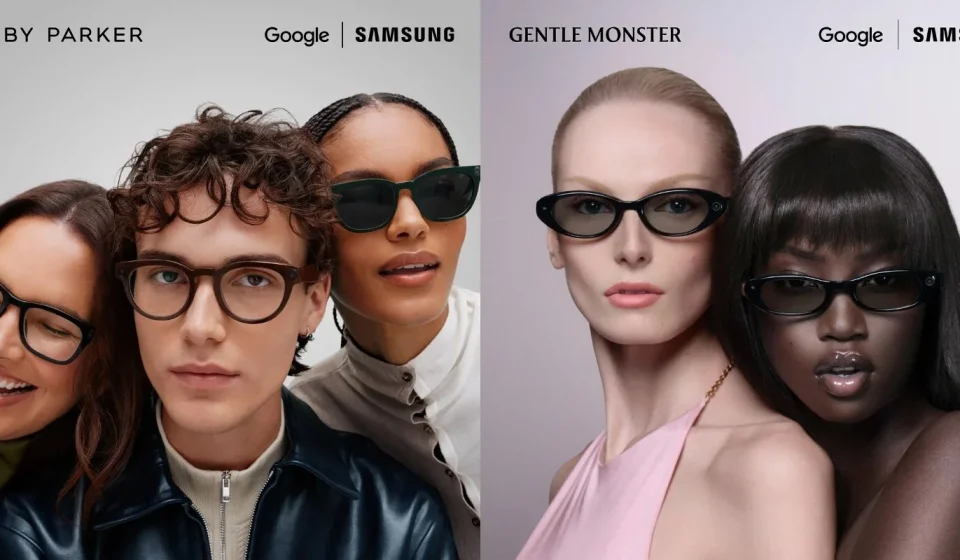
Smart glasses have always had one feature that raised privacy concerns: secretly filming and taking photos of other people. After all, this is the main reason for the downfall of the original Google Glass.
Well, the new Android XR glasses, developed by Samsung in collaboration with Warby Parker and Gentle Monster, don’t have this problem, as they are not allowed to see human faces.
Samsung Intelligent Eyewear Android XR glasses will blur people’s faces

Any images and videos taken during these Gemini queries will not be saved in the AI Agent’s history log. | Image from Google
Shahram Izadi, Vice President and General Manager of Android XR, shared a long article on the official Google blog on how these new AI-powered smart glasses work.
The most important privacy feature is that all Android XR smart glasses, not just Samsung’s smart glasses, will blur people’s faces before sending images and videos to Google’s servers for processing.
…when technology can see the world around you, it also has a responsibility to the people around you. Throughout our years of eyewear research, we’ve listened carefully to wearers, bystanders, and privacy experts. We found that wearers of glasses like these were constantly calculating while out and about, while passersby feared being filmed without their knowledge.
– Vice President and General Manager of Android XR Shahram Izadi, November 12, 2026
The feature will automatically activate when you ask Gemini for information about your surroundings, such as asking it to translate a sign or identify something. If there are people in the glasses’ field of view, their faces will be blurred before the image is sent to Google’s data centers for processing.
You also get the same level of protection for your face. If you walk in front of a mirror and run one of these queries, your face will also be blurred using the same privacy algorithms.
Gemini will not save images and videos in its logs

Before using smart glasses, you must agree not to record other people without permission, not to record in sensitive locations, and not to cover the exterior indicator light. | Image from Google
Additionally, any images and videos taken during these Gemini queries will not be saved in the AI Agent’s history log.
The next point is particularly interesting. Google says visual data from these Gemini queries will not be used for AI training or ad personalization.
The privacy framework goes beyond Gemini and involves third-party apps as well. Play Store apps for Android XR glasses will not be able to use the camera for facial recognition or live streaming.
This way, Google will have control over what the camera records and can apply its privacy filters. Locking the camera features behind this privacy wall might be disappointing for some people who might want to use the glasses as an action camera or stream their wildlife adventures or that trip to Japan, for example.
Front-facing privacy LED camera indicator

Android XR glasses, including Samsung smart glasses, have a privacy LED indicator. | Image from Google
Just like the Meta Ray-Bans, the Android XR glasses, including the Samsung smart glasses, feature a privacy LED indicator, designed to alert people around you when the glasses are actively recording or taking photos.
The camera on all Android XR glasses will not turn on if this indicator is covered or disabled, bringing the same anti-tampering features as the aforementioned Ray-Bans.
Given that the glasses already blur people’s faces and don’t allow third-party apps to use the camera for streaming or facial recognition, this feature seems slightly overkill.
However, giving people around you clues that you are actively recording could be helpful. You just have to explain to them that their faces are blurry and hope they believe you.
Is this system bulletproof?

Ray-Ban Meta smart glasses have been involved in many controversies regarding their privacy features. | Image by Meta
Google’s privacy features built into Android XR are thoughtful and designed to provide peace of mind to users. However, there is no 100% secure system. Some faces might pass through unblurred if the system doesn’t recognize them, and people will almost certainly find ways to use the Android XR glasses for spooky things.
There’s a recent example involving a Harvard student who tinkered with Meta Ray-Ban glasses and turned them into a full-fledged facial recognition device. There are numerous cases where government agencies have abused Ray-Bans and their recording capabilities, and there have even been reports that the government asked Meta for a special facial recognition model for security agencies.
The first Android XR glasses are available for pre-order

You can already pre-order Samsung smart glasses. | Image from Google
Samsung’s Intelligent Eyewear smart glasses are officially available for pre-order. Prices start at $395 and the first pairs are expected to begin shipping to customers in the United States and South Korea on December 10, 2026.
Intelligent Eyewear smart glasses feature an ultra-wide 12 MP front camera, built-in speakers and microphone, and up to nine hours of battery life between charges.
What do you think of all this? Would you buy a pair and think Google is really going to blur people’s faces?
Learn more about Android XR and smart glasses here:
Gn tech