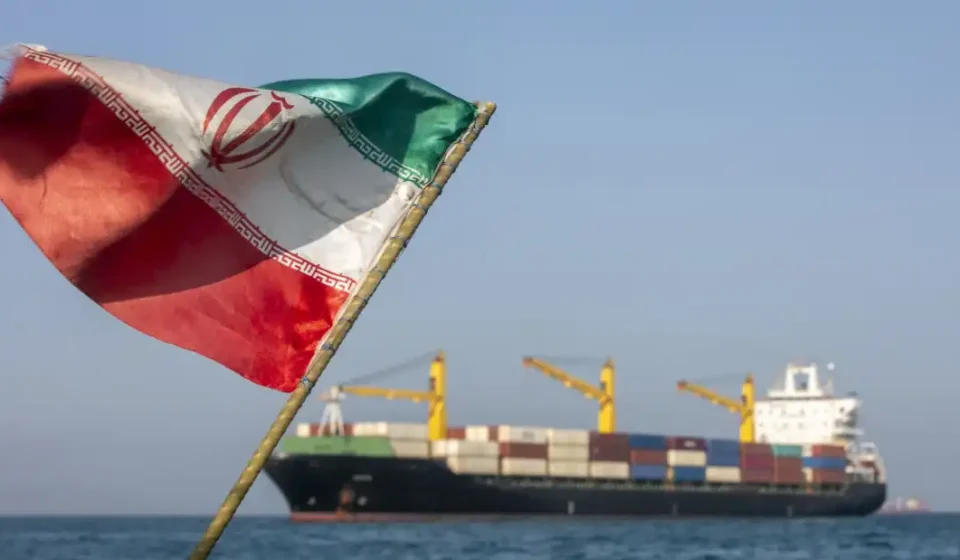

An Iranian flag flutters in the wind as ships remain anchored in the Strait of Hormuz.
Majid Saeedi/Getty Images
hide caption
Majid Saeedi/Getty Images
DUBAI, United Arab Emirates — President Trump is facing new realities nine months into the war with Iran that leave him with fewer and fewer options to end the conflict.
On Thursday, he dismissed the need for a deal with Iran, saying the United States had frozen billions of Iranian dollars in overseas accounts.
“We don’t need a deal with Iran. Those days are long gone. We have their money,” he wrote in a Truth Social article.
Negotiations with Iran have stalled, with mediator Qatar struggling to bridge the gap. Trump met with Qatar’s prime minister at the White House this week and said afterward that Gulf Arab allies preferred “the status quo” and continued economic pressure on Iran. He wrote that while the United States remains “locked and loaded,” an attack at this point “seems entirely unlikely.”

It’s a departure from his threats to carry out rapid and intense strikes against Iran in the days before his two electoral setbacks.
Trump’s wartime ally, Israeli Prime Minister Benjamin Netanyahu, whom he had supported, is set to be ousted from power after that country’s elections.
Meanwhile, domestically, Trump’s party lost its majority in Congress in the midterm elections. Vice President Vance blamed the Republican losses on the unpopular war with Iran and the nature of the relationship between the United States and Israel.
With less room for maneuver and a still defiant Iran, Trump’s strategy appears to be to keep things as they are, for now. This means that the possibility of escalation still looms.
Anwar Gargash, the United Arab Emirates’ top diplomat, told an audience in Abu Dhabi, the country’s capital, this week that the region must “prepare for a prolonged period of uncertainty, during which neither a decisive resolution nor a stable regional order can be taken for granted.”
This is what maintaining the status quo looks like.
Iranian stranglehold on the Strait of Hormuz persists
Official Iranian social media accounts frequently post videos of attacks on ships in the Strait of Hormuz for violating new Iranian rules requiring permission to navigate the waterway, which was open and free to ships before the war.
Meanwhile, the United States is helping oil tankers cross the Strait of Hormuz using a route close to the coast of Oman. While this has helped Arab states export their oil, it does not solve the larger problem: how to return pre-war production levels of other vital products like liquefied natural gas, fertilizer and aluminum. A status quo also does not allow countries like Kuwait, Qatar and Bahrain to import goods into their ports.
The International Monetary Fund says Gulf Arab states are in economic recession because of the war, despite rising oil prices. It says the economies of Kuwait, Qatar and Iraq are contracting by about 16% this year. That of Bahrain is down 11%.
More limited strikes that could quickly degenerate
The United States is sending a third aircraft carrier with thousands of troops to the region, leaving open the possibility of further planned military escalation.
This week, Iran unveiled what it says is a new underground missile production site.
The United States and Iran still occasionally carry out tit-for-tat strikes.
On Friday, Iranian media said the United States had struck one of its islands in the Strait of Hormuz. This is an area where Iran has radars and drone launch sites. Iran’s Revolutionary Guard said it retaliated by targeting a US early warning radar in Bahrain.
Iran remains economically battered and deprived of oil revenues
Secretary of State Marco Rubio told reporters this week that military action against Iran is not necessary at this point because economic sanctions do the job.
“The pain they feel is that ultimately you’re going to have to eat. Ultimately you’re going to have to be able to pay your own fighters and your own security forces,” Rubio said.
There is also a US naval blockade at sea that prevents Iranian ships from transporting oil to countries like China. This blockade, according to the US military, has so far deprived Iran of at least $25 billion in revenue.
However, one of the biggest economic blows came from the United Arab Emirates. The United Arab Emirates announced this summer that it was severing all economic and trade ties with Iran. The UAE was among Iran’s largest trading partners and local bank accounts were reportedly used by Iran’s Supreme Leader and the Revolutionary Guard to move money.
Meanwhile, the US military’s Central Command announced a new operation, dubbed “Iron Gate”, with other US government agencies, aimed at preventing Iran from using land routes to transport advanced weapons across its borders and the Caspian Sea.
Yemen war intensifies, attracts more countries
Another consequence of the conflict with Iran is the resumption of all-out war between Saudi Arabia and the Houthis in Yemen.
The Houthis, who are not a direct proxy for Iran but are backed by it, say Saudi airstrikes across Yemen have killed dozens of people in recent months, including nearly 60 last weekend, many of them women and children in a village near the capital Sanaa.
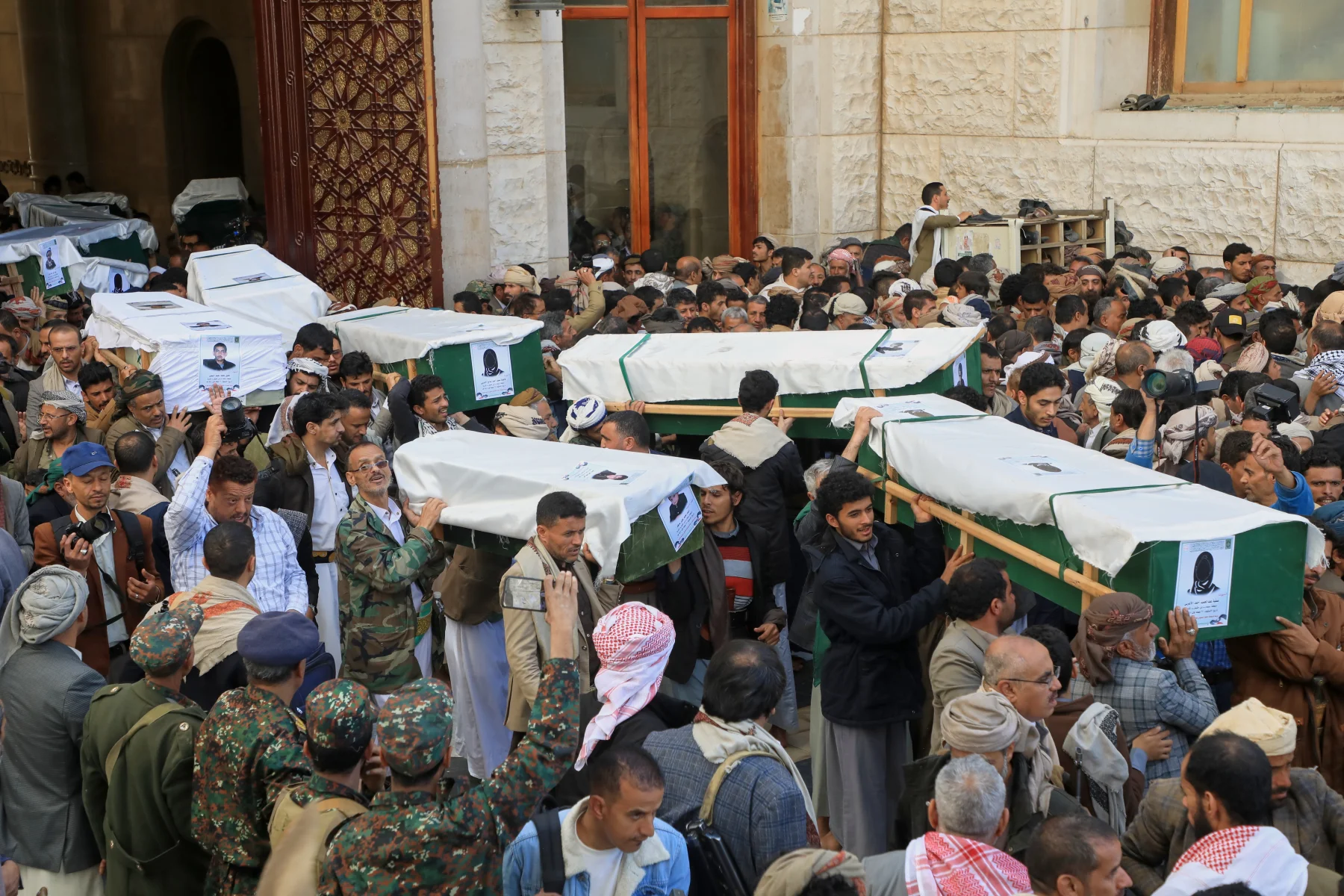
Mourners carry coffins during the funeral of those killed in recent airstrikes on the village of al-Shariya, northeast of Sanaa, which Houthi authorities blamed on Saudi Arabia, in Houthi-controlled Sanaa, Yemen, November 11, 2026.
Osama Abdulrahman/AP
hide caption
Osama Abdulrahman/AP
Saudi Arabia, meanwhile, faces daily missile and drone attacks from the Houthis, some of which this week hit its main East-West pipeline carrying crude oil to bypass the Strait of Hormuz. Another Houthi attack hit the headquarters of the Saudi oil company Aramco in Riyadh’s financial district.
Deadly Houthi attacks on Saudi airports have led to the cancellation of flights and high-profile events.
As the war in Yemen drags on, Pakistan, Turkey and Egypt are among the countries entering the fray by providing defensive support to Saudi Arabia. The United States is providing intelligence assistance to the Houthis.
The United Nations says some 330,000 Yemenis have been displaced by renewed fighting between the Houthis and the Saudi-backed Yemeni government, exacerbating an already dire humanitarian crisis.
Mediators’ efforts continue, neither side moves
Iran says it is ready for a short-term pause in attacks on ships in the Strait of Hormuz, but insists that seven demands be met before starting direct negotiations on its nuclear program.
“The message has only been one thing. These seven points are on the table. Take it or leave it,” Hamidreza Gholamzade, a spokesperson for Tehran Municipality, told NPR.
These demands include lifting sanctions, ending the naval blockade, unfreezing Iranian dollars in overseas accounts and implementing a ceasefire on all fronts, which includes stopping Israeli attacks in Lebanon and Gaza.
Rubio called the conditions “absurd.”
Discussions are also underway on the dilution and transfer of Iranian enriched uranium abroad. However, the head of Iran’s Supreme National Security Council, Mohsen Rezaei, told Iranian state television on Wednesday: “We will not remove even a single ounce of enriched nuclear material from Iran.”
This is another indication of the impasse.
NPR’s Hadeel Al-Shalchi in Antalya, Turkey, and Ahmed Abu Hamada in Cairo contributed reporting.
Gn headline