NEWYou can now listen to Fox News articles!
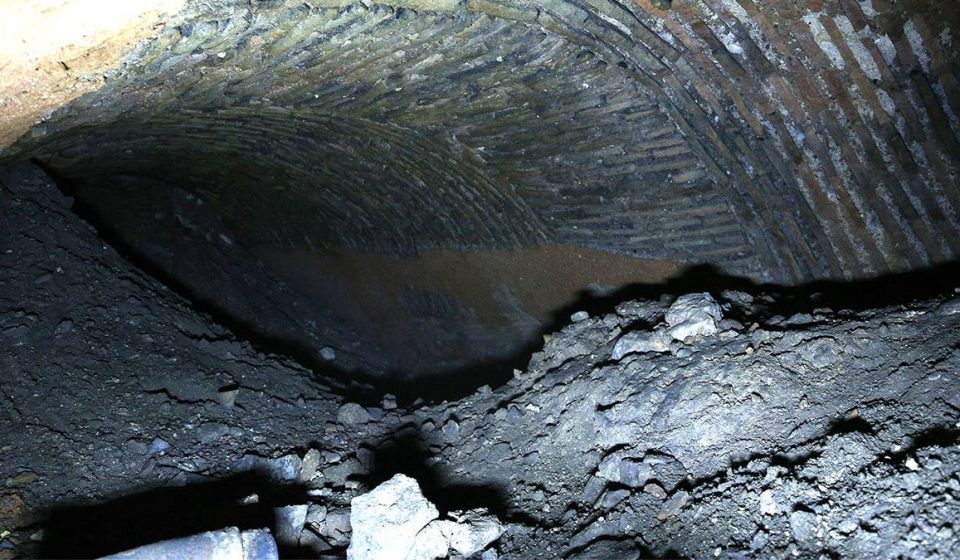
Archaeologists have removed around 3,000 tonnes of debris from a centuries-old network of underground tunnels beneath Istanbul’s iconic Hagia Sophia, revealing previously inaccessible passages beneath one of the world’s most historic religious monuments.
The findings were announced by archaeologist Hasan Fırat Diker during a presentation this fall in Istanbul, as reported by local newspaper Türkiye Today.
The tunnels have been undergoing excavation and clearance work since February 2025, allowing researchers to explore sections previously buried under mud and debris.
Noah’s Ark Site Gives First Glimpse of Charred Wood Fragments Recovered Deep Below Ground
During the Oct. 16 presentation, Diker said the approximately 1,600-year-old tunnels were built by the Romans and originally functioned as part of the city’s water and drainage system, while also providing protected underground space.
Some of the underground structures predate today’s Hagia Sophia, completed in 537 AD under the Byzantine emperor Justinian I.

Archaeologists have removed around 3,000 tonnes of debris from ancient tunnels beneath Istanbul’s Hagia Sophia (seen here during a 2022 excavation), revealing previously inaccessible passages. (Isa Terli/Anadolu Agency via Getty Images)
Although the underground network has been known for decades, much of it remains difficult to access and ongoing excavation work is allowing researchers to examine previously buried sections of the historic site.
Diker’s research shed new light on the complex network, which he compared to a modern metro system, Türkiye Today said.
THE “EXCAVAGES OF THE CENTURY” UNDER NOTRE-DAME REVEAL MYSTERIOUS MARKS AND ANCIENT SECRETS
The tunnels were designed to carry rainwater from surrounding streets to the sea, according to Diker.
Researchers have cleared nearly 558 feet of an underground pathway connected to a 5th-century Roman street that stretches from the Sarayburnu neighborhood toward the Little Hagia Sophia, Diker said.

Some underground structures beneath the Hagia Sophia predate the current monument, completed in AD 537 under the Byzantine emperor Justinian I. (Isa Terli Agency/Anadolu via Getty Images; Prisma/UIG/Getty Images)
This monument, listed as a UNESCO World Heritage Site and visited by millions of tourists each year, is actually the third structure built at the site, Diker said.
CLICK HERE TO SUBSCRIBE TO OUR LIFESTYLE NEWSLETTER
He said his team cleared the upper and lower sections of an ancient underground burial complex discovered in 1946, digging an additional five feet below.
The burial chambers predate the current Hagia Sophia; they had accumulated large quantities of mud over the centuries, according to Diker.
CLICK HERE FOR MORE LIFESTYLE NEWS
Looking ahead, Diker said researchers hope to open more sections of the Hagia Sophia’s underground network to visitors, with plans for an exhibit showcasing the archaeological remains.

Hagia Sophia, one of Istanbul’s most historic religious monuments, sits above a vast network of tunnels and underground structures from Roman times. (Yasin Akgul/AFP via Getty Images)
Hagia Sophia – meaning “Holy Wisdom” in Greek – was a major center of Eastern Christianity for almost 1,000 years until Ottoman forces conquered what was then Constantinople and converted the church into a mosque in 1453.
It then became a museum in 1935 before being converted into a mosque in 2020.
TEST YOURSELF WITH OUR LATEST LIFESTYLE QUIZ
The excavations are the latest in a series of archaeological investigations into ancient underground tunnels around the world.

Researchers have excavated the upper and lower parts of an ancient underground burial complex discovered in 1946 beneath Istanbul’s historic Hagia Sophia. (Isa Terli/Anadolu Agency via Getty Images)
Earlier this year, archaeologists discovered a mysterious 164-foot-long tunnel in Jerusalem, near a site linked to the biblical kingdom of Judah, although its age and purpose remain unknown.
CLICK HERE TO DOWNLOAD THE FOX NEWS APP
In Germany, archaeologists have discovered a medieval tunnel beneath a prehistoric burial site after initially mistaking its entrance for a tomb.
Gn world