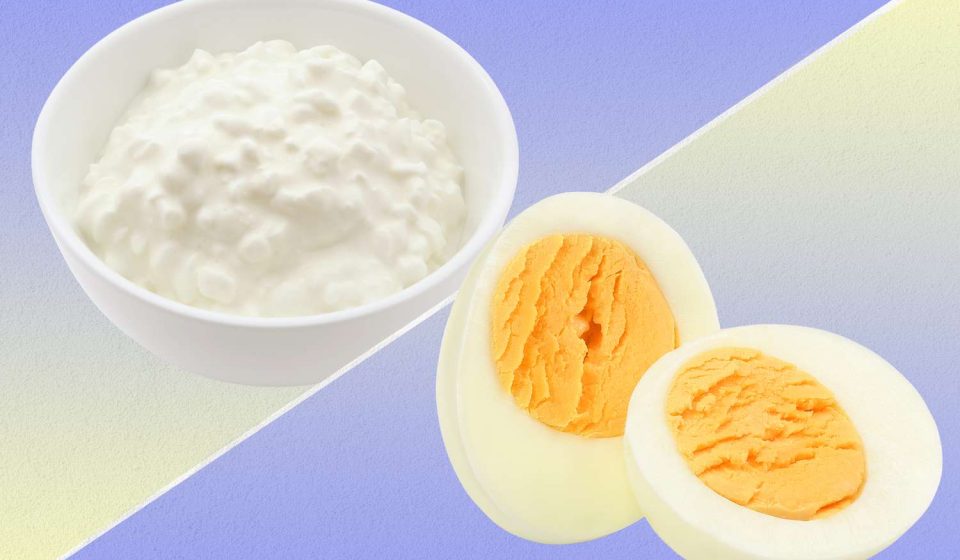

- Hard-boiled eggs and cottage cheese can be part of a heart-healthy diet.
- Choose low-sodium, low-fat cottage cheese to support heart health.
- Pair eggs or cottage cheese with fiber-rich foods like fruits, vegetables, or whole grains for added benefits.
Heart disease is the leading cause of death among adults in the United States. But your risk of developing heart disease can be reduced by adjusting your lifestyle and diet. Small adjustments, like the protein foods you eat, can make a significant difference in your heart health.
Some protein foods contain high amounts of cholesterol, saturated fat, and sometimes sodium, which don’t necessarily correlate with heart health. When it comes to choosing heart-healthy foods high in protein, hard-boiled eggs and cottage cheese can both be part of a balanced diet. But is one better for your heart than the other? We asked dietitians for their opinions. Read on to find out what they had to say.
How Hard Boiled Eggs Affect Heart Health
Eggs are an efficient source of protein, with around 6 grams of protein per egg. But it was once widely believed that because eggs contain cholesterol, they were not a heart-healthy food. “It’s important to remember that dietary cholesterol and blood cholesterol are not the same thing,” says Veronica Rouse, MAN, RD. “Eating foods that contain cholesterol, like eggs, does not automatically mean that your blood cholesterol levels will increase significantly,” she adds.
Dietitians suggest focusing more on saturated fats than dietary cholesterol. Saturated fats have a much stronger effect on raising LDL (“bad”) cholesterol, says Ali McGowan, MS, RD. Eggs are relatively low in saturated fat, providing about 1.5 grams per large egg. “I would be more careful about what you eat with your eggs (like bacon or sausage) than the egg itself,” adds McGowan. Try pairing your eggs with high-fiber, heart-healthy foods, like whole-wheat toast or nuts.
If you eat a varied and balanced diet, you won’t have to worry about consuming too many eggs. “For most healthy individuals, moderate egg consumption (which includes up to about one egg per day) can be incorporated into an overall heart-healthy diet,” says Cici McGuane, MS, CNS, LDN. However, if you already have heart disease or high cholesterol, check with your healthcare provider if you should opt for an alternative like egg whites.
How Cottage Cheese Affects Heart Health
Like eggs, cottage cheese is another controversial ingredient. Its unique texture is not suitable for everyone. There are two factors to keep in mind when incorporating cottage cheese into your diet: sodium and fat content.
“Depending on the variety and brand, cottage cheese can contain a fair amount of sodium, which is important to consider because of its potential impact on blood pressure and overall cardiovascular health,” says McGuane. A ½-cup serving of cottage cheese can contain up to 459 milligrams of sodium, or about 20 percent of the recommended daily limit. Look for cottage cheese options labeled “low sodium” or “reduced sodium.” You can even opt for a no-added sodium variety with as little as 15 mg per ½ cup.
You will also need to pay attention to the fat content of your cottage cheese. “High-fat varieties can also contribute more saturated fat to the diet,” says McGuane. A ½ cup serving of full-fat cottage cheese contains almost 3 grams of saturated fat. That said, you can find cottage cheese at different fat contents, including fat-free, low-fat, and reduced fat, depending on your needs. If you prefer full-fat cottage cheese, consider its fat content when choosing other foods throughout the day.
Hard-boiled eggs or cottage cheese: which is better for heart health?
The short answer is that both can fit into a heart-healthy diet. Boiled eggs and cottage cheese are nutrient-dense, protein-rich foods. However, if you want to get the most protein per serving, cottage cheese is the best option. Just ½ cup of 1% cottage cheese contains 14 grams of protein, more than double the 6 grams of protein in 1 hard-boiled egg.
Whatever your preference, keep sodium and fat content in mind. Since cottage cheese can be quite high in sodium, choose varieties that are low in sodium or even without added sodium. Opt for low-fat or fat-free cottage cheese if you want to reduce your overall fat intake. Ultimately, what you serve with your hard-boiled eggs or cottage cheese may be more beneficial for your heart. “Rather than focusing on choosing one or the other, I would pair one or the other with high-fiber foods like fruits, vegetables, or whole grains, which can help maintain healthy cholesterol levels and overall heart health,” says McGowan.
Other Tips for Choosing Heart-Healthy Foods
- Incorporate more unsaturated fats. “Instead of just trying to follow a low-fat diet, I would tell someone to focus on replacing foods high in saturated fat with unsaturated fat sources such as extra virgin olive oil, avocado, nuts, and fatty fish,” says McGuane.
- Small exchanges add up. “When choosing between similar foods, check the Nutrition Facts label,” says McGowan. Whenever you can, choose low-sodium foods that you eat often, like bread, tortillas, or canned goods. Foods containing less than 140 mg of sodium per serving are considered low sodium.
- Focus on what you can add to your diet. Diets that are too restrictive are unnecessary for heart health and make it difficult to establish lasting habits. McGuane suggests thinking about what you can add to your intake rather than focusing too much on what you should avoid. This includes adding foods rich in fiber, potassium and unsaturated fats to your plate.
- Eat more fiber. When it comes to heart health, fiber is a nutrient that does it all. “Foods rich in soluble fiber and other plant fibers, such as oats, beans, lentils, fruits, vegetables, nuts and seeds, can play an important role in maintaining healthy cholesterol levels and overall cardiovascular health,” says McGuane.
Our expert opinion
Hard-boiled eggs and cottage cheese are high-protein foods that can both fit into a heart-healthy diet. This is good news to help you meet your protein goals while keeping your heart in tip-top shape. Dietitians suggest consuming hard-boiled eggs in moderation and opting for low-fat, low-sodium varieties of cottage cheese. Pairing either with fruits, vegetables, or whole grains optimizes their potential for heart health.
Gn Health