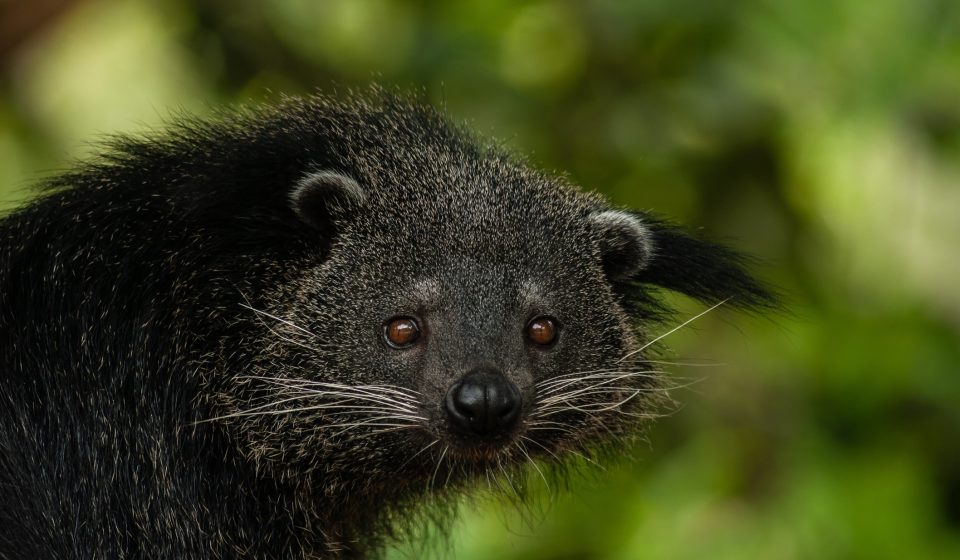
He’s the size of a Labrador, looks like a bear crossed with a pet cat, laughs like a human and smells like popcorn.

Often confused with a strange bear-cat hybrid, the binturong is a secretive mammal native to the dense rainforests of Southeast Asia.
With its shaggy black fur, prehensile tail, and unmistakable buttery scent, this arboreal creature is both distinctive and captivating.
What is a binturong?
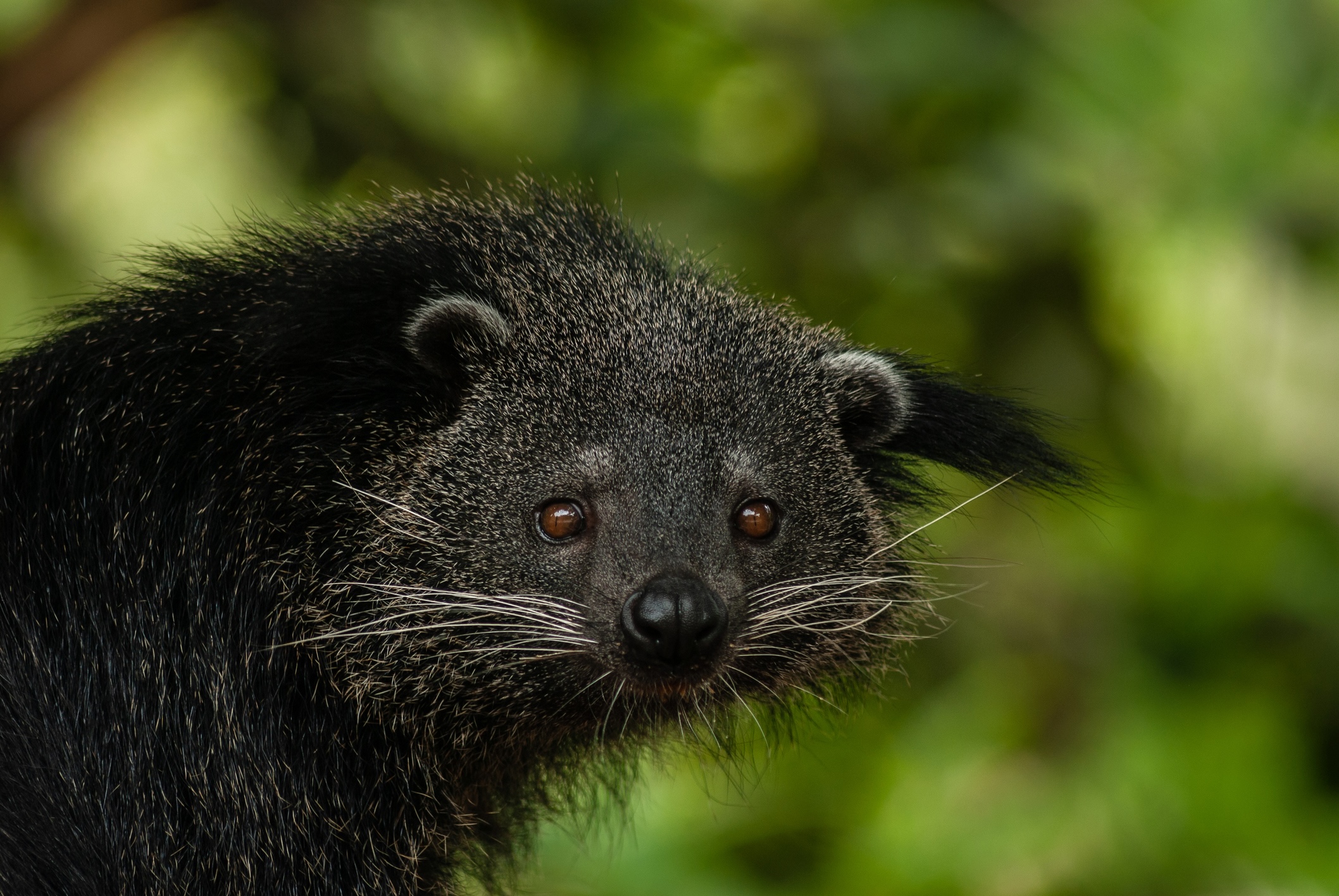
The binturong (Arctic binturong), sometimes called “cat-bear”, is neither a bear nor a cat, despite its misleading name.
It belongs to the Viverridae family – the same family as civets and genets – and is the only species in its genus. These largely solitary animals are most active at night and are distinguished by their distinctive physical traits and unique scent.
What do binturongs look like?
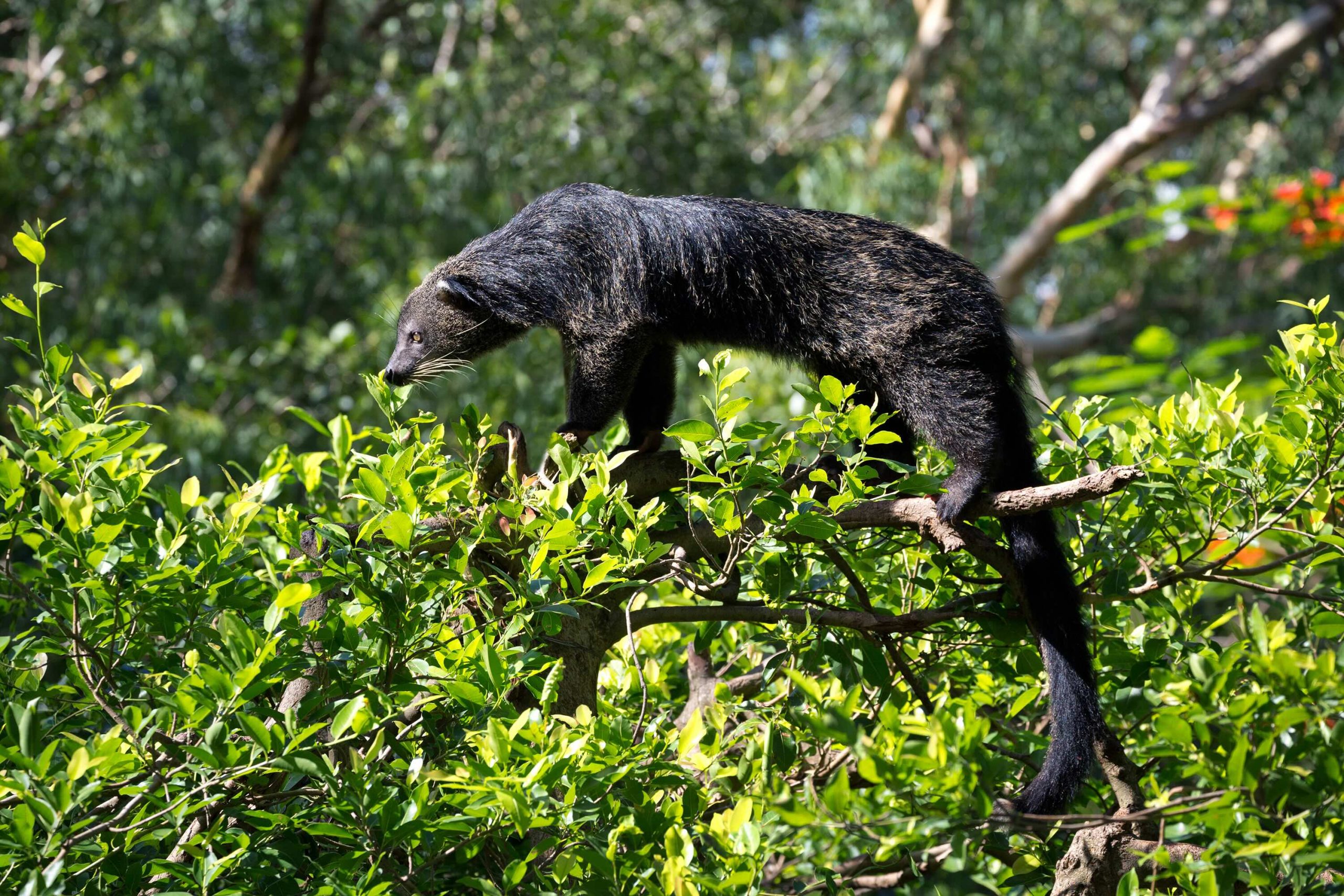
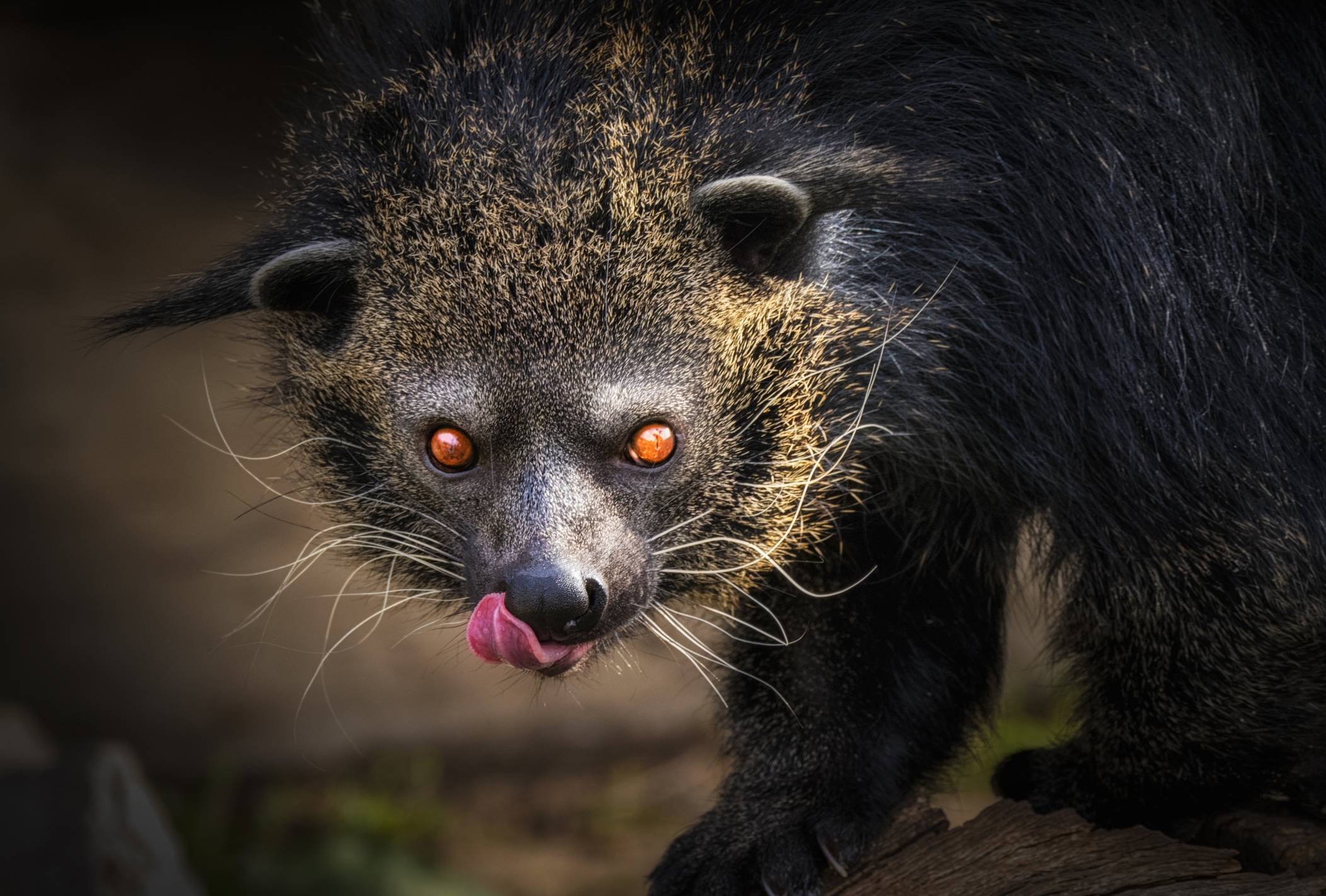
Binturongs have a comical appearance that is difficult to categorize. They have large, muscular bodies covered in coarse, shaggy black or dark gray fur, often with graying hairs tipped with silver.
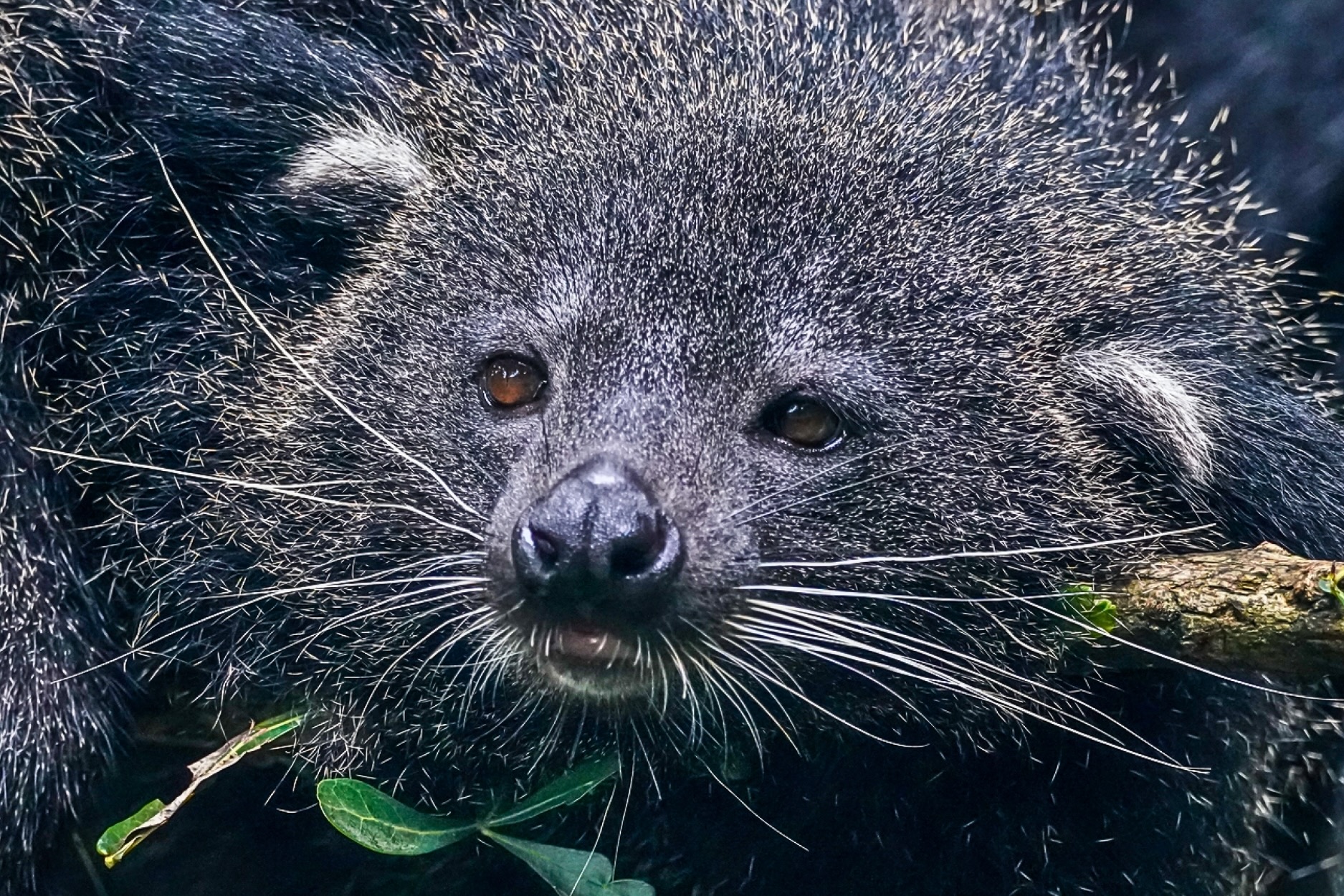
Their rounded faces are framed by long white mustaches and expressive eyes, giving them a somewhat owlish or wise look. Their ears are short and rounded with prominent tufts.
Adult binturongs typically measure between 60 and 96 cm in length, with an impressive tail of similar length – sometimes as long as their body. They generally weigh between 9 and 20 kg, with females generally being larger than males, which is rare among mammals.
Their most striking feature is their prehensile tail – the only one of its kind among Old World carnivores. This tail acts as a fifth limb, allowing binturongs to expertly navigate the canopy, grasp branches, and even hang upside down when feeding.
Where do binturongs live?
Binturongs are native to South and Southeast Asia, with a range extending to countries such as India, Nepal, Bhutan, Bangladesh, Myanmar, Thailand, Malaysia, Indonesia, the Philippines, Cambodia, Laos, Vietnam, and southern China.
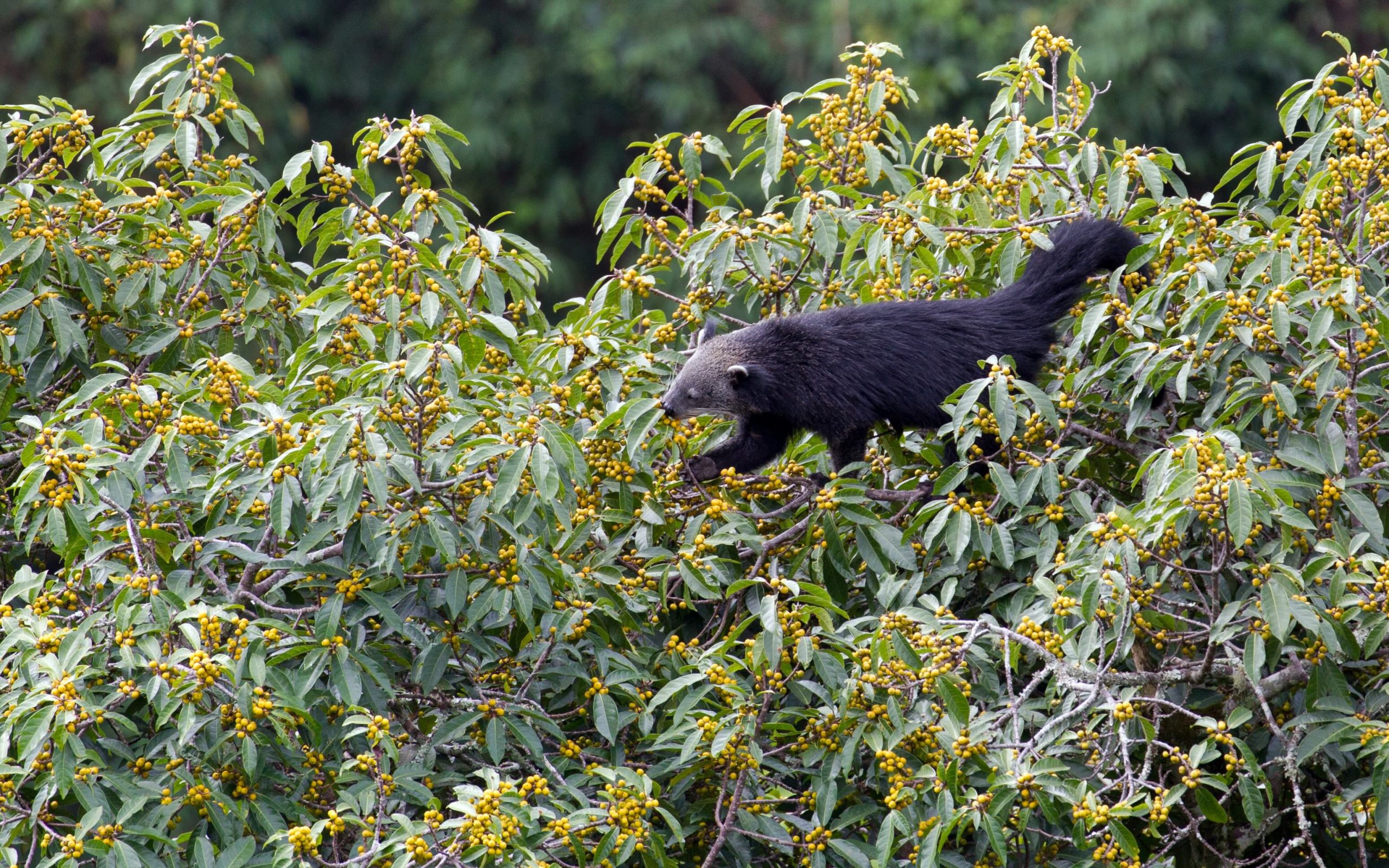
They inhabit tropical and subtropical forests, particularly dense primary and secondary forests with large trees and an abundant canopy. Binturongs are very arboreal and spend most of their time in trees, although they occasionally come to the ground in search of food or to move between trees.
Due to habitat loss, deforestation and hunting, their populations have declined across much of their original range and they are now classified as vulnerable on the IUCN Red List.
What do binturongs eat?
Although part of the order Carnivora, binturongs are omnivores and have a largely frugivorous diet, meaning they eat primarily fruit. Their favorite food is fig, but they also consume other fruits, small mammals, birds, eggs, insects and plant matter.
Binturongs play a crucial role as seed dispersers in the forest. When they eat fruits like figs, they pass the seeds through their digestive tract and excrete them, helping to regenerate and maintain healthy forest ecosystems.
Do binturongs really smell like popcorn?
Yes, it’s not just a myth. One of the most unique characteristics of binturong is its distinctive scent, which many people describe as being remarkably similar to buttered popcorn. This smell comes from a chemical compound in their urine called 2-acetyl-1-pyrroline, which is also produced during the Maillard reaction that gives popcorn, baked bread, and grilled foods their appetizing aroma.
Binturongs mark their territory by dragging their tails and hindquarters across branches and foliage, spreading their unique aroma as a form of communication and territorial marking. Scientists believe this scent may signal reproductive status, warn rivals, or attract mates.
Are binturongs endangered?
Binturongs are classified as vulnerable by the International Union for Conservation of Nature (IUCN). Their numbers are declining due to several interrelated threats:
- Habitat loss due to logging, agriculture and palm oil plantations.
- Illegal wildlife trade – they are sometimes sold as exotic pets or for traditional medicine purposes.
- Hunting for meat and fur in parts of their range.
- Road kills, as they occasionally descend to the forest floor.
Conservation efforts include habitat protection, enforcement of wildlife trade regulations, and education campaigns. Some zoos and wildlife centers are involved in captive breeding programs and outreach to raise awareness of this unusual species.
How do binturongs behave?
Binturongs are primarily nocturnal and solitary, although some studies suggest they may exhibit some level of social behavior, particularly in captivity or during the mating season. They are known to be relatively slow but agile in trees, using their tails for balance and grip.
They communicate using a range of vocalizations, including laughs, growls, hisses and moans. These sounds can indicate anything from contentment to aggression or distress.
Unlike many carnivores, binturongs do not actively hunt. Instead, they forage for fallen fruit or opportunistically eat small animals and insects.
How do binturongs reproduce?
Binturongs have a polygamous mating system, in which a male may mate with multiple females. They are also among the few mammals capable of delayed implantation, meaning that the fertilized egg can remain dormant in the female’s body before implantation and gestation begin. This allows for more favorable timing of births.
Females give birth to litters of one to six young, although two is most common. The gestation period lasts approximately 90 to 92 days, excluding any delay in implantation.
Newborns are blind and helpless at birth and remain in the nest for the first few weeks of life. They are weaned around 6 to 8 weeks of age and become completely independent around 2 to 3 months of age.
Binturongs can live up to 25 years in captivity, although their lifespan in the wild is likely shorter.
In brief: Fun facts about binturongs
- Not a Cat: Although they are called “cat-bears”, binturongs are neither related to cats nor bears. They are more closely related to civets and genets.
- Prehensile Prowess: Their prehensile tails are strong enough to support their entire body weight – a rare trait among Old World mammals.
- Popcorn Scent: That buttered popcorn scent? It is used as a calling card in the jungle.
- Tree Architects: They sometimes build resting platforms in trees from broken branches or leaves.
Main image: Binturong. Credit: Getty
Even more amazing wildlife from around the world
Gn world