HIV prevention drug hailed as major breakthrough, but who has access to it? | Scientific and technological news

A drug injected just twice a year could transform the fight against HIV.
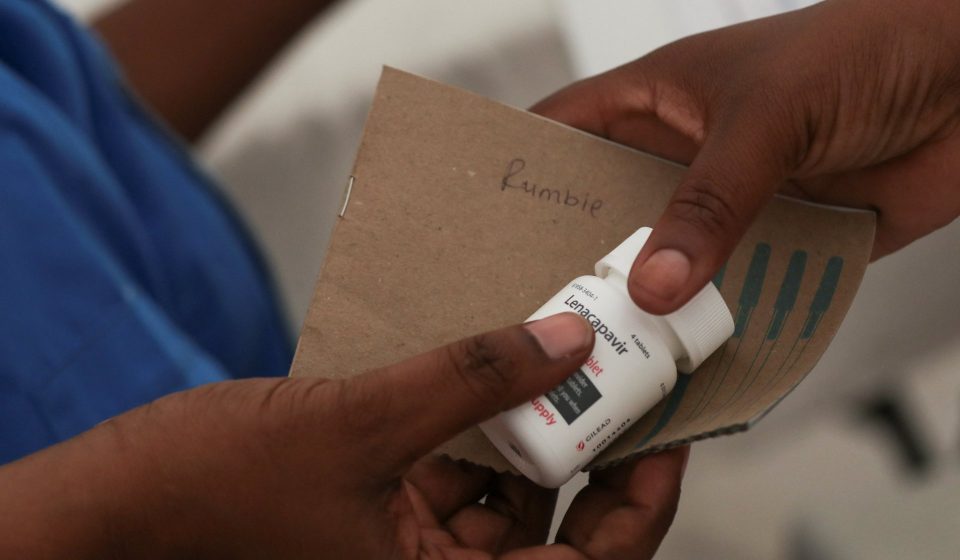
In a clinical trial conducted in 2024 among more than 2,000 young women in South Africa and Uganda, no participants who received lenacapavir contracted HIV.
Recommended Stories
list of 4 elementsend of list
Developed by the American pharmaceutical company Gilead Sciences, this injectable drug can be used to prevent HIV.
“This is the most innovative tool that has reached the HIV field in the last decade, because it is the closest thing to a vaccine,” Carlota Baptista da Silva, global head of HIV at Médecins Sans Frontières (known by its French initials, MSF), told Al Jazeera.
The World Health Organization has recommended the long-acting injectable as an additional form of pre-exposure prophylaxis, or PrEP – a medication intended to reduce the risk of contracting HIV.
But the arrival of this drug comes at a difficult time in the global fight against HIV.
International funding for HIV fell 18% in 2025 to $7.3 billion, its lowest level in almost two decades, according to the United Nations HIV/AIDS program (UNAIDS). This pressure has already affected prevention programs: the number of people receiving drugs to reduce risks has increased from 1.4 million in 2024 to 1.1 million in 2025.
This makes the arrival of a very effective biannual prevention option significant. The question of who can access it is now more urgent.
For MSF, the scientific question has largely been answered: lenacapavir can prevent HIV with remarkable effectiveness.
The question now is whether the rules governing manufacturing, pricing and supply will allow this scientific breakthrough to reach the people who need it.
Why are some countries excluded?
In the United States, lenacapavir costs about $28,000 per person per year. Generic versions should cost around $40 per year.
A generic version is a copy of the original drug made by another manufacturer after the patent holder has licensed the technology. It contains the same active ingredient, but it can be produced and sold at a much lower price.
In June 2025, the U.S. Food and Drug Administration (FDA) approved lenacapavir for HIV prevention, giving patients the option of being injected twice a year. But in several low- and middle-income countries, access to cheaper versions is not expected on a large scale before 2027.
Gilead provides its own version of lenacapavir free of charge to programs supported by the Global Fund and the U.S. President’s Emergency Plan for AIDS Relief (PEPFAR), with deployments underway in countries including South Africa, Kenya, Zambia, Nigeria and Eswatini.
These are not the cheapest generic versions which should cost around $40 per person per year. Gilead has authorized six manufacturers to produce them, with large-scale generic deployment expected in 2027.
At least 26 middle-income countries are excluded from Gilead’s generic deal, MSF says, including countries where HIV infections are rising and some that helped test the drug. Among them are Brazil, Mexico, Argentina and Peru.
“People shouldn’t really help produce the evidence for revolutionary medicine and then find that their country is excluded from access to affordable generics,” da Silva said.
According to MSF, countries excluded from the license accounted for almost 23% of new HIV infections worldwide in 2023.
Gilead has since announced a separate agreement with the Pan American Health Organization, creating a pathway for 14 Latin American and Caribbean countries outside of its generic licensing territory, including Brazil, Mexico, Argentina and Peru.
MSF says this leaves these countries dependent on Gilead rather than being able to automatically purchase cheaper generics.
MSF says it cannot buy the medicine
For more than a year, MSF says it has requested authorization to purchase lenacapavir directly from Gilead for its medical programs, without requiring a reduced price.
“Despite these requests, Gilead has not authorized MSF to purchase this medicine directly,” da Silva said.
This is particularly important in humanitarian emergencies, she says. People displaced by conflict or disaster may struggle to take a preventative pill every day, while sexual violence and other vulnerabilities can increase the risk of contracting HIV.
Daily PrEP pills are already available as an alternative to the injection. But unlike lenacapavir, they must be taken regularly to provide protection. A shot offering six months of protection could be particularly valuable.
“People living in conflict (and) humanitarian crises cannot be the last to benefit from medical innovation,” da Silva said.
Gilead declined Al Jazeera’s interview request due to scheduling constraints. In its emailed statement, the company says its access strategy combines non-profit supplies, royalty-free licenses and regional agreements. He did not respond to questions about why he would not sell his drug to MSF, or why certain countries were excluded from his generics deal.
The company plans to supply enough lenacapavir for up to three million people through 2028 as generic manufacturers ramp up production, with large-scale generic deployment expected in 2027.
MSF says this figure is far from enough, noting that nearly 20 million people worldwide are projected to need access to PrEP to significantly reduce new HIV infections. This includes all forms of PrEP, not just lenacapavir.
But countries excluded from Gilead’s generic licensing agreement could have another option.
Can governments get around patent barriers?
World Trade Organization (WTO) rules allow governments, in some cases, to circumvent a pharmaceutical company’s patent so that cheaper versions of a drug can be made or imported without the company’s permission.
They can also authorize government use of patents and challenge patents they consider weak or unjustified. The 2001 Doha Declaration affirmed the right of WTO members to use such safeguards to protect public health.
Brazil has already used them in the fight against HIV. In 2007, after negotiations with the pharmaceutical company Merck over the price of the HIV drug efavirenz failed, Brazil issued a compulsory license allowing it access to cheaper generic versions of the drug.
Nearly two decades later, activists are urging Brazil to consider using those powers again for lenacapavir if patent barriers prevent affordable access to generic drugs.
MSF says governments excluded from Gilead’s license could consider the same legal safeguards for lenacapavir, including compulsory licensing, government use authorizations and patent challenges.
It also calls on Gilead to ensure that its agreements with generic manufacturers do not prevent them from supplying to countries where patent barriers have been removed through such measures.
For MSF, the issues go beyond lenacapavir. How the drug is made available could determine whether one of the biggest advances in HIV prevention in decades reaches people based on their needs, rather than where they live or what their health system can afford.
“For a humanitarian medical organization, we shouldn’t have to spend more than a year trying to find a way to purchase a WHO-recommended drug,” da Silva said.
Gn Health