Bigger isn’t always better, but when it comes to space exploration, it just might be.
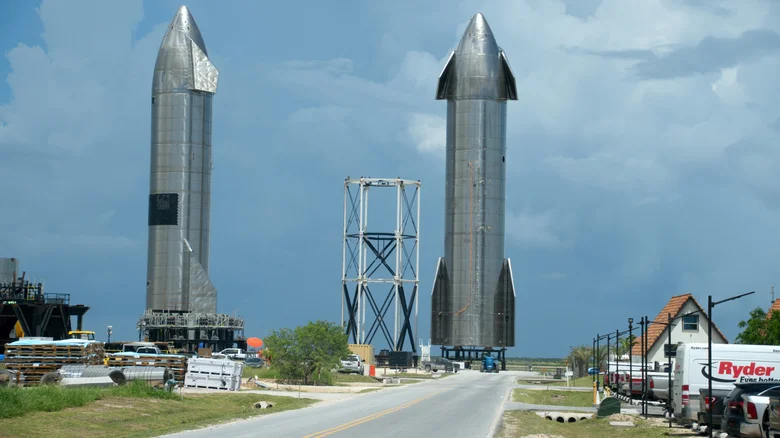
With both stages stacked, the current SpaceX Starship launch vehicle rises to 407 feet. It is taller than the largest known living tree, Hyperion, and a third larger than the Statue of Liberty (pedestal included). It is the tallest rocket ever flown and the most powerful, with a liftoff thrust of 18.1 million pounds-force. During its first full launch in April 2023, exhaust from the booster shattered the concrete launch pad, digging into the earth beneath and throwing debris across 385 acres. This booster was rated at 16.7 million pounds of thrust, slightly less than the September 28, 2026 launch.
Keep in mind that this height covers the entire double-decker vehicle. The lower section, known as Super Heavy, is the 236.2-foot booster that provides initial thrust from the launch pad. Above is the 170.6-foot Starship spacecraft. Although it is immense in size and power, its dimensions serve a greater purpose than impressions alone. SpaceX designed the system to carry huge payloads and eventually transport people and cargo beyond Earth’s orbit. SpaceX also plans to recover and reuse the two stages.
How much energy does Starship produce?
The Super Heavy booster contains 33 Raptor engines, which burn liquid methane and liquid oxygen to generate 18.1 million pound-force of booster thrust. For an interesting perspective, NASA’s Space Launch System produces a maximum thrust of 8.8 to 9.4 million pounds. Once Super Heavy separates, Starship will continue, powered by three regular Raptor engines and three Raptor Vacuum engines designed to operate in space. SpaceX estimates the thrust of the upper stage at around 3.5 million pounds-force. Only the booster figure represents the takeoff thrust.
The rocket’s immense power must do more than fight gravity to lift heavy payloads. Super Heavy has a listed propellant capacity of 3,650 metric tons, and Starship holds an additional 1,600 metric tons. That’s 5,250 tonnes on top of everything else. With all that weight, the world’s most powerful rocket still depends on staging, highly efficient engines and careful pre-launch planning.
Can Starship go to the Moon without refueling?
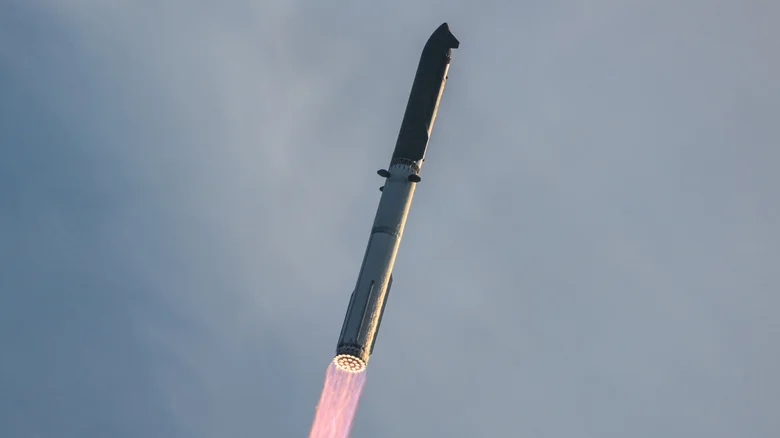
Despite all of today’s technological advances, Starship will still need to refuel in Earth orbit, at least when it comes to NASA’s planned moon landing missions. SpaceX’s lunar lander burns a significant portion of its propellant just to reach orbit and will need to refuel.
SpaceX and NASA’s game plan includes several specialized vehicles, including a propellant depot that launches first, followed by tankers that deliver fuel. The lunar lander starts last, docks with the depot and picks up the booster.
All of this takes place before the crew launches aboard NASA’s Orion spacecraft (part of the Artemis program), after which they will encounter the Starship lander prepositioned in Earth orbit before Starship pushes the two spacecraft into lunar orbit. The Starship lander will then carry two crew members to the surface of the Moon and back. Transporting and storing extremely cold propellants in space poses a herculean technical challenge. Planned steps, refueling and a complex support system are therefore necessary for everything to succeed.
Gn tech