Muscle health is linked to our ability to fight disease and our longevity. But healthy muscles are about more than the size of a bicep or our weight.
An international team of kinesiologists and nutrition experts recently urged doctors to pay more attention to skeletal muscle quality and the muscle-to-fat ratio as key to “metabolic regulation, immune function, and overall vitality and functioning.”
“Estimating muscle health could be as important as measuring a person’s blood pressure,” said longevity expert Dr. Nicolaas Deutz, professor in the Department of Kinesiology and Sports Management at Texas A&M University and co-author of the experts’ review. Kinesiology is the study of physical activity and body mechanics.
Healthy muscles not only help you move safely, but they also serve as the body’s primary blood sugar storage system, which maintains an active metabolism and reduces inflammation in the body.
Muscle health is typically associated with muscle size in younger people, but that relationship becomes less clear as we age, Deutz said.
In fact, mass is only part of overall muscle health. For example, women generally have lower overall muscle mass than men, but their muscle health is generally comparable to men.
A more complete picture of muscle includes strength, balance, physical function, activity levels and the amount of fat stored in the muscle itself, said Dr. Fatima Cody Stanford, a physician-scientist in obesity medicine at Mass General Brigham.
How to prevent muscle loss
There is growing awareness of the role muscle health plays in longevity and metabolic diseases such as type 2 diabetes, particularly following the phenomenal popularity of GLP-1 drugs. Drugs such as Ozempic and Zepbound have been shown to improve blood sugar, blood pressure, and cardiovascular risk, but they are also linked to the loss of fat and lean mass, including skeletal muscle.
Stanford, who is also an associate professor of medicine and pediatrics at Harvard Medical School, said people taking GLP-1 need adequate nutrition to preserve muscle function.
“As a person loses a lot of weight, the body needs less muscle to support that weight, and reducing fat in the muscles can improve muscle quality and function,” Stanford said. “At the same time, older adults, people who are frail or have low baseline muscle mass, and people who lose weight quickly deserve special attention to strength, function, protein intake, and resistance exercise.”
Getting enough daily, high-quality protein — including fish, poultry, eggs, dairy, tofu, beans, lentils, nuts and seeds — helps protect against muscle loss, Stanford said.
The U.S. Dietary Guidelines encourage people to prioritize protein with nutritious, minimally processed foods at every meal, recommending 1.2 to 1.6 grams of protein per kilogram of body weight.
Staying active — working in the yard, walking or doing weight training — strengthens different muscle groups, Deutz said.
If lifting heavy weights isn’t appealing, resistance exercises can effectively preserve muscle strength and function, especially during weight loss.
“Body-weight exercises, resistance bands, machines, or supervised strength work may all be appropriate depending on the individual’s mobility, fitness, and medical history,” Stanford said.
How to measure muscle health
Muscle power is the ability to produce force quickly, and grip strength is one of the simplest ways to measure it.
“An often overlooked consideration is muscle power — the ability to rapidly produce force, which declines earlier and more rapidly with aging than muscle strength,” said Stephen J. Carter, Ph.D., associate professor in the department of kinesiology at Indiana University Bloomington School of Public Health. “From a practical point of view, muscle power is more relevant to daily life than simple strength.”
Grip strength measures the force generated when squeezing a hand-held tool called a dynamometer.
Although “weak” strength depends on factors such as age and BMI, an in-depth analysis of the grip strength of more than 20,000 older men and women defined it as less than 57 pounds for men and 35 pounds for women.
Fortunately, targeted resistance training can improve the numbers.
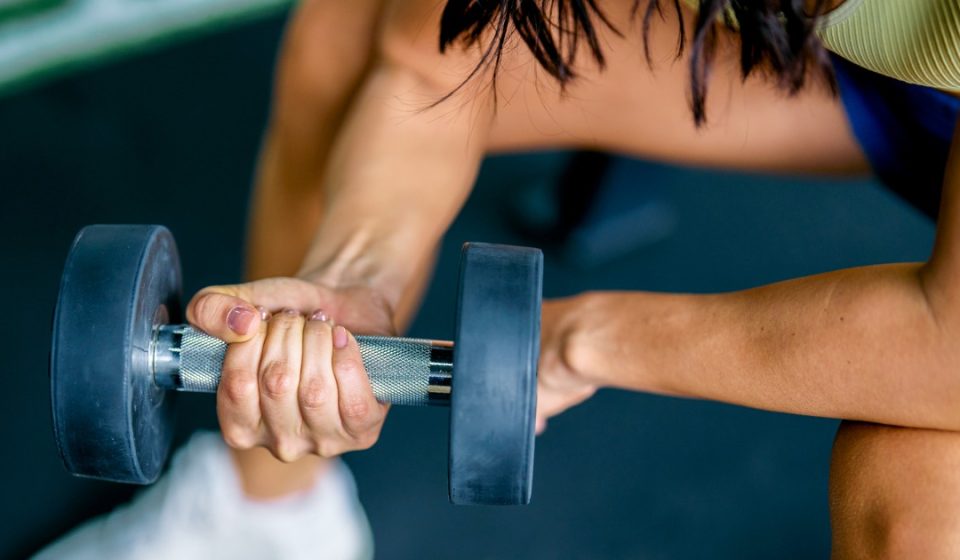
Carter recommended resistance training, such as free weights, weight machines, resistance bands, or bodyweight exercises like push-ups, two to three times per week, gradually progressing to higher intensity to build more muscle.
Other functional tests can help assess broader endurance, power and mobility:
- The 6-minute walk test: measures the distance a person can walk in six minutes. It is an indicator of pulmonary and cardiovascular fitness.
- The Timed Up and Go test: assesses fall risk and mobility and can easily be done at home.
- The 30-Second Chair Stand Test: Tests lower body strength by counting the number of times someone stands up from a chair in 30 seconds without using their arms.
- The 5-Rep Sit-Stand Test: Measures lower body strength and mobility by timing how quickly a person can complete five repetitions from sitting to standing without using their arms. It is a measure of balance, muscular strength and flexibility.
Gn Health