How ICE raids in Kansas meatpacking country sparked fury – and turned voters against Trump | Kansas

J.Osé Del Real looked out at the crowd from a park stage, toward hundreds of his neighbors with angry signs under their arms, expressing anger at immigration agents who had descended on their town and begun rounding up their friends and family. His daughters, in the front row, were crying.
Del Real, an Army veteran who served two tours in Iraq, had not voted in a decade. He thought it wouldn’t matter in this ruby red corner of Kansas. But the midterm elections were just weeks away. He draped an American flag over his shoulders, put on his Iraq veteran’s cap and ended his speech with a message: “None of this matters if you don’t vote. Let’s go vote.”
They did it. That county and two of its southwest Kansas neighbors, Republican strongholds where a steady stream of immigrants settled over the decades to work in feedlots and slaughterhouses, have swung wildly to the left. The shift elected a Democratic U.S. senator from Kansas for the first time in nearly a century, signaling the limits of Donald Trump’s aggressive deportation agenda.
Since Democrats regained control of Congress with a decisive rebuke of Republicans, Trump has sent mixed messages about how he plans to handle immigration enforcement in the future. He suggested his approach to deportations was too harsh, but also named hard-liner Stephen Miller as the new White House chief of staff. Both parties will recalibrate their approach before the next presidential campaign.
Here in Kansas, the late September raids set off a whirlwind of anger, turning those who were apathetic, like Del Real, into determined voters.
Masked officers in tactical gear knocked on doors before dawn. They stopped cars in the middle of intersections. Businesses closed their doors. Families were afraid to leave their homes. The children stopped going to school. Some filmed themselves live during their detention. One man begged “God, help me” in Spanish, his hands shaking, as he asked everyone watching to let his family know.
Resistance hasn’t come just from Democrats or the Latino population, which makes up about two-thirds of Dodge City. Kansas Republican Sen. Roger Marshall, who would lose re-election to Adam Hamilton, issued a statement imploring the administration to consult with local authorities before launching raids.
Del Real regrets not voting in 2024, when Trump returned to power promising mass deportations.
“We had to see it in front of us,” Del Real said. “I had to see him in the flesh.”
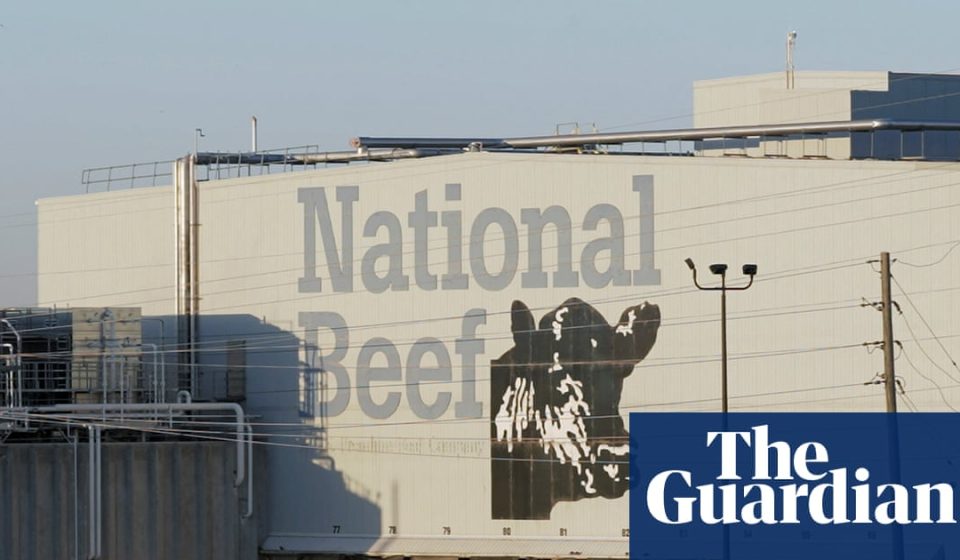
This corner of Kansas produces much of the country’s beef. The gates leading to Dodge City boast of being the “Queen of Cow Towns.” Its main street is named after the classic western set here, Gunsmoke. Murals celebrating cowboy history mingle with evidence of an evolving culture: storefronts displaying quinceañera dresses, Mexican bakeries, town signs printed in Spanish and English.
Del Real’s family came from Mexico when he was in kindergarten. Like most here, they came to work. The region – Dodge City and the region’s other hubs Garden City and Liberal – is known as the Golden Triangle of Meatpacking, responsible for about a quarter of the United States’ beef supply.
Some here thought their importance to feeding the country might spare them the administration’s expulsion campaigns, said Amy Soberanes, a 25-year-old local organizer.
Soberanes, the daughter of Mexican immigrants, said she and others have been trying for years to get people involved — especially their younger Latino neighbors.
But from rural Kansas, the immigration raids in places like Minneapolis and Chicago seemed abstract.
Then they saw their own streets in videos on social media.
People were furious, said Soberanes, who feared the daily protests would spiral out of control. They told people not to slash tires or break windows, to store their anger and express it on election day.
“We will see them at the polls,” she remembers repeating.
His phone rang and rang. People she had pestered to vote for years were asking: How do I register?
“If ICE hadn’t come, we would still be 100 percent red,” she said. “And so I thank Donald Trump for sending immigration here.”
Answers on immigration raids never arrived
No one knew the immigration officers were coming.
Dodge City Commissioner Rick Sowers said he and other city officials found out about it like everyone else, through social media or masses of unmarked trucks on their neighbors’ lawns.
They struggled to get answers from the federal government – who they were looking for, who was in charge, how long they would stay – and never got there.
The Trump administration released statements naming five “heinous criminals” who it said had been arrested. But the Wichita Eagle dug deeper into that claim and found that none of those people had been apprehended during that surge: four had been deported months before and the fifth was already in prison, according to the newspaper.
The agency said it arrested 104 people from southwest Kansas.
Local officials still have never seen a list, Sowers said.
The local Republican chairman, Scott Fischer, who describes himself as a supporter of strong borders, was surprised by the intensity of the operation.
“There was a bit of staging,” he said. “I don’t know why it was like that.”
He said he still considers the county red — he voted, narrowly, for Republican gubernatorial candidate Ty Masterson. The Associated Press announced that race Thursday: Masterson lost to Democrat Cindy Holscher.
But some Dodge City Republicans abandoned the party in the U.S. Senate race.
Russell Arben Fox, a political science professor at Friends University in Wichita, said such dramatic changes could not have happened without some moderate white Republicans changing their minds.
More than half of Kansas voters in the Senate race disapprove of how Immigration and Customs Enforcement (ICE) handles its job, according to The AP Voter Poll, a survey of more than 100,000 midterm voters. This is consistent with the 61% of voters who say this nationally.
Most Latino immigrants here are loyal, hard-working and family-minded people — which fits right in with Kansas’ conservative values, Fischer said, so local Republicans tend to have a nuanced view of immigration.
Some public officials have been calling on the federal government for years for reforms to provide a path for these workers who drive the region’s economy.
“Generally speaking, mass evictions are not practical,” Fischer said. “When we say send them all home, what does that mean? Who are they?”
Residents of Dodge City rallied to help during raids
For many here, “them” this time meant relatives and friends. In this small town, almost everyone is connected to others, so they did what they could to help.
Oscar Soto delivered food to people who were afraid to leave their homes during deportation operations.
He started calling it “Black Week” after the Black Death. That’s what it felt like, a plague that had come suddenly.
His mother came from Mexico, he said, and even though she is here legally, she was terrified.
“It seemed unreal,” he said. “It was things that had never been seen here, and it was day after day.”
He works in a family-owned grocery store and hung a garland of flags from around the world above the counter when he opened. Most customers come from Mexico and Guatemala, he said, but he wanted to point out that the store is for everyone.
Then he hung a large American flag from the ceiling. What this means to him is that anyone, from anywhere, can come here, work hard and build a life without fear.
This belief in the American dream was shaken for him with the arrival of ICE.
He therefore registered for the first time on the electoral lists at the age of 39.
He waited in line to vote, amazed by the number of young Latino voters waiting alongside him.
Gn headline