One afternoon about a month ago, my husband, Shawn, and I were in the kitchen admiring some of our 8-year-old daughter’s schoolwork. We noticed that his writing had improved a lot and we were truly impressed.
Later, I found Zoë reading in her room with a shy little smile on her face. I recognized that smile. It’s the one she gets when she’s quietly proud of herself. I had the impression that she heard us talking about her. If we had told her to her face, she might have filed it among the things parents are supposed to say. But hearing us seemed to give those praises a different weight.
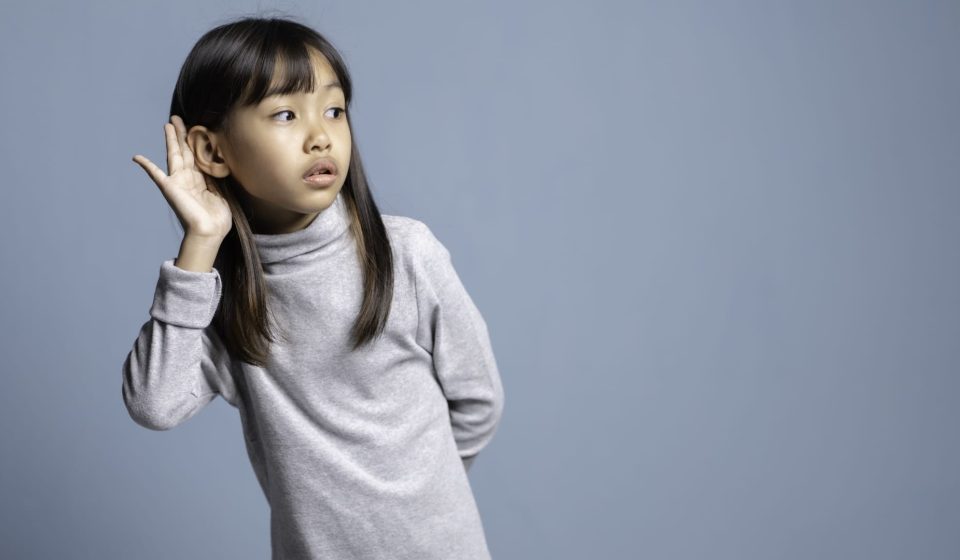
My children, and many of their peers, are world-class spies. It might seem like they’re ignoring a lecture happening right in front of them, but then they pick up on every word when I’m talking to another adult in the next room.
You might be inclined to tell your children not to listen at doors. This is behavior that is generally considered rude or impolite. But I think it’s misunderstood. I love that my kids are so observant, and I think embracing this is one of the most important ways to build their resilience and optimism.
As a positive psychology researcher, I have spent the last 15 years studying the power of optimism and how fostering it is the key to raising more resilient children with better problem-solving skills and better physical and mental health. I wrote my latest book, Resilient Optimism, because I wanted people to understand that optimism is not something we are born with. It’s something we can develop through our daily actions, even when life is hard.
What children hear can help shape what they think about themselves and what is possible. Optimism is not a fleeting feeling. This is essential to their future growth and success. We teach our children to cultivate it by example, especially in the way we talk about our own daily efforts, failures, and joys, especially when we don’t realize they are listening.
1. I delight in my children when they are within earshot
Research shows that children learn from conversations in which they are not involved. A 2026 study published in Child Development found that 5- and 6-year-olds who heard an adult praise their behavior by asking questions were more likely to ask a question themselves.
Another study found that children who heard adults describe a generous child as “nice” were more likely to share.
These studies examined children hearing praise from others, not themselves. But the lesson is important: Children don’t just learn what adults tell them to value. They also learn from what adults appreciate in others.
When I was little, my mother noticed something in the playground. While the children were playing, some mothers complained about the mess in the rooms and their poor listening skills. Others spoke of the kindness or efforts of their children. My mother saw how children seemed to shrink or grow depending on what they heard. She decided to be a mother of the second type. Years later, when she told me this story, I remember thinking: I want to be that kind of mom too.
Make your appreciation authentic and specific. “You should have seen how he got stuck with that math problem after getting it wrong twice” teaches something different than “He’s so smart.” With our 12-year-old son, I recently made a point of telling Shawn how impressed I was that Leo stuck with a challenging social studies project, even though it didn’t turn out the way he had hoped. I wanted him to hear that what impressed me was not the result, but his willingness to keep trying.
When children hear us celebrate their efforts and progress, we show them that their actions matter. This is at the heart of optimism.
2. I talk openly about how I deal with setbacks
I think many of us tend to hide our stress to protect our children. But if they only hear about our victories, they miss an important lesson: how to respond when things go wrong.
This does not mean that we are offloading the worries of adults to them. This means allowing them to hear how we work despite manageable frustrations.
If I’m nervous about a presentation, I might say to Shawn, in front of our kids, “This really matters to me and I want to do a good job.” I’m going to practice tonight to feel more prepared.
My children have heard me name a difficult emotion, connect it to something meaningful, and identify the next step. Several times recently they’ve said something empathetic like, “Oh Mom, I’m so sorry,” and then stayed engaged in the story to see what I was going to do about it.
Resilient optimism is not about pretending everything is okay. It means, “Yes, this is hard, and here’s what I can do next.” » When our children hear us react this way, they learn that setbacks don’t have to leave them helpless.
3. I celebrate small joys out loud
In my family, we’re good at celebrating big milestones like birthdays, promotions, and good report cards. But I want my children to know that ordinary days are also full of moments worth celebrating.
As of 2021, I send Shawn a text before bed with three or four favorite moments from my day. I started practicing during the blur of the pandemic, when I consciously knew there were good moments during the day, but I was so tired I probably wasn’t registering them in my brain.
Now, more than 1,500 texts later, they’re a time capsule of our family: a surprise hug from Zoë, a competitive game of pickleball with our son Leo, or something funny at dinner.
Now I look back on some of those moments with Shawn when the kids are within earshot. “Remember how much we laughed last night?” Sometimes they participate, sometimes they just listen.
Our brains are good at spotting problems, so small joys can be overlooked. When our children hear us celebrate them, they learn to notice what is going well. This habit helps maintain optimism, even when things are difficult.
We spend so much time thinking about what to say to our children. But they also learn from what we tell everyone. I can’t stop thinking about Zoë’s little smile. She hadn’t asked for encouragement that afternoon, but she had heard something important: that her hard work was paying off.
This is the optimism I want my children to pass on to the world. I want them to believe that their actions matter and that good things are possible. I want them to know that ordinary days hold moments worth celebrating and that when life is difficult, there is always something to do, because no challenge is ever truly insurmountable.
Michelle Giélan is a positive psychology researcher, former CBS News anchor, and the bestselling author of “Resilient Optimism: The Science of Sustaining a Positive Mindset in Tough Times” and “Broadcasting Happiness.”
Gn Health