Now that measles is officially back Some Americans in the United States are wondering: Do adults need a booster shot?
In general, experts say, the answer is no.
“Most people are protected without receiving a booster” because they have been vaccinated or had measles when we were kids, said Dr. Richard Martinello of the Yale School of Medicine.
The United States, Mexico and Bolivia lost their measles-free status this week after stubborn epidemics erased decades of progress. Last year, Canada lost its measles elimination designation.
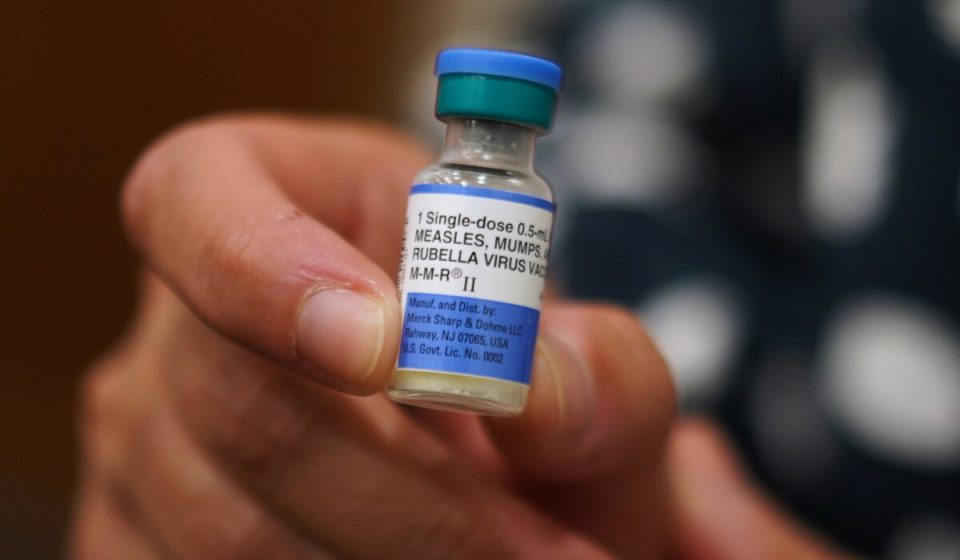
Doctors say getting two doses of the measles, mumps and rubella, or MMR, vaccine is the best way to protect against one of the most common diseases. contagious virus in the world. The vaccine generally protects people for life, as does having contracted the disease. Americans born before 1957 are considered to have “presumptive evidence” of immunity, because almost everyone at the time I had measles during childhood.
This article is part of AP’s Be Well coverage, focusing on wellness, fitness, nutrition and mental health. Learn more Be well.
For some people, boosters may be a good idea
But doctors say some people should consider getting booster shots.
One group is healthcare workers born before 1957 without proof of immunity. They are more likely than the general public to come into contact with people with measles and can therefore contract it or even pass it on to vulnerable patients.
Adults vaccinated between 1963 and 1967 might also want to think about boosters. During those years, some children received an inactivated vaccine using a killed version of the virus, which is less effective than the current vaccine containing a live, weakened virus. Doctors said people who know they have received the inactivated vaccine or are unsure should receive at least one dose of the live MMR vaccine. One dose is 93% effective in preventing measles, while two doses provide 97% protection.
Until 1989, a single dose was the norm. It is now recommended that adults receive at least one documented dose of MMR. Two doses are recommended for some people in high-risk groups who do not have other evidence of immunity.
“People who have not received a vaccine should get vaccinated if they were not born before 1957,” said Dr. Joshua Sharfstein of the Johns Hopkins Bloomberg School of Public Health. “If they have only had one injection, they may want to consider whether they are in a risk group for a second injection.”
This risk group, he said, includes people in school, health care workers, international travelers or people living with family members with weakened immune systems. In places with active measles outbreaks, health officials sometimes recommend that everyone get two shots, Sharfstein said.
For people who have only received one injection, especially in an area where measles is circulating, “it’s always a good idea to discuss with your doctor whether another injection is necessary,” Martinello said.
Tracking your vaccination status
But what if you don’t know how many vaccines you’ve received or even if you’ve been vaccinated?
The Centers for Disease Control and Prevention suggests asking your parents or doctor, checking with your high school or college health department or contacting previous employers that required vaccinations. You can also try contacting your state’s health department; some states have registries that include adult vaccines.
If you’re still unsure of your vaccination status, you can talk to your doctor about an MMR immunity blood test that can show if you have antibodies to measles. But Martinello said that’s not an ideal measure of your protection against the virus. Although the test is accurate, he said, scientists don’t know how to perfectly tie the result to the level of protection a person might receive.
Regardless, doctors said getting a booster shot just to be sure won’t hurt you unless you’re in a group that’s not supposed to get the vaccine at all, like pregnant women.
Now that measles is circulating in the United States, doctors say it’s crucial to take steps to protect yourself.
“Now is the time to not only check for yourself, but also encourage others to make sure they are properly vaccinated,” Sharfstein said. “Too many people took measles for granted…or just didn’t think about it. But now it’s something to think about.”
___
The Associated Press Health and Science Department receives support from the Howard Hughes Medical Institute’s Department of Science Education and the Robert Wood Johnson Foundation. The AP is solely responsible for all content.
Gn Health