Skip to content
-
Subscribe to our newsletter & never miss our best posts. Subscribe Now!
Today's News. Tomorrow's Perspective. Today's News. Tomorrow's Perspective.

Deliver fast, factual, and easy-to-understand news covering global events, technology, business, science, AI, health, entertainment, and lifestyle.

Today's News. Tomorrow's Perspective. Today's News. Tomorrow's Perspective.

Deliver fast, factual, and easy-to-understand news covering global events, technology, business, science, AI, health, entertainment, and lifestyle.

  • Home
  • Breaking News
  • Business
  • Sports
  • Health
  • Politics
  • Technology & AI
  • World
  • Home
  • Breaking News
  • Business
  • Sports
  • Health
  • Politics
  • Technology & AI
  • World
Close

Search

Subscribe
I am an astronomer. Here's why Elon Musk's planned million satellites could be a really bad idea
Business

I am an astronomer. Here’s why Elon Musk’s planned million satellites could be a really bad idea

jack colman
By jack colman
November 29, 2026 2 Min Read
Comments Off on I am an astronomer. Here’s why Elon Musk’s planned million satellites could be a really bad idea

The news that SpaceX has received permission from the US government to launch a million satellites into orbit is potentially catastrophic for astronomy, but could also have serious and wider global consequences.

In terms of astronomy, the impact could be disastrous.

There would be 60 times more satellites than there already are in our Starlink-filled sky and these data center satellites would have to be considerably larger and therefore much brighter.

They are also planned for higher orbits, meaning they will remain visible longer after sunset.
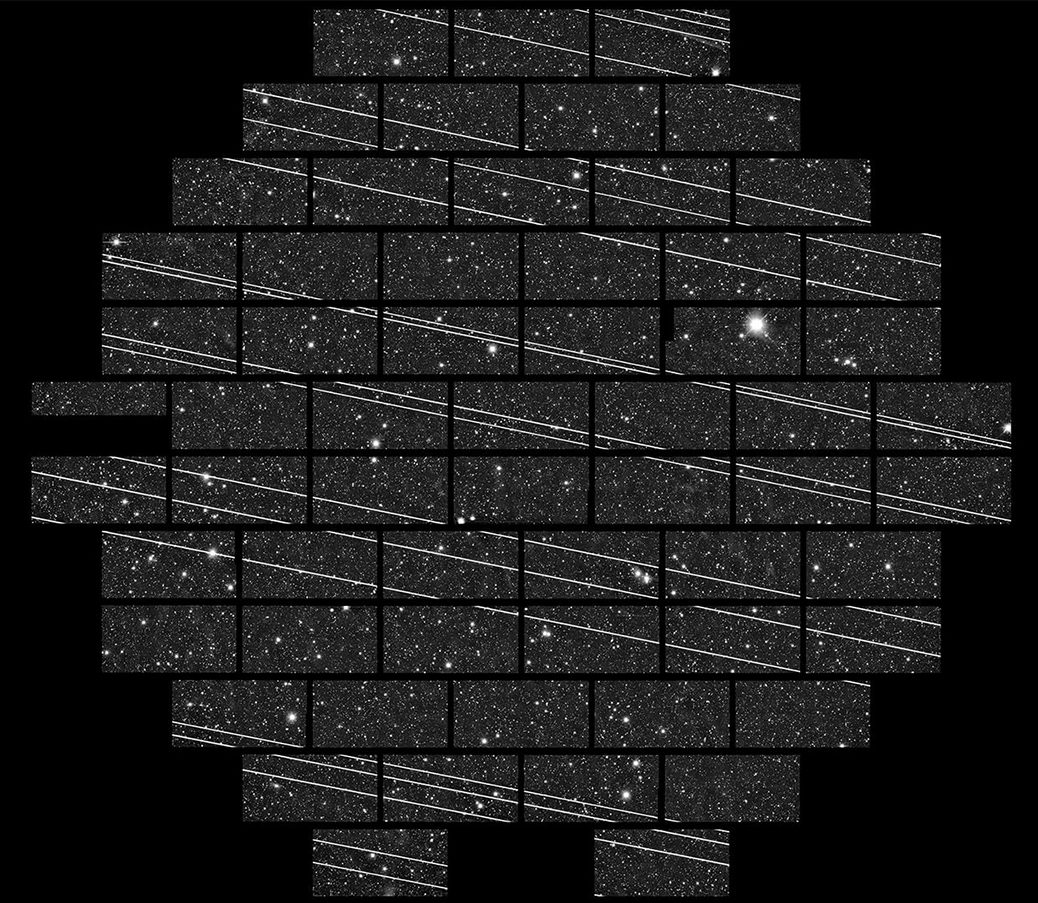
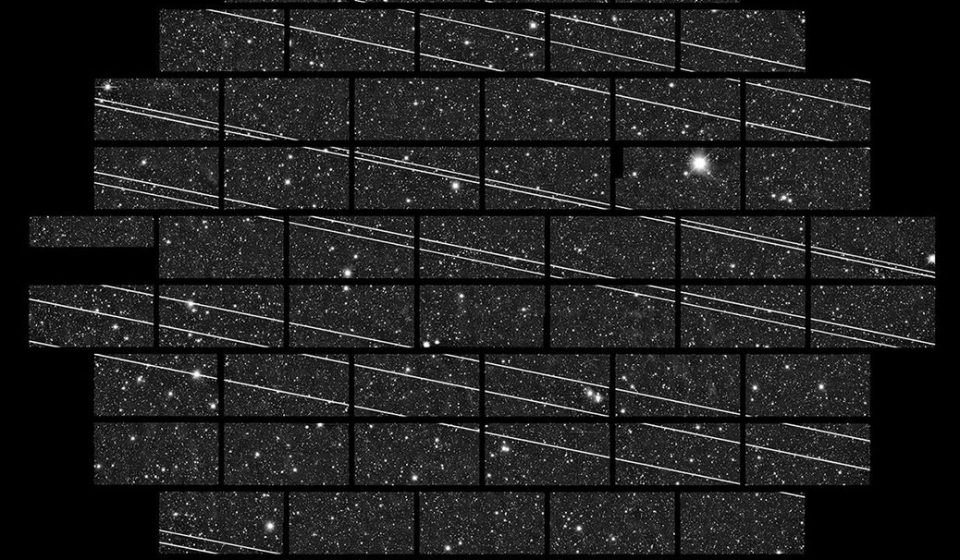
A 333-second exposure captured using the Blanco 4m telescope at the Cerro Tololo Inter-American Observatory (CTIO) shows 19 streaks that astronomers have attributed to Starlink satellites. Credit: NSF National Optical-Infrared Astronomy Research Laboratory/CTIO/AURA/DELVE

The result could be a dramatic reduction in the amount of astronomical observations possible from anywhere on Earth.

Putting so many large satellites into orbit also poses enormous risks.

Orbital space is already so crowded that active traffic management is necessary to avoid collisions.
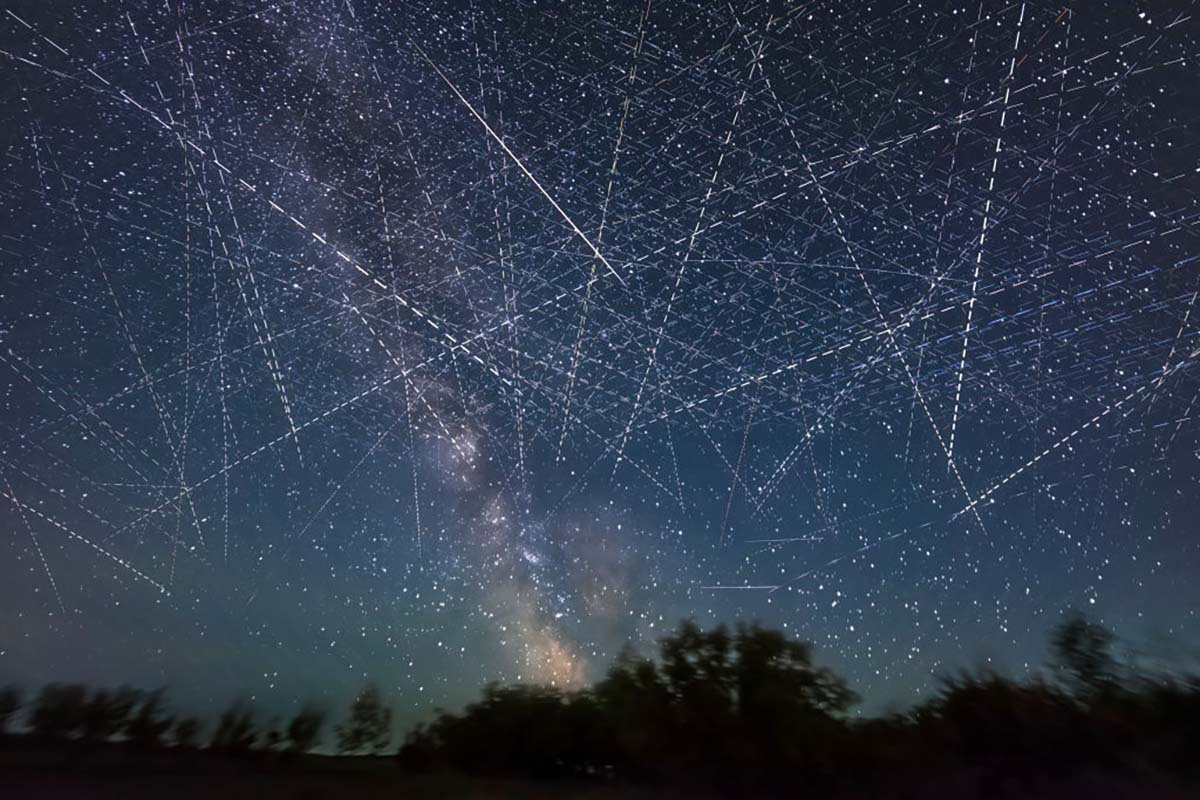
Exposures taken over 30 minutes showing the passage of artificial satellites in the night sky. Credit: Alan Dyer/VWPics/Universal Images Group via Getty Images

With a million satellites, this system should be exceptionally efficient.

Even a single collision could generate debris, which could then collide with other satellites, creating even more debris and setting off a chain reaction.

This is known as Kessler syndrome and could eventually render low Earth orbit unusable, potentially for centuries.
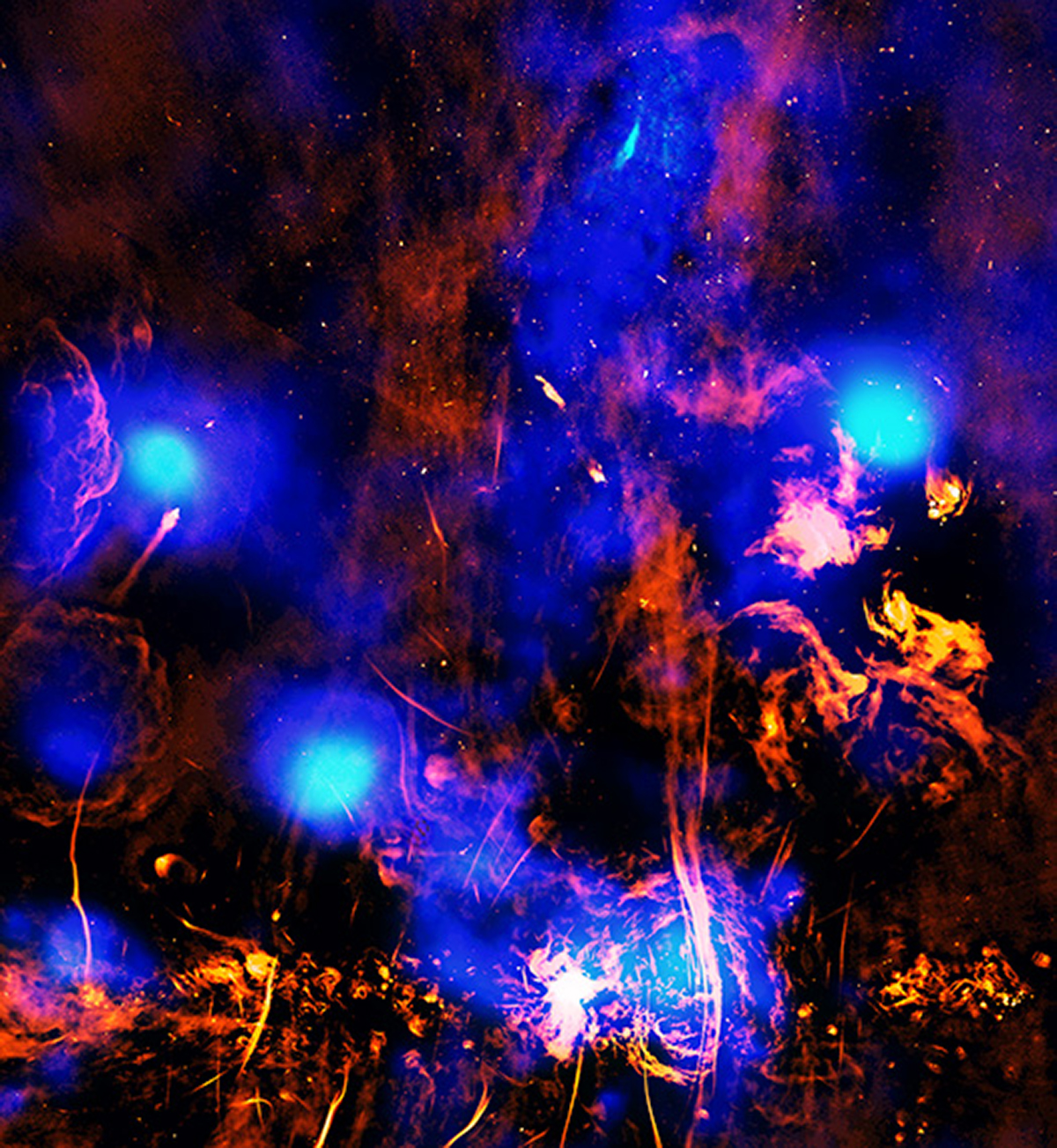
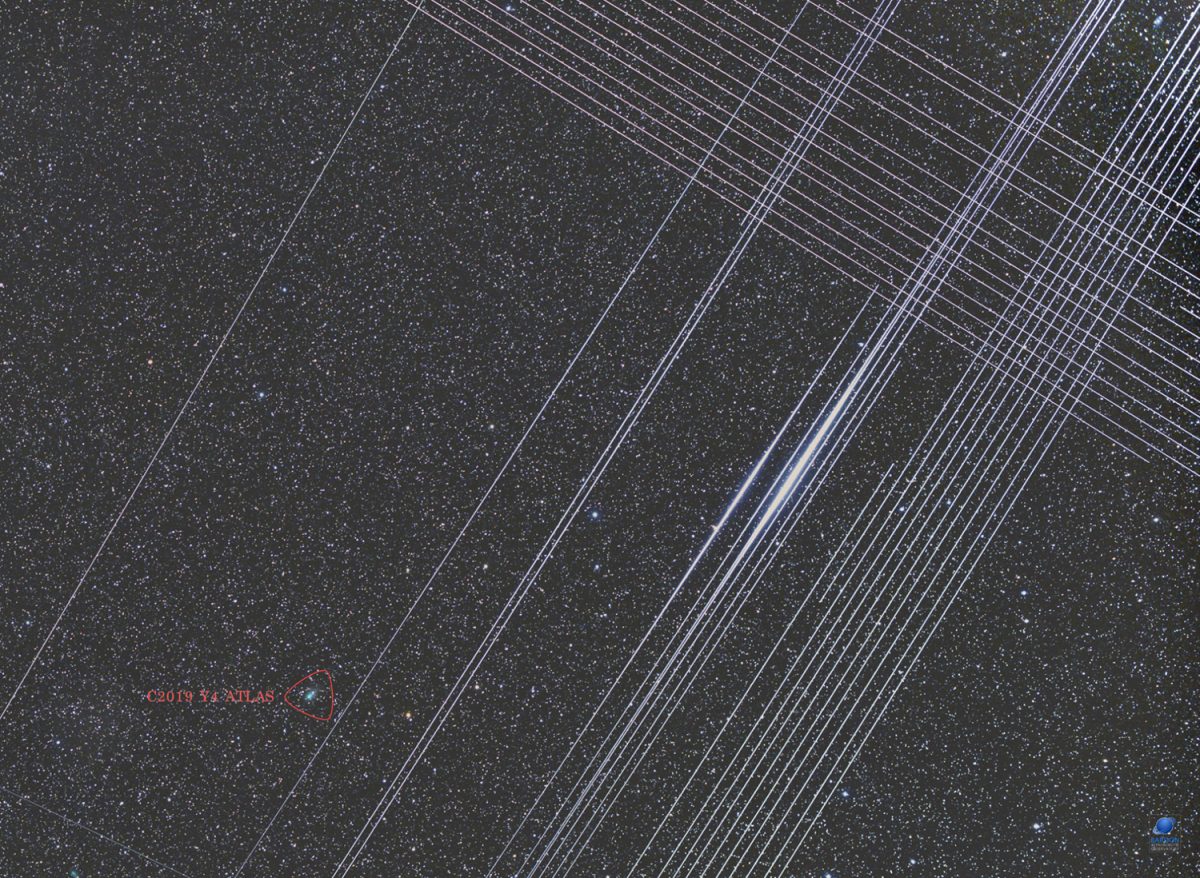
Image of the region near the center of the Milky Way showing the supermassive black hole Sagittarius A*, a chimney and vent channeling cosmic matter outwards. Captured by the Chandra X-ray Observatory and the MeerKAT telescope. Credit: Radiography: NASA/CXC/Univ. by Chicago/SC Mackey et al. ; Radio: NRF/SARAO/MeerKAT; Image processing: NASA/CXC/SAO/N. Wolf
Credit: Radiography: NASA/CXC/Univ. by Chicago/SC Mackey et al. ; Radio: NRF/SARAO/MeerKAT; Image processing: NASA/CXC/SAO/N. Wolf
Zdenek Bardon captured Starlink satellite tracks while photographing comet C2019/Y4 (ATLAS) from Rasošky, Czech Republic, April 19, 2020. Credit: Zdenek Bardon

Finally, serious questions arise about what will happen when these satellites reach the end of their life.

The standard approach is to deorbit them and let them burn up in Earth’s atmosphere.

However, burning a million large satellites, containing a wide range of complex chemical compounds, could have significant and currently unknown consequences for the upper atmosphere.

The hole in the ozone layer reminds us how vulnerable our atmosphere can be.

We simply don’t know what the cumulative effects of releasing such large quantities of material might be.

What do you think of this news? Let us know by emailing contactus@skyatnightmagazine.com

Gn bussni

Views: 4
jack colman
Author

jack colman

**Jack** is a staff journalist and digital content writer at **DailyVoxa**, specializing in breaking news, technology, artificial intelligence, business, and global affairs. He is passionate about transforming complex topics into clear, accurate, and engaging stories that help readers stay informed.With a strong focus on fact-based reporting and thorough research, Jack monitors developing events, analyzes reliable sources, and delivers timely news with clarity and context. His work emphasizes accuracy, transparency, and editorial integrity while avoiding sensationalism.At DailyVoxa, every article written by Jack follows the publication's Editorial Policy, Fact-Checking Policy, and Ethics Policy. He is committed to providing trustworthy journalism that empowers readers with reliable information and meaningful insights into the stories shaping the world.

Follow Me
Other Articles
Woman hospitalized after crash in South Portland
Previous

Woman hospitalized after crash in South Portland

Multiple aftershocks follow magnitude 5 earthquake near Los Angeles
Next

Multiple aftershocks follow magnitude 5 earthquake near Los Angeles

Deliver fast, factual, and easy-to-understand news covering global events, technology, business, science, AI, health, entertainment, and lifestyle.
  • About Us
  • Accessibility Statement
  • Advertise With Us
  • AI Usage & Transparency Policy
  • Contact us
  • Cookie Policy
  • Corrections Policy
  • Meet Our Team
  • Privacy Policy
    • Disclaimer
    • DMCA & Copyright Policy
    • Editorial Policy
    • Ethics Policy
    • Fact-Checking Policy
  • Terms and Conditions
Copyright 2026 — Today's News. Tomorrow's Perspective.. All rights reserved.