‘I didn’t expect to be a main character’: Abdul El-Sayed runs for Senate with a mandate – and a spotlight | 2026 US midterm elections

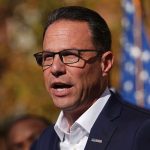
Abdul El-Sayed said he didn’t expect to be “a main character in these midterm elections,” but the first Muslim elected to the U.S. Senate in history will take his seat in January after a vitriolic campaign that cast him as the chief villain of the president and his party.
In October, he told the Associated Press that he was “not turning away” from these right-wing obsessions. “What are you implying?” El-Sayed, the son of Egyptian immigrants, responded when asked by a city hall employee if he would disavow the Muslim Brotherhood, in a now-viral exchange.
On Tuesday, Michigan voters helped the pugnacious progressive stem a transcendental blue wave nationally, defeating his Republican rival, Mike Rogers, by about seven points, 52.5 percent to 45.5 percent.
“My name is Abdulrahman Mohamed El-Sayed,” he said at the start of his victory speech in downtown Detroit Tuesday night, to cheers from the crowd. He then thanked Michigan voters for taking “a chance on the most unlikely candidate.”
He won with majorities among Black voters and early Jewish voters, and with a larger vote share than Kamala Harris or Sen. Elissa Slotkin in 2024 in Wayne, Oakland and Macomb counties, despite Republican attacks on his faith and objections from some Jewish leaders to his stance on Israel. He now takes this mandate to Washington as one of the most visible Democrats to emerge this election cycle.
“He’s a charismatic, social media-savvy politician, so he’ll come to Washington with a lot more initial interest than most new politicians,” said Matt Grossmann, director of the Institute for Public Policy and Social Research at Michigan State University. “He won’t be able to say that he had some kind of unique vision that worked above all others, but he will be able to say that people said he couldn’t win in a swing state, and he did. I think that will count.”
The test, according to Shekar Narasimhan, founder and president of the AAPI Victory Fund, a Super Pac focused on the political power of Asian Americans and Pacific Islanders, is less about identity and more about achievement.
“I think Abdul’s responsibility is not so much being the first Muslim senator. Obviously that carries weight, but it’s more about how he represents Michigan, given the $165 million that was thrown at him in the primary and general elections,” Narasimhan said. “I think he needs to have an agenda and I think the caucus is going to give him a leadership position to be able to implement it.”
For many Arab and Muslim Americans, the result was vindication. Maya Berry, executive director of the Arab American Institute, called voters’ rejection of attacks on El-Sayed “enormous” for “every little boy named Abdul, every little girl named Zainab,” arguing that the issue at stake was whether the country supported an inclusive democracy.
Donald Trump and other Republicans have repeatedly used Islamophobia to target his faith. At a rally in Port Huron on October 25, the president baselessly called El-Sayed a jihadist and a member of the Muslim Brotherhood, said he was “on the side of the terrorists” and claimed he “should go through a metal detector” before entering the Senate. John Kennedy, the Louisiana senator, said El-Sayed “sleeps in a bin Laden jersey,” while Ted Cruz, the Texas senator, called him a “jihadist imp” and JD Vance called him “evil.”
Campaign mailers paid for by the Senate Leadership Fund, a prominent Republican Super Pac, and seen by the Guardian reportedly link El-Sayed to sharia law, with text saying his specific views “dictate how women dress,” “require women to have a guardian” and “prohibit women from divorcing.”
El-Sayed rejected these attacks, joking that he supported “shawarma law.”
On election night, Dearborn Mayor Abdullah Hammoud said voters chose El-Sayed “no matter which way he prayed.” He called it “a magnificent American story.”
after newsletter promotion
Some Jewish leaders, like Amy Sapeika, Detroit community director for the American Jewish Committee, said El-Sayed’s rhetoric, and even his victory speech, made many in the community “feel excluded as Jews and as people who support Israel.”
While exit polls and preliminary analyzes show a majority of Michigan Jews voted for El-Sayed, his margins in communities with large Jewish concentrations lag other Democrats in the state, such as Gov.-elect Jocelyn Benson. In West Bloomfield, where an attack on a synagogue took place in March, Rogers’ vote share increased from 42 percent two years ago, when he ran against Slotkin in the Senate, to 46 percent.
El-Sayed would achieve the same parity with Black voters as Slotkin’s victory in 2024, where he won about 86% to her 85%, according to an NBC exit poll.
On Israel, El-Sayed has not changed his position since his election. On the morning of the election, Trump said on Fox & Friends that about $4 billion in annual U.S. military aid to Israel would be “cut at the end of the year,” citing “crazy people like El-Sayed.” El-Sayed, who campaigned to end the aid, welcomed the announcement and also called for an end to arms sales.
With Congress appropriating the aid, Grossmann said Trump “basically credited Abdul with changing his position on aid to Israel,” giving him a quick victory. Narasimhan called the announcement “a good starting point.” He said efforts by Bernie Sanders and other Democrats to restrict offensive weapons were “as far as he can go in this environment regarding Israel.”
Asked on CNN Thursday about working with the president and vice president, El-Sayed made clear he was not softening his tone. He said he would “take every opportunity” to “differentiate between what JD Vance says and what JD Vance does,” and that he found both men “abhorrent” in the way they behave outside of their official duties.
But he also said he would work with them. “I will work with anyone to serve the people of the state of Michigan,” he said. “If they really want to do this, let’s do something.”
Gn usa