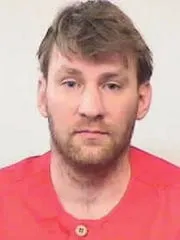
In the United States, three killers executed on the same day for the second time this year

Updated November 5, 2026, 7:56 p.m. ET
Three states each executed death row inmates on Thursday, November 5, marking the second such triple execution in the United States since August.
Indiana executed Jeffrey Weisheit, 50, by lethal injection for the 2010 murders of his girlfriend’s two children, Alyssa Lynch, 8, and her brother Caleb, 5. Weisheit was pronounced dead at 12:45 a.m. local time on Thursday.
Weisheit’s lawyers had unsuccessfully asked Indiana Governor Mike Braun to halt her execution and all other executions in the state because of the botched lethal injection of Christa Pike in Tennessee. Indiana uses the same drug, pentobarbital, as Tennessee for its executions.
Later Thursday, Florida executed Jesse Guardado, 64, by lethal injection for the 2004 stabbing and beating of a 75-year-old community activist named Jackie Malone. He was pronounced dead at 6:13 p.m. ET.
About an hour after the execution in Florida, Alabama executed Michael Shannon Taylor, 55, by lethal injection for the 1991 beating of an elderly couple, Ivan Moore, 83, and Lucille Moore, 79. Taylor was pronounced dead at 6:10 p.m. CT / 7:10 p.m. ET.
Three executions in one day is a rare phenomenon in the modern era of the death penalty. Before this year, the last triple execution in the United States was 16 years ago. Death penalty observers say the double or triple executions are purely coincidental.
In August, Alabama, Tennessee and Oklahoma all executed death row inmates on the same day. This year’s two triple executions reflect an overall increase in the death penalty since the start of 2025, a trend that experts attribute to the political climate under President Donald Trump and the state of Florida’s recent record execution pace. Since January 2025, 11 states have put 79 inmates to death. That’s more than any other two-year period in over a decade.
The triple execution took place the same day that California Governor Gavin Newsom announced he was commuting the death sentences of the state’s 548 death row inmates to life in prison, saying “state-sanctioned murder is incompatible with California values.” This decision does not repeal the state’s existing death penalty and applies only to current death sentences.
Just after Taylor’s execution in Alabama, Governor Kay Ivey said in a statement that she “faces the Good Lord for final judgment tonight.”
“California can let its criminals escape justice, but not Alabama,” she added. “We enforce the law here and we always will.”
Here’s what you need to know about the three executions that took place on Thursday.
Indiana executes Jeffrey Weisheit for gruesome murder of 2 children

Indiana executed Jeffrey Weisheit by lethal injection for burning down his girlfriend’s home and leaving her two children to suffer and die inside on April 10, 2010.
Investigators found that Weisheit lit flares under and around Caleb, 5, while his sister Alyssa, 8, died in a closet, either because she ran away or was trapped there.
“Nothing justifies the evil that was unleashed on my two children,” their mother, Lisa Lynch, said immediately after Weisheit was sentenced to death in 2013, according to an archived article in the Evansville Courier & Press, part of the USA TODAY Network. “There’s not a second that goes by that I don’t miss my kids and think about the memories we could have made.”
During a prison interview with the Indiana Parole Board last month, Weisheit admitted to setting the fire but struggled to explain why his anger toward Lynch led him to kill the children. “There is no excuse or explanation for what I did,” he said, according to the Indiana Capital Chronicle.
Weisheit did not say his last word before the state injected him with a lethal dose of pentobarbital, according to the Indiana Department of Corrections. Indiana is the only state with an active death penalty that does not allow members of the media to witness executions as the eyes and ears of the public.
The execution took place despite controversy that included two recent botched pentobarbital executions in Tennessee and last-minute attempts by Weisheit’s lawyers to stop the proceedings.

Weisheit’s lawyers recently asked Braun to stop all executions in the state, citing the botched lethal injection of Christa Pike on September 30 and that of Tony Carruthers in May. Joseph Perkovitch, one of Weisheit’s lawyers, said there were “glaring” and “unmistakable” questions about pentobarbital.
On Nov. 2, Perkovitch revealed that Indiana purchased his pentobarbital from a pharmacy that the state is actively investigating and placed on probation for drug contamination, IndyStar, part of the USA TODAY Network, reported.
“It is alarming that the state purchased these medications from a pharmacy that it is attempting to close due to major safety concerns in the storage and management of medications,” Perkovich said in a statement.
The Indiana Department of Corrections and the attorney general’s office said in statements they were confident the state would carry out the execution in accordance with state law. They did not respond to IndyStar’s questions about the provider’s past infractions. The governor’s office did not respond to IndyStar’s questions.
The parole board declined to recommend clemency for Weisheit to Braun last week. On Nov. 2, Braun announced he would not intervene in the execution, which is the first in Indiana this year.
Florida executes Jesse Guardado for killing woman who helped him
Florida executed Jesse Guardado for the merciless murder of a 75-year-old community activist named Jackie Malone on September 13, 2005. Guardado had met Malone a year earlier when she helped him find housing, find a job and gave him money after he was released from prison for armed robbery, according to court records.
Guardado had a kitchen knife and a metal rod when he arrived at Malone’s home in Defuniak Springs in Florida’s Panhandle. Malone was asleep but let Guardado in after saying he needed to use the phone.
Guardado used the rod to hit Malone repeatedly in the head, stabbed her five times in the chest and slit her throat, according to court records. Guardado stole Malone’s jewelry, checkbook, purse and cell phone and fled. He later confessed to the murder and pleaded guilty.
His lawyers and anti-death penalty activists in Florida argued he deserved clemency because of a horrific childhood filled with neglect, sexual abuse and exposure to drugs that led to serious addiction.

A guard raped Guardado while he was in juvenile detention, and at the notorious Dozier School for Boys, he was beaten while chained, witnessed sexual assault and feared staff would kill him, according to Floridians for Alternatives to the Death Penalty. The jury deciding Guardado’s fate was never informed of his traumatic experiences, they added.
The group also said Guardado deserved clemency because he became a sober and faithful man in prison and always deeply regretted killing Malone.
“I can offer no excuses for what I did, only my sincerest apologies and regrets,” he wrote in a letter seeking clemency from Florida Governor Ron DeSantis.
DeSantis has never granted clemency to anyone on death row and has said executions provide justice for victims’ families. No other Florida governor has overseen so many executions in the modern era.
The Florida Supreme Court recently denied Guardado’s request for a stay of execution, rejecting his attorneys’ arguments that the state’s clemency process is essentially meaningless because DeSantis has bluntly said he will not grant clemency to people convicted of murder or sex crimes.
Guardado became the 19th inmate put to death in the state this year, tying the state’s one-year record, set in 2025. The state plans to execute at least two additional inmates by the end of the year.
Alabama executes Michael Shannon Taylor for murder of elderly couple

Alabama executed Michael Shannon Taylor by lethal injection for the November 4, 1991, murder of an elderly couple he knew: Lucille Moore, 79, and her husband, Ivan Moore, 83. Taylor, who was 19 at the time, was AWOL from the Navy when he decided to return to his hometown of Gadsden, Alabama, where he convinced the Moores to open their door for him before beating them to death with a metal bar, robbing them and going shopping, according to court records.
Taylor became the third inmate put to death in Alabama this year.
Alabama Attorney General Steve Marshall said in a statement that the execution was “long overdue” for the Moores’ loved ones, who have waited 35 years for justice.
“The Moores showed kindness to a young man in need and were cruelly murdered for it,” he said, calling the case “devastatingly grotesque.”
Taylor’s lawyers had argued that he had previously chosen to be executed by nitrogen gas and that the state’s new plan to put him to death by lethal injection violated his rights. The change in method came four months after a federal judge in Alabama banned the state from using nitrogen gas, ruling that the method amounted to cruel and unusual punishment in violation of the U.S. Constitution.
Alabama was the first state in the nation to carry out a nitrogen gas execution, that of Kenneth Eugene Smith in 2024. The state has executed six other inmates using this method, and Louisiana has used it once.

Contributors: Kristine Phillips, Indianapolis Star, Jon Webb, Evansville Courier & Press, Sarah Clifton, The Montgomery Advertiser and Daniella Segura, USA TODAY
Amanda Lee Myers is a senior crime and courts reporter covering the death penalty, cold cases and breaking news for USA TODAY. Follow her on X at @amandaleeusat
Gn headline