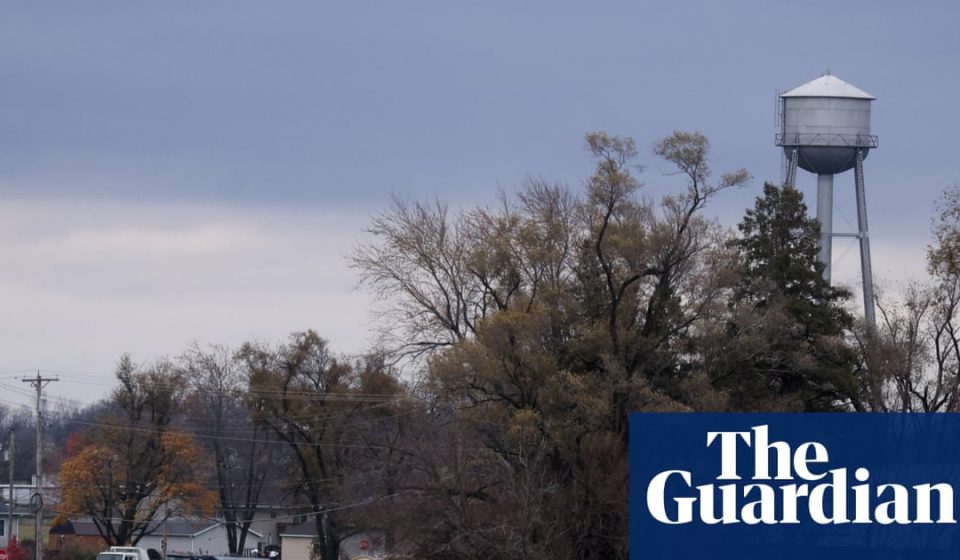
Iowa city shelters in place as military prepares to detonate entire US stockpile of lead azide | Iowa

The US military is set to detonate the nation’s entire stockpile of lead azide in Iowa on Wednesday morning, after multiple delays and despite a wave of public concern over potential health and environmental effects.
The controlled explosion is expected to remove 9,700 pounds (4,400 kg) of bomb-making chemicals stored at the Iowa Army Ammunition Plant in Middletown, a small town in southeastern Iowa that is home to about 400 people. The explosion is likely to release plumes of toxic chemicals within a 100-mile radius, but exactly where those toxins will land has changed as weather forecasts change.
On Tuesday, the Army released new maps predicting the projected trajectory would shift southwest from Middletown before extending into northern Missouri.
The military warned that “all people, but especially infants, children, pregnant women, adults, and children with chronic conditions such as heart disease, kidney disease, or dementia, should avoid outdoor activities in affected areas until additional guidance is provided.”
Detonation is currently scheduled for 10 a.m. ET. In a public safety advisory issued Tuesday, the military said: “A more precise time will be communicated after assessing changing weather conditions and waiting for the safest possible conditions.” »
At a news conference Tuesday, officials said they were unable to find a “viable alternative” after the material was found to be dangerously unstable earlier this year.
“There is consensus among experts across the country that a controlled, attenuated detonation of lead azide here at the Iowa Army Ammunition Plant is far preferable to a spontaneous, uncontrolled detonation of this substance,” said Acting Secretary of the U.S. Army Adam Telle.
In a statement Tuesday, Sen.-elect Josh Turek said he was informed of the detonation, adding that the chemicals “should never have degraded to this extent.”
“I will continue to ask questions about how we got here. There is no excuse for such a failure of transparency and communication, especially when the public’s health and safety are at stake,” he said.
The Federal Emergency Management Agency (Fema) supports “the relocation of all residents of Middletown, Iowa and immediately affected areas,” according to the military, “out of an abundance of caution.”
In a social media post, Homeland Security Secretary Markwayne Mullin said, “FEMA will ensure that every resident who must temporarily evacuate receives the support they need, including transportation, housing, meals, and other essential assistance. »
“We have made it very clear to those living in the Southwest: If they choose to move, we will provide services,” Fema Administrator Cameron Hamilton said in a statement.
On Tuesday, Iowa Governor Kim Reynolds issued a disaster emergency proclamation for Des Moines, Lee and Van Buren counties. With Reynolds’ approval, the Iowa National Guard is providing up to 100 federally activated troops to support public safety and community outreach efforts surrounding the detonation.
“Iowa agencies are actively engaged alongside our federal and local partners, and we remain focused on ensuring communities have the information and resources they need before, during and after the operation,” Reynolds said in a statement.
An emergency notification sent to cellphones Tuesday said some people within a five-mile radius southwest of the plant may be evacuated and warned those within 20 miles to stay indoors with windows closed to “avoid airborne lead dust, noise and vibration.” The military encouraged residents living outside the recommended evacuation zone to shelter in place.
The operation was originally scheduled for last Friday, but was postponed three times due to growing public concern and lawsuits filed by environmentalists to block the detonation.
Donald Trump ordered the military to suspend any detonations pending a court ruling and the approval of Democratic Governor-elect Rob Sand, who will not take office until January.
On Monday, a three-judge panel of the Eighth Circuit Court of Appeals ruled that the military could proceed with the stockpile explosion, finding that the Environmental Protection Agency had properly built safeguards into an emergency permit to minimize dust dispersal.
Gn usa