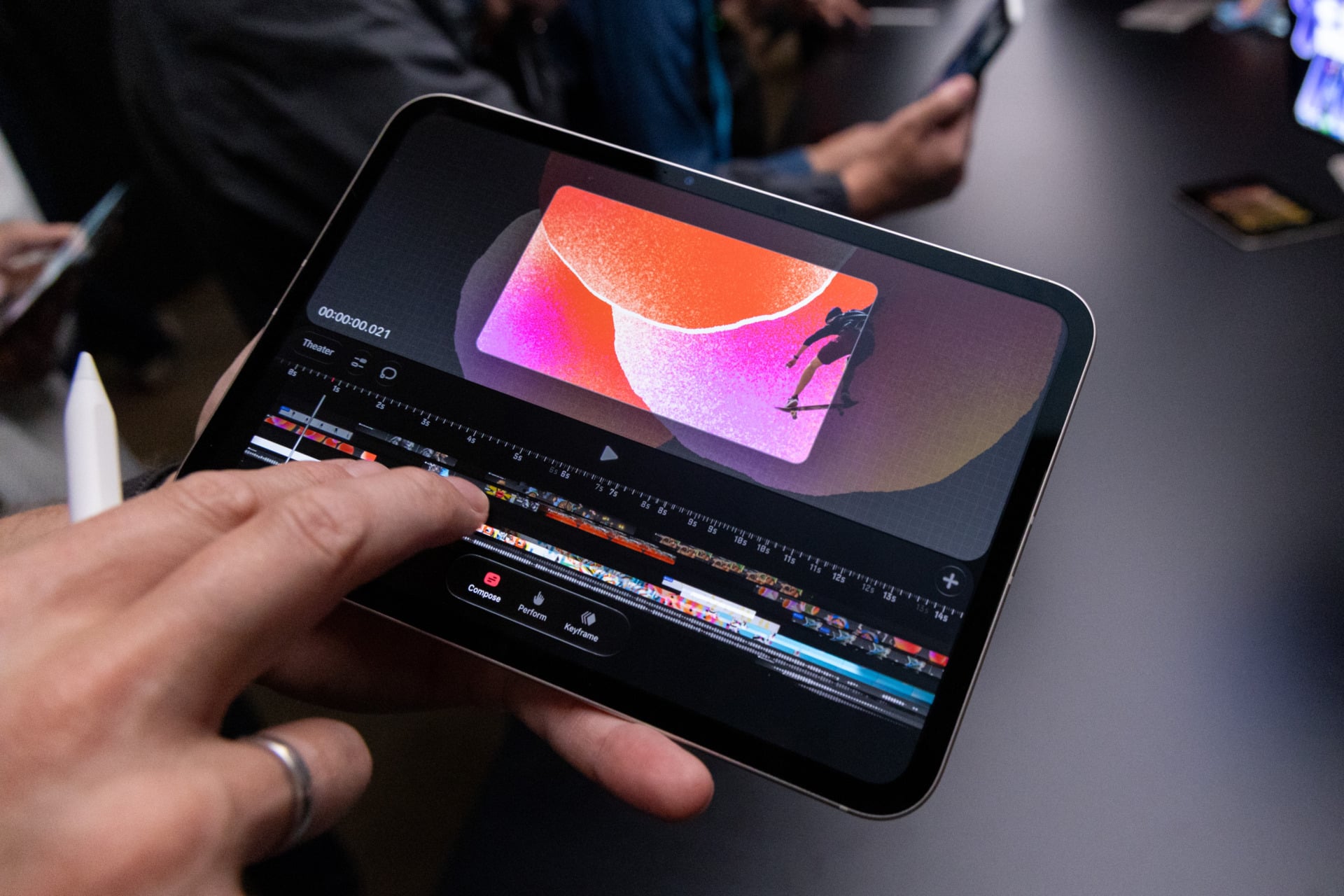
As the name suggests, the iPad mini never needed to be a gigantic potential tablet. The smaller iPad, now with an 8.5-inch OLED screen, works better as a companion device. Is your phone too small, but an 11-inch tablet takes up too much space in your bag? That’s where an iPad mini comes in and offers that secondary screen for note-taking, doodling, and light editing. Now it looks better than ever, it’s more powerful than ever, and none of that is likely to change when and how you use it.
But damn, the newest and smallest iPad makes a strong first impression.
The previous iPad mini A17 Pro from 2024 wasn’t a huge leap from the previous sixth-generation version. The eighth-generation iPad mini moves from the 12-megapixel “Center Stage” camera to the landscape side of the device. This doesn’t change much, considering this tablet doesn’t have a dedicated Magic Keyboard like the M4 iPad Air or the M5 iPad Pro. Instead, it means you’ll take your FaceTime calls with some variety of folio (Apple still sells its own $79 Smart Folio redesigned for the modified tablet body) instead of standing.
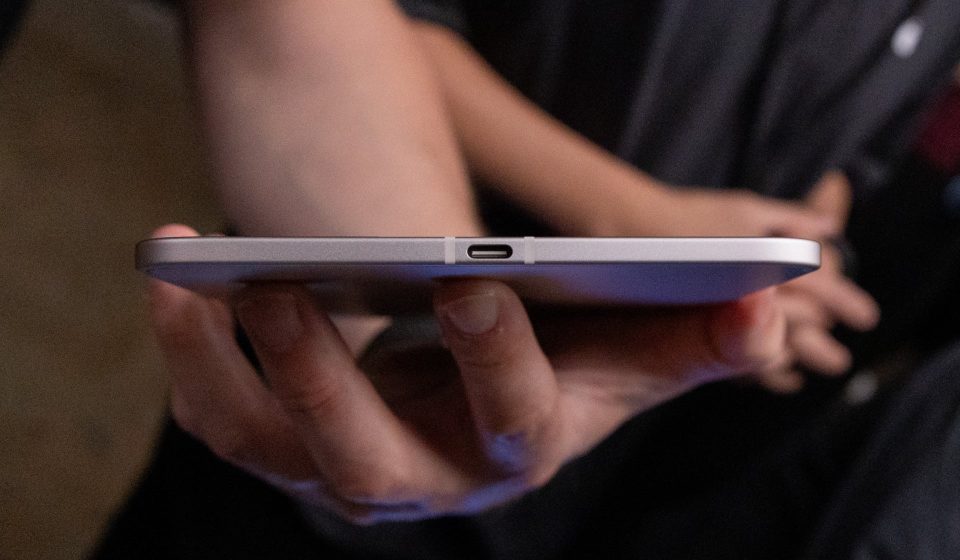
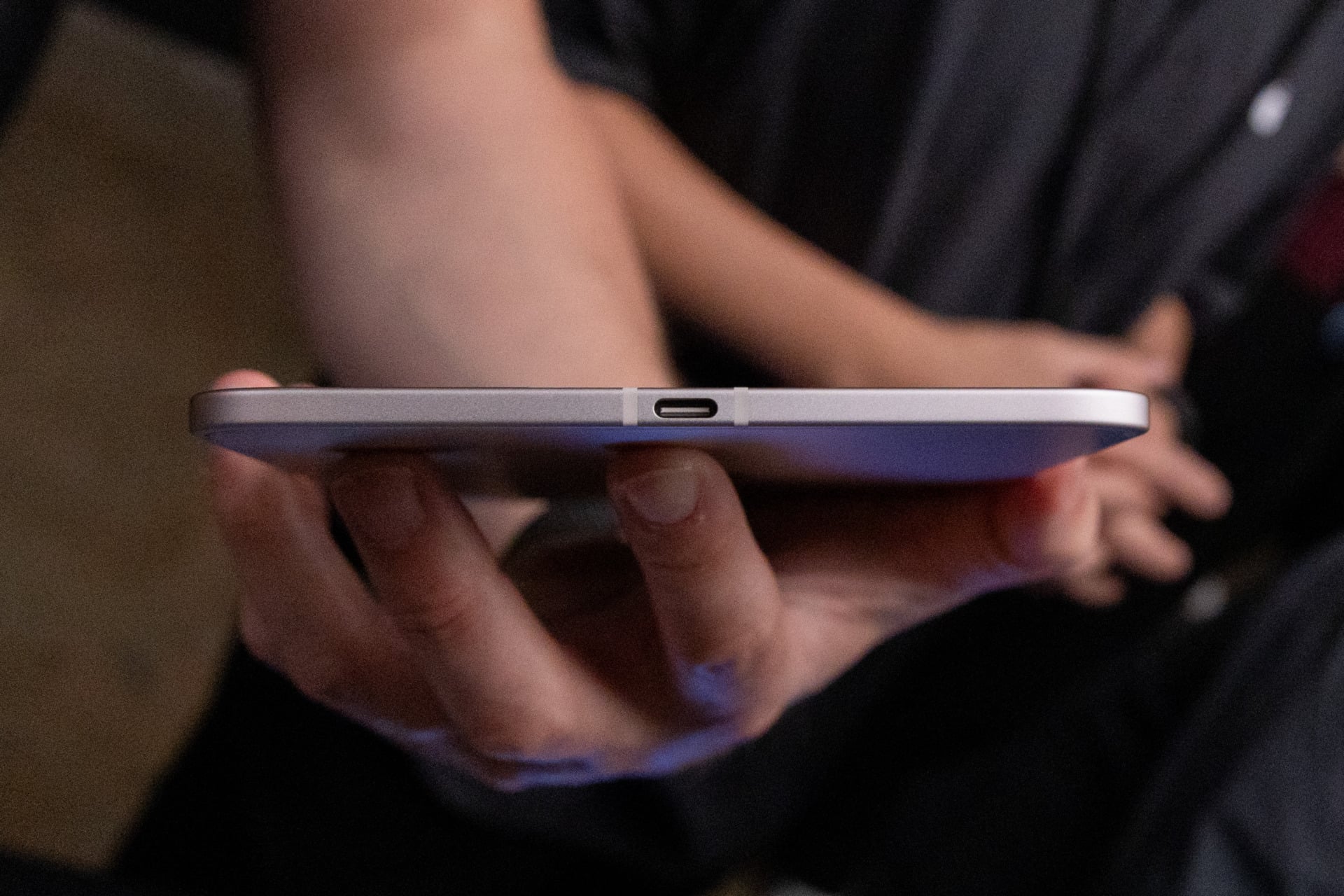
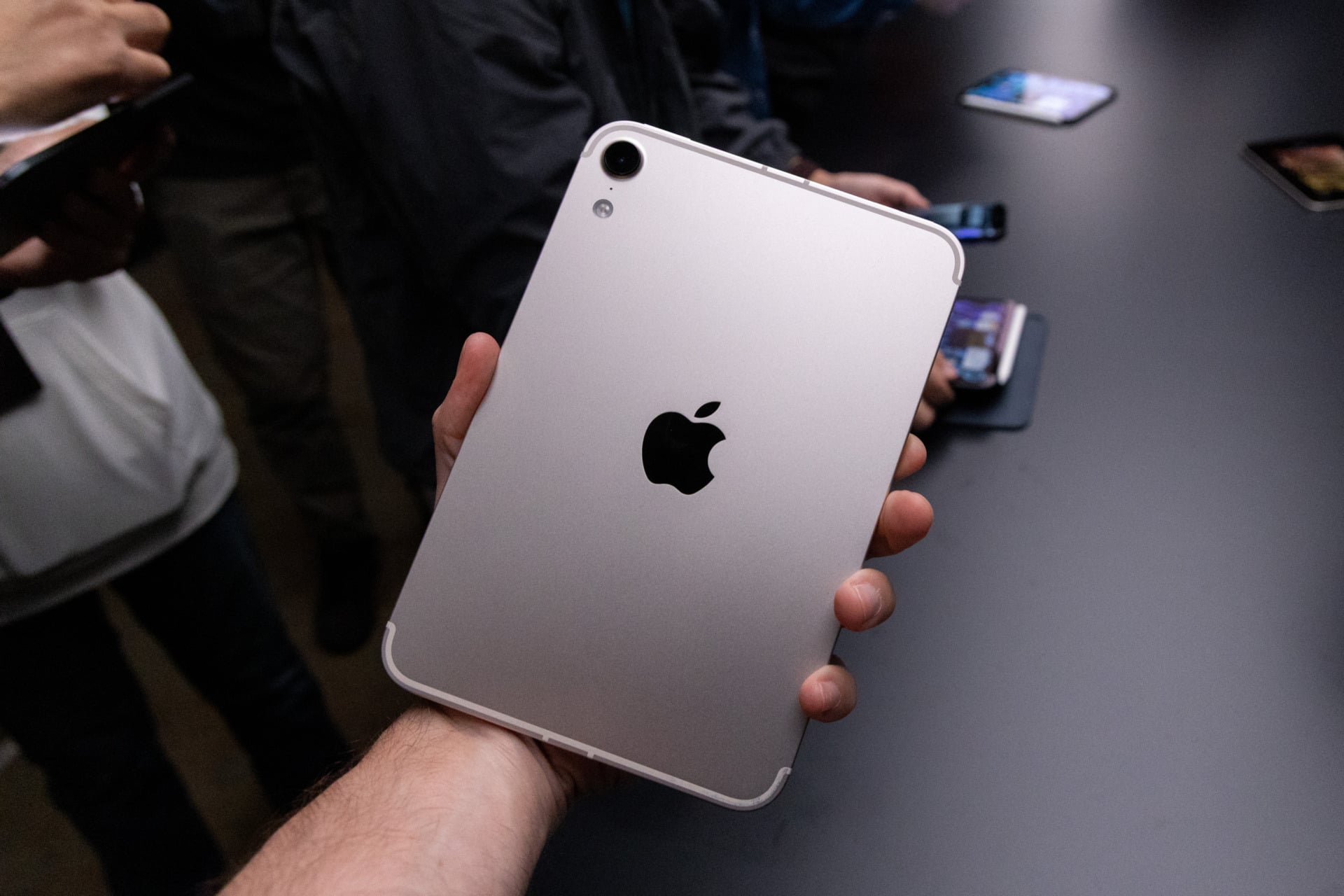
What’s even better is how thin the new device is. Apple reduced the thickness from 6.3mm to 5.4mm. It’s only a tiny bit thicker than a modern iPad Pro, and I’m amazed at how well Apple has managed to impose a Weight Watchers routine on the iPad, especially since the new screen with reduced bezels doesn’t increase the tablet’s overall footprint.
What I was curious to know was if the smaller glasses made it harder to hold on. This is not the case. This little iPad gives you more screen and it looks nicer to boot. It’s a win-win.
Apple also boasts that the new iPad mini completely loses its speaker holes. This means it can claim IP67 water and dust resistance (which implies it can survive being around three feet deep in water for up to 30 minutes). Apple now offers its “acoustic display”, which basically means that the speakers and tweeters are hidden under the screen. The speakers are positioned at either end of the device, and when the volume is turned up, I can feel the low vibrations coming from the speakers directly into my hands and palms. I’m a gamer at heart, and any sort of rumble sensation makes me fizz with nostalgic joy. I imagine some people don’t like that feeling when watching a movie on a small screen in bed.
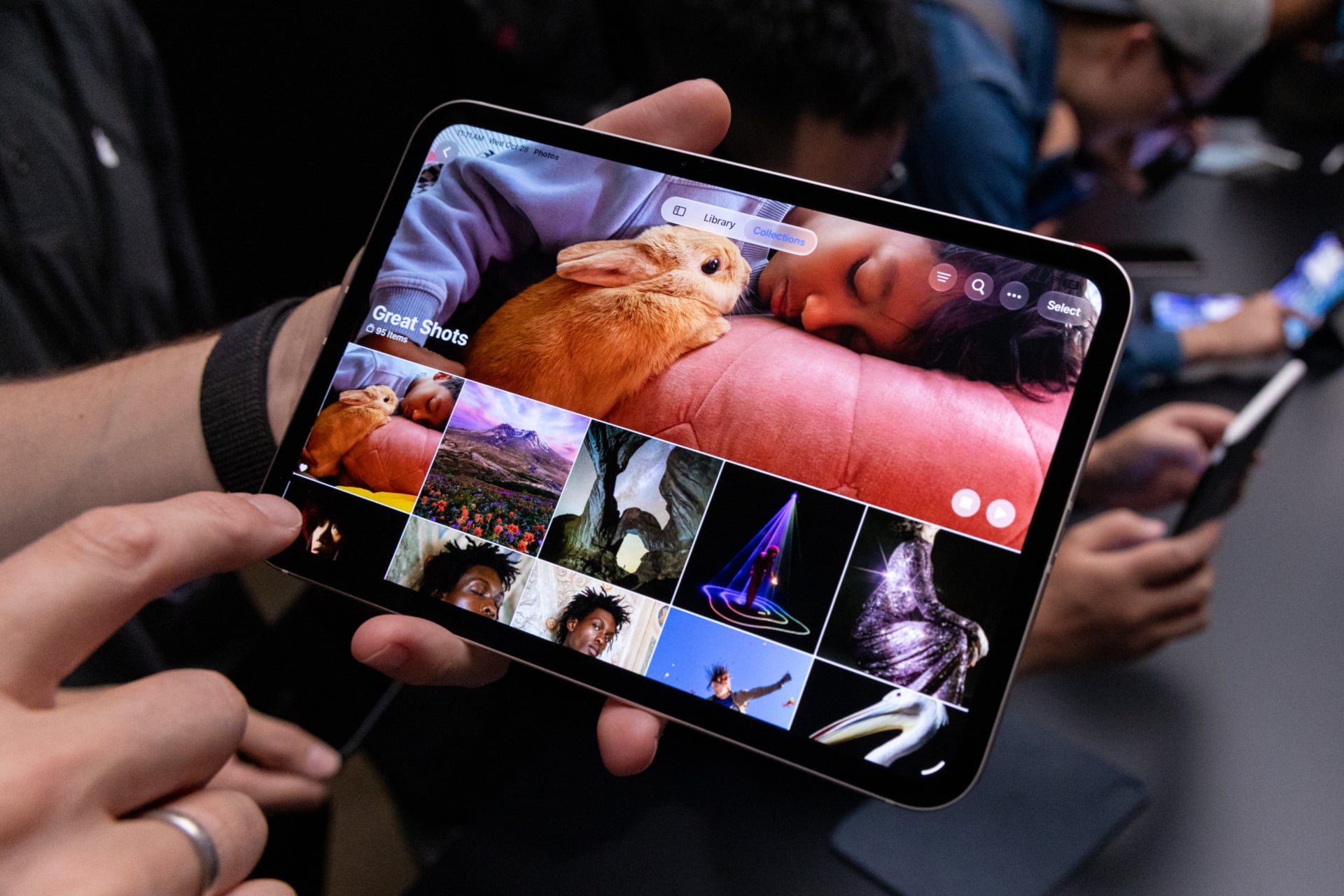
Under the lights of Apple’s Los Angeles storefront, the iPad mini’s screen was striking. The iPad mini doesn’t use the same tandem OLED technology as the latest iPad Pro models, which normally offer better brightness by squishing multiple layers of organic light-emitting diodes. I wasn’t able to directly compare the two models, but I had no readability issues on the smaller iPad. Apple promises that the new little tablet manages around 600 nits of full-screen brightness at maximum, but you can also reduce it to just 1 nit, a handy feature for reading on a plane or in bed.
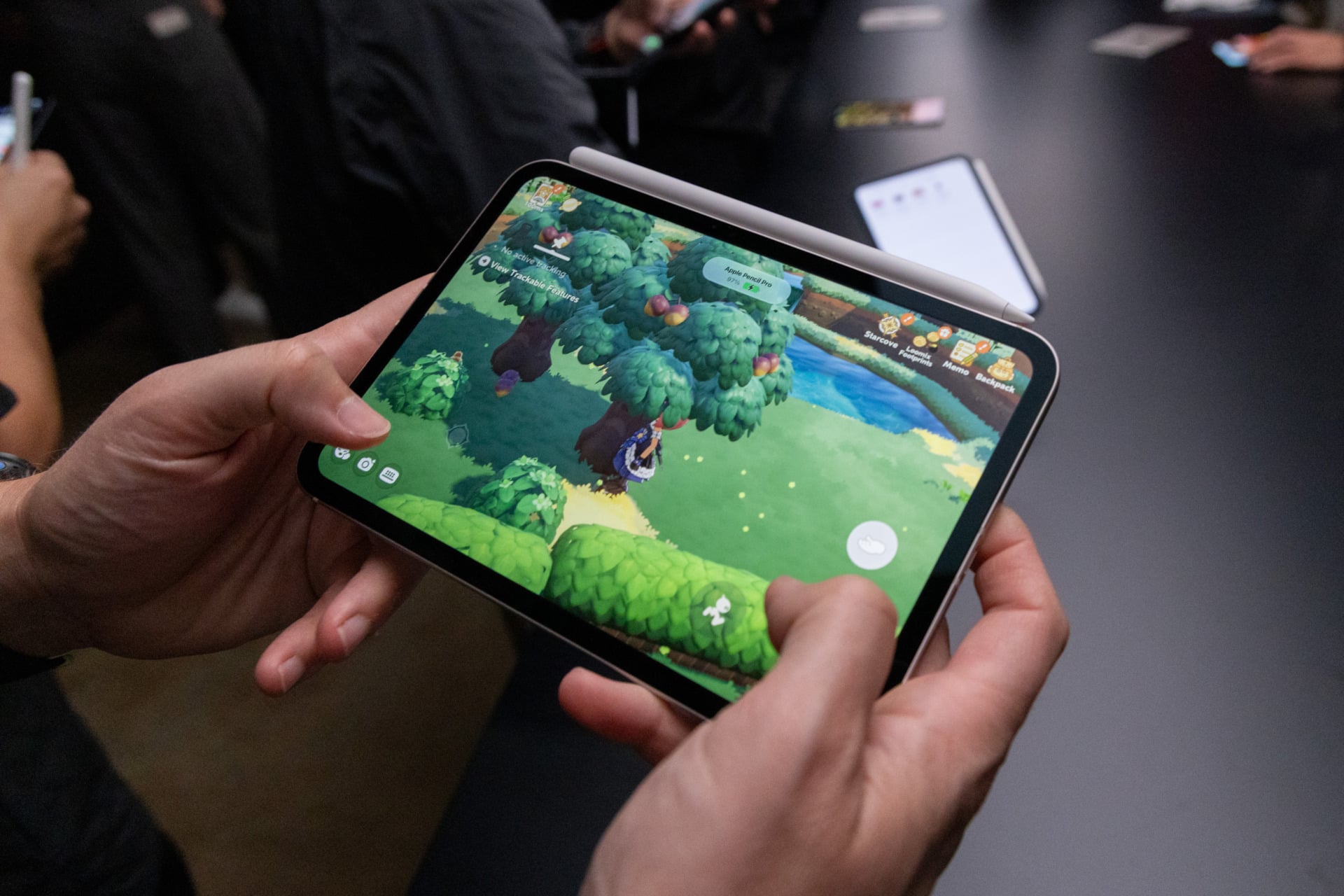
And yes, it must be said that OLED is simply fantastic, especially compared to the old “Liquid Retina” LCD screens of older iPad models. It reminds me of the first iPhone screen. This is spoiled to some extent by the nano-texture display, essentially a matte layer on top of the screen that’s supposed to reduce reflections. It adds a paper-like quality to the screen, almost like the iPhone Duo’s internal screen. You can only get this extra layer for $100 more on the 256GB and 512GB versions, so I don’t know if it’s entirely necessary for most people unless you want to work outside.
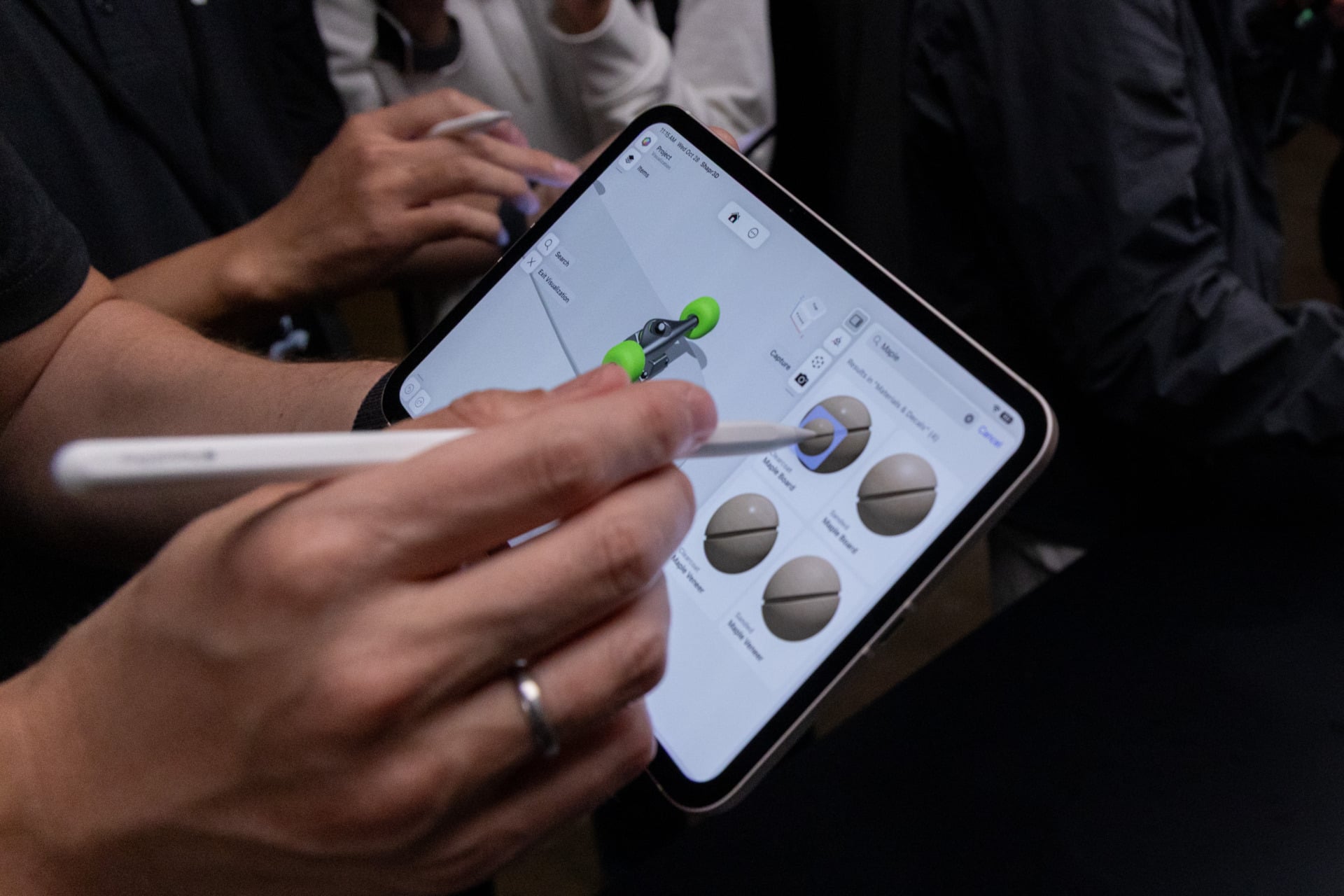
And this is where it gets a little confusing. The iPad mini costs $699 with 128GB of storage. If you opt for a low-end model with either the base storage or a 256GB SSD, you’ll receive a “bundled” chip, meaning it has one fewer CPU core and a less powerful “neural engine” designed to handle AI tasks. The 512GB model actually packs the same powerful chip inside the iPhone 18 Pro. However, they both have the same GPU and Apple expects its users to still perform the same AI or editing tasks no matter which version you get.
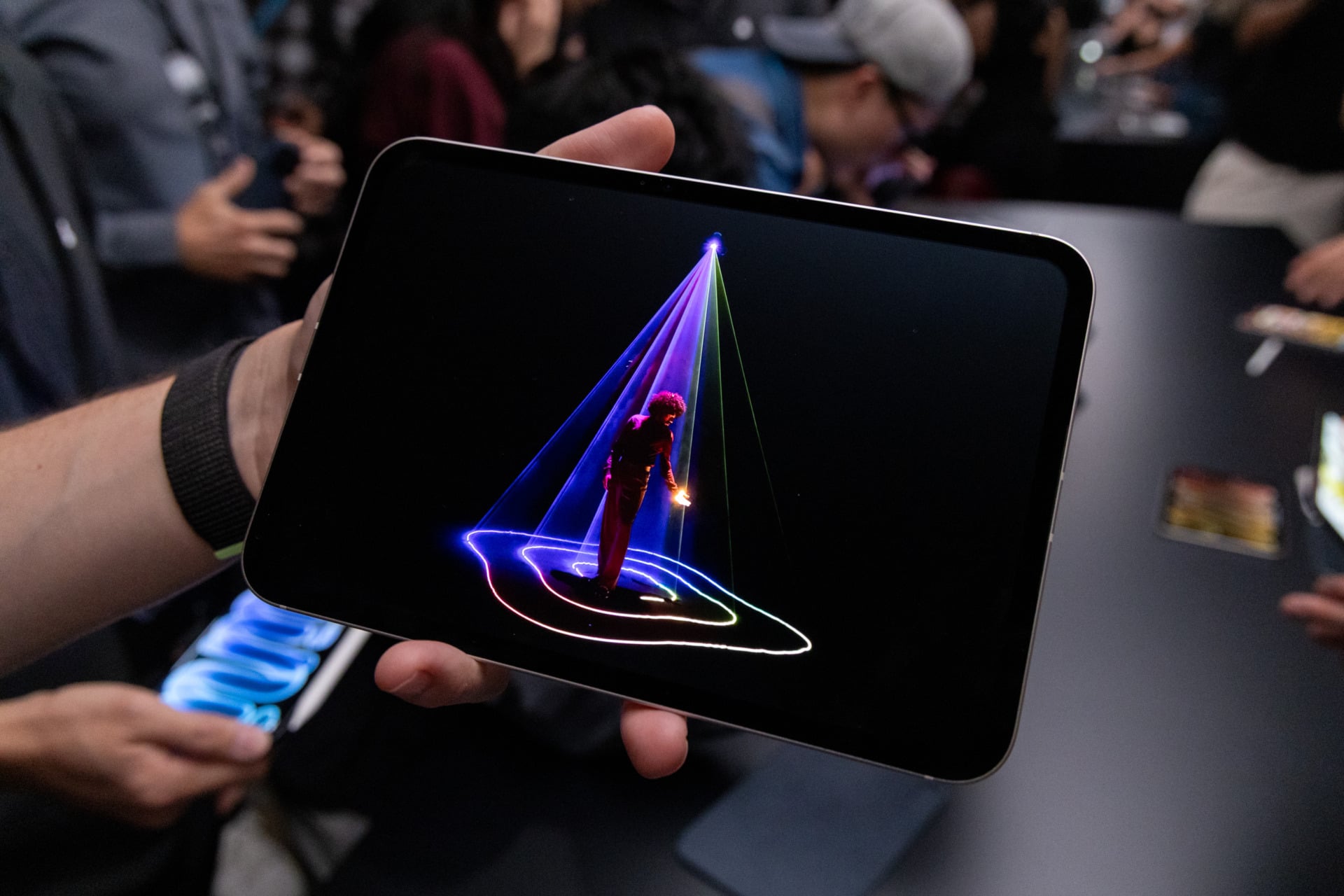
There’s still a lot to test, including its overall performance compared to its M-series tablet cousins. I already have a feeling you’ll end up buying this iPad for the OLED screen and ergonomic improvements. Everything else will be a sweetener on what already seems like a delicious little tablet cupcake, even one that now costs as much as a base iPhone 17 without paying $150 more for cellular connectivity, making it an expensive treat.
The iPad mini A20 Pro is up for pre-order now and is expected to start shipping on November 6.
Gn tech