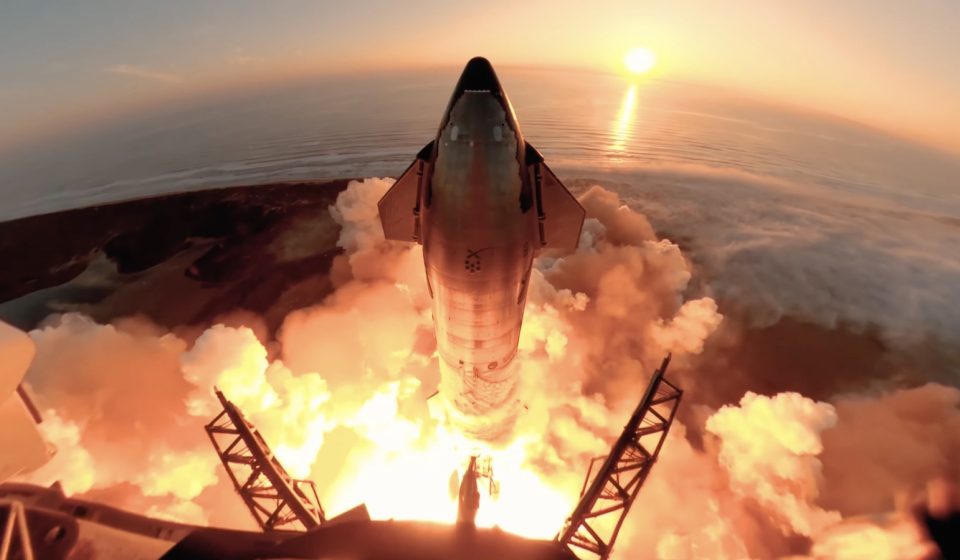

SpaceX’s Starship is a special rocket in many ways. Firstly, at 408 feet, it is absolutely massive and the tallest to ever fly. When it comes to height records, you have to go back to the Apollo-era Saturn V rocket half a century ago, which measured 363 feet, to find its closest competitor. But it’s not just the height that impresses the Starship, it’s also its power. The 33 Raptor 3 engines that propel Starship’s first stage Super Heavy booster into space generate a combined launch thrust of 18.1 million pounds, making it the most powerful rocket ever built, by a significant margin.
In fact, the Starship’s colossal thrust is more than twice that of the Saturn V, which produced approximately 7.6 million pounds of thrust as it left the launch pad and ranks fourth on the list of the most powerful rockets ever built. In third place is NASA’s Space Launch System (SLS) rocket, which has flown twice to date – most recently on the Artemis II lunar mission in April 2026 – generating 8.8 million pounds of thrust. Coming in second was the Soviet N-1 rocket, a rocket that achieved 10.2 million pounds of thrust during its four launches between 1969 and 1972, although its development ended in 1974 after all of its flights failed to reach orbit.
To give a little more context to the Starship’s launch capability, the rocket’s thrust power when it leaves the ground with all engines ignited is more than 10 times that of the Falcon 9 rocket, the spaceflight company’s workhorse, which generates 1.7 million pounds of thrust during liftoff. But the Starship’s enormous size and impressive power are only part of what makes the vehicle so remarkable.
What makes Starship special?
The Starship was first launched in April 2023 and is still in the testing and development phase. SpaceX takes an iterative approach to rocket development, putting vehicles like the Falcon 9 and Starship through real-world testing rather than relying heavily on ground testing like NASA does. So when the first Starship exploded just four minutes after taking off on its maiden flight, SpaceX viewed it as a valuable test rather than a simple failure. Since then, the Starship has flown 13 additional times, with each flight generally improving the performance of the previous ones.
SpaceX even managed to get the Super Heavy (the first stage booster of the Starship Launch System) to make an autonomous descent to the launch pad as part of its efforts to make it a fully reusable rocket. The company has already mastered the landing process with the Falcon 9, but at 236 feet, the Super Heavy is almost twice as large, making the maneuver even more difficult. Additionally, instead of landing it on the ground or on a drone as it does with the Falcon 9, SpaceX uses a pair of giant mechanical arms to “catch” the Super Heavy a few feet off the ground when it returns to Earth, an astonishing feat never attempted with any other rocket in history. So what are the plans for Starship when it finally emerges from its testing phase?
What’s the plan for Starship?
SpaceX has big ambitions for the Starship, with the company saying it could one day carry up to 100 people into deep space. In the short term, however, the rocket is expected to carry much smaller cargo and crews to the Moon, and could ultimately take the first humans to Mars. It is also designed to carry more than 100 tonnes of payload into low Earth orbit, with in-orbit refueling potentially allowing far greater quantities of cargo to be carried into deep space than current rockets can handle. This capability would allow NASA to achieve its goal of building a permanent base on the Moon where astronauts could spend extended periods living and working, as is the case today on the International Space Station. A lunar base could also become a springboard for Mars missions, as the Moon’s weaker gravity would make launching from the lunar surface less fuel-intensive, potentially allowing more cargo to be sent to Mars.
The immediate plan is to prepare a modified version of the Starship upper stage, known as the Ship, to land the first humans on the lunar surface since 1972. The highly anticipated Artemis IV mission is currently scheduled for 2028 and will use NASA’s SLS rocket and Orion spacecraft to fly astronauts into a lunar orbit before transferring them to the Starship HLS lunar lander for descent to the moon. It’s an exciting time for space fans interested in human exploration of deep space, although there are still many challenges to overcome before Starship is ready for operational use.
Gn bussni