Israel kills top Hamas commander in Gaza two months after killing predecessor as ceasefire stalls

Israel killed a senior Hamas commander involved in planning the Oct. 7 attacks just two months after killing his predecessor, a new sign of how the conflict in Gaza remains active despite a U.S.-brokered ceasefire in place.
The Israel Defense Forces (IDF) killed Samir Mahmoud Abu Younis, the commander of Hamas’s Rafah Brigade, in a strike in southern Gaza Saturday night, Hamas and the IDF said.
Abu Younis, a longtime member of the brigade, had replaced Nael Abu Obeid, the former commander killed in a September strike. And Abu Obeid himself replaced Mohammad Sabaneh, another Rafah brigade commander killed in May 2025.
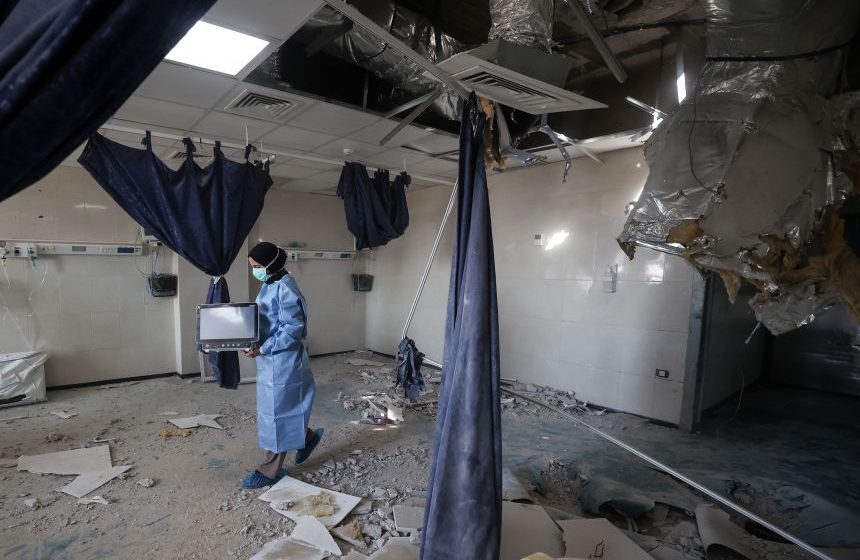
The strike comes just days after an Israeli attack on the Nasser Hospital in Khan Younis, in what the IDF said was an attempt to kill another Hamas commander.

In a statement, Hamas’ military wing, the Al-Qassam Brigades, acknowledged Abu Younis’ death, saying he joined the brigade in 1991 and was “one of the most prominent commanders who participated in the planning and supervision” of Hamas’ attack on Israel on October 7, 2023.
“The Israeli army continues to eliminate Hamas leaders in Gaza, and another joins its predecessors in the depths of hell,” Israeli Defense Minister Israel Katz said. “The offensive policy that I am pursuing with the Prime Minister and the Israeli army in Gaza will continue – until Gaza is demilitarized and there is no more Hamas. »
The killing of Abu Younis highlights an emerging trend in Gaza. Despite a theoretical ceasefire that took effect more than a year ago, Israel has continued to carry out strikes targeting Hamas members, particularly senior commanders. But these commanders are quickly being replaced as Hamas strengthens its hold on the half of Gaza not occupied by Israel.
Meanwhile, the Peace Council, a body created by the Trump administration with the support of the United Nations to oversee the Gaza ceasefire plan, remains on the sidelines, unable to make substantial progress on the 20-point plan agreed to in October 2025.
On Friday, the council said it had “very constructive discussions” with 17 countries about a civilian police force in Gaza under the authority of a Palestinian technocratic committee meant to rule Gaza. But this committee has not yet entered the enclave, and an international security force intended to stabilize Gaza has not yet materialized.
The IDF attack on the Nasser Hospital in southern Gaza last week killed at least six people, including a doctor and a child, according to Palestinian officials. The strike hit the hospital’s surgical unit, killing Dr. Rizk Abu Shaira and a 13-year-old boy who was waiting for surgery. A total of 40 other people were injured in the strike, including two doctors who are in critical condition, officials said.


In a statement, the Israeli military said it targeted the commander of Hamas’s Khan Younis Brigade, Muhammad Abu Ismail, as well as “other terrorists who were hiding inside the Nasser Hospital in Khan Younis.” But when asked whether Abu Ismail was killed in the attack, the IDF did not respond.
Médecins Sans Frontières (MSF) condemned the strike, saying: “It is unacceptable that patients and medical staff are once again killed and injured in a hospital, a place where lives should be saved and not taken. » MSF withdrew its own staff from the hospital in January due to the presence of armed men inside, as well as concerns about the neutrality and management of the hospital. “In accordance with international humanitarian law, hospitals must be respected and protected,” MSF said.
The Peace Council also urged Israel and Hamas to respect their commitments under the Comprehensive Peace Plan and to protect civilians.
According to the Palestinian Health Ministry, more than 1,600 people have been killed in near-daily Israeli strikes in Gaza since the ceasefire was signed a year ago.
The destroyed territory is also facing a humanitarian crisis as winter approaches. Last week, seasonal rains flooded tens of thousands of tents in Gaza, where nearly two million Palestinians remain displaced.
Israel said more than 91,000 tents had entered Gaza before winter, but it refused to allow the entry of heavy equipment needed for large-scale cleaning and rubble removal efforts.
“The reconstruction of Gaza can only begin after the complete disarmament of Hamas,” declared the Israeli coordinator for government activities in the territories.
Gn world