
An international team led by researchers from the Weizmann Institute of Science and the Hebrew University of Jerusalem has developed an experimental blood test that detects breast cancer at an early stage with 95% accuracy for localized tumors less than two centimeters (about 0.8 inches).
The test also outperforms conventional tissue biopsies in assessing the risk of recurrence after treatment.
The peer-reviewed study, published Wednesday in the prestigious journal Nature, is the result of a collaboration between Dr. Efrat Shema’s laboratory at Weizmann, Professor Guy Ron of the Hebrew University and doctors at Kaplan Medical Center in Rehovot. Researchers in France, Germany, Italy and the United States also participated in the research.
Scientists have mapped the epigenetics of breast tumors, the unique molecular switches that control the behavior of genes, and discovered a group of particularly aggressive cells hidden among the less harmful cancer cells.
“Breast cancer screening saves lives,” Shema said in a statement. “Regular mammograms reduce the risk of dying from the disease by 22 percent, but the denser the breast tissue, the easier it is for a tumor to ‘hide’ in the image.”
She noted that the newly developed blood test demonstrated strong diagnostic performance regardless of breast density.
Shema added that when the research expanded to evaluate blood samples from 188 patients with the help of Kaplan and Sheba Medical Centers, “it showed equally good results for different types of breast cancer.”

Detect epigenetic changes early
According to the World Health Organization, in 2022, approximately 2.3 million women were diagnosed with breast cancer worldwide and 670,000 died from it.
The Israel Cancer Association reports that approximately 4,500 women are diagnosed with breast cancer in Israel each year and approximately 900 die from it.
Currently, breast tumors are classified and treated based on their gene expression patterns. But the epigenetic tags that govern these models remain largely unknown. In the new study, Dr. Noa Furth and Dr. Christina Riemenschneider from Shema’s lab, along with Yishai Arieli from Ron’s group, set out to decipher the epigenetic signatures of breast tumors.
Epigenetics refers to chemical changes that determine which genes are turned on or off without altering the genetic code itself. These markers evolve very early in cancer development and provide crucial information about cancer and where a tumor takes root in the body.
To study these markers directly from patient tissue, speed is essential.
“We recruited 12 women who were scheduled to have their tumors surgically removed,” Furth said in a statement. “Once a tumor is removed, there is only a short window of opportunity before its epigenetic tags begin to deteriorate. So the doctors let me know at the start of each surgery. I transported the tissue sample on ice from the hospital to our lab and we began analyzing it the same day.”
Once the scientists mapped the profiles of the primary tumors, they sought to detect the same markers circulating in the blood. They focused on nucleosomes, the microscopic coil-shaped packages of DNA wrapped tightly around structural proteins that cells release when they decay.
A promising 2022 study co-authored by Ron and Shema has already shown that blood tests can detect colorectal and pancreatic cancers at an early stage.
This time, the team placed blood samples on specialized glass slides and treated them with fluorescent antibodies designed to recognize dozens of distinct chemical tags on these individual protein spools.
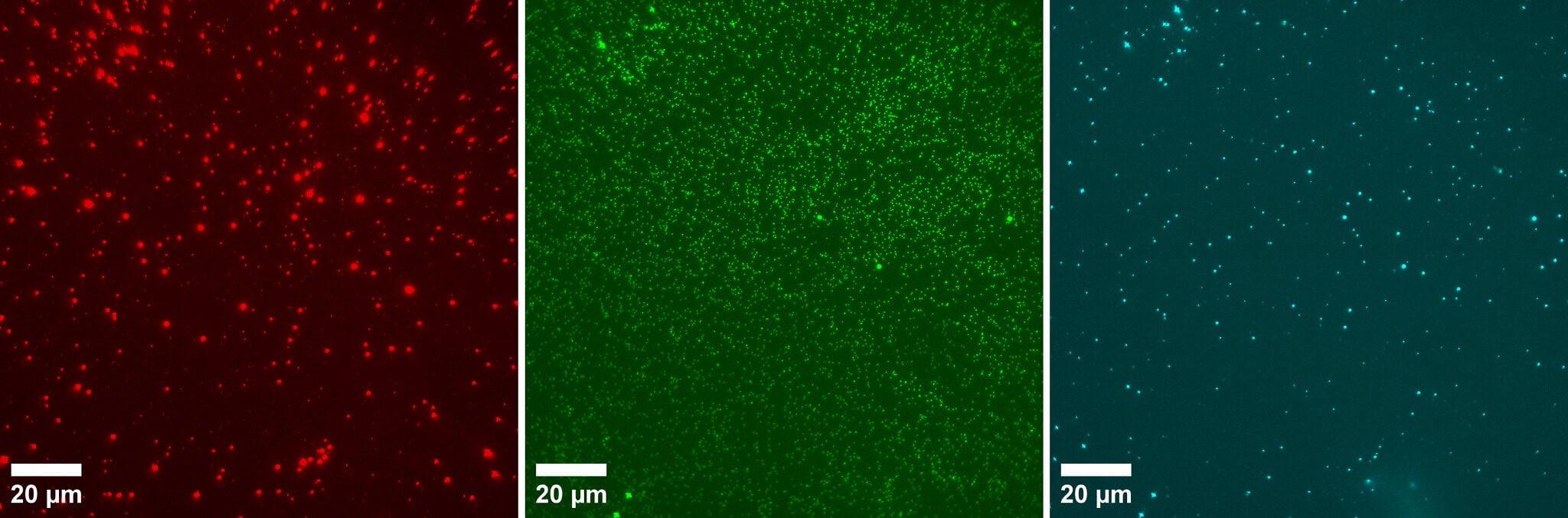
Using high-resolution single-molecule fluorescence microscopy, the scientists’ imaging system analyzed millions of these coils one by one.
Each label was illuminated in a distinct color, creating a constellation of light revealing the exact combination of active and inactive molecular switches. The physics group then used advanced computer algorithms and artificial intelligence to sift through millions of optical signals, isolating the coordinated pattern of a malignancy.
The scientists tested their new method on blood samples from 77 breast cancer patients who had been followed for at least five years at the Mayo Clinic in Florida, comparing them to samples from 30 healthy women. The trained AI models distinguished between the two groups, achieving 95% accuracy in detecting breast cancer at an early stage, when the tumor was still confined to the breast, measuring less than two centimeters.
Why does breast cancer come back?
Even when breast cancer is detected early and treatment appears effective, the disease returns in 20 to 40% of cases.
The researchers then wondered how cells with such different characteristics could coexist within the same tumor.
“The differences appear to be primarily epigenetic,” Shema explained. “When we developed models of breast cancer in the laboratory starting with non-aggressive cells, an aggressive population always emerged.”

These aggressive cells could be among the main culprits in cancer recurrence. The scientists said that when they looked for this epigenetic signature in blood samples, they found that the more prevalent it was, the greater the risk of recurrence.
“Using this signature and additional epigenetic markers, we were able to distinguish with 81 percent accuracy between patients whose cancer returned during follow-up and those who did not experience a recurrence,” Ron said.
The test even highlighted a risk of recurrence in patients considered low risk by conventional measures, the scientists said.
“There is growing evidence that cancer cells exploit their epigenetic flexibility to change their behavior, become more aggressive and evade treatments,” Shema said.
Shema, whose research is supported by the Swiss Research Society Institute for Cancer Prevention and the Fundación Alberto Palatchi of Spain, noted that the findings could open new therapeutic avenues by tracking aggressive cell populations in different cancer types.
“In the future, they could help us not only predict recidivism, but also look for ways to prevent it,” Shema said. “We are now looking for treatments that could strip cancer cells of their epigenetic flexibility – and perhaps even cause cells that have already become aggressive to adopt less aggressive traits.”

Gn Health