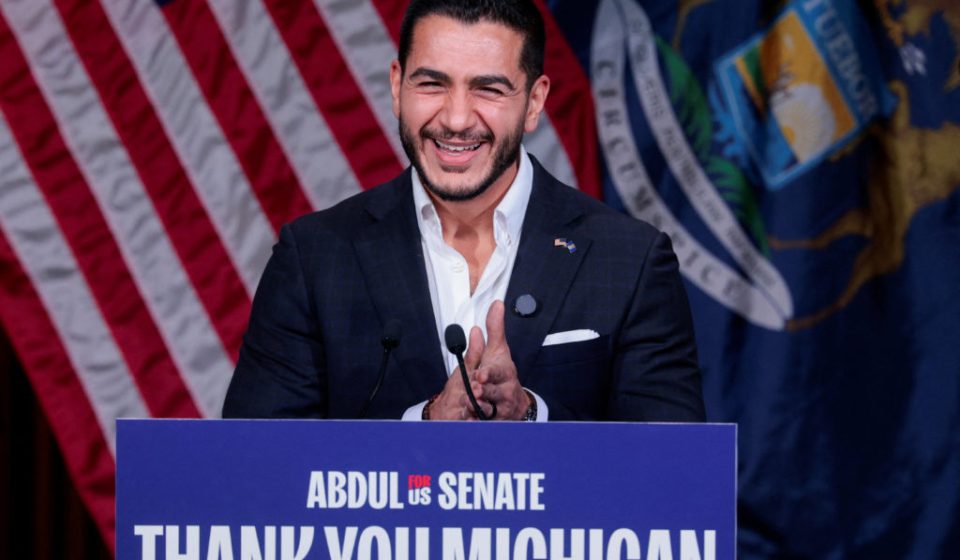
“JD, habibi. » Arabs celebrate El-Sayed’s use of term of endearment in victory speech

BEIRUT — From Michigan to the Middle East, Arabs are celebrating Abdul El-Sayed’s Senate victory and rejoicing over his introduction of Arabic terms like “habibi” and “inshallah” into the American political lexicon.
After being the target of Islamophobic rhetoric on the campaign trail, the rising political star who will be the first Muslim U.S. senator has mocked his right-wing critics while championing the Palestinian cause and drawing on his faith and Egyptian heritage.
LEARN MORE: The election brought a wave of historic firsts. Here are some game-changing winners
“JD, habibi,” El-Sayed said in his victory speech, addressing US Vice President JD Vance, who had warned the candidate would lead rioters to burn down Detroit. “There is this delicious irony in the fact that you are constitutionally obligated to swear me in in January.”
‘Habibi’ is a term of endearment
“Habibi” literally translates to “my beloved” and is peppered with Arabic pop songs. In common parlance, it often means “buddy”, “buddy” or “brother”. El-Sayed supporters wore shirts reading “Habibi for Abdul.”
El-Sayed, the son of Egyptian immigrants, said his campaign transformed “inshallah” — “God willing” — into “hamdulillah,” meaning “thank God.”
Arabs were delighted with the vice president’s gentle mockery, and numerous video clips featuring “Habibi” were posted on social media. It is a rare outburst of joy in a region traumatized by past and present conflicts – which have also fueled negative stereotypes in the West.
A user on X posted a video of Egyptian diva Shireen Abd El-Wahab dancing to one of her most popular songs, joking that El-Sayed would make it the new national anthem.
Egyptians are renowned throughout the Arab world for their sense of humor and joking about life’s difficulties, a spirit that has been popularized in films and by famous comic actors.
Echoing El-Sayed’s victory speech, some shared a meme from an Egyptian film in which a man attends a funeral while high and is unable to stop laughing. “I came here to make jokes,” reads the caption, quoting a line from the film.
An Egyptian scholar, Khalil al-Anani, praised El-Sayed on X, saying: “‘Habibi’ is the sweetest word.” He thanked the senator-elect for bringing joy to Egyptians.
Signs of change after decades of prejudice
Arab and Muslim Americans have faced prejudice for decades, with popular films portraying them as terrorists and right-wing politicians stoking unfounded fears about the imposition of sharia, or Islamic law.
During the campaign, US President Donald Trump called El-Sayed a “jihadist”, discussed the September 11 attacks and deliberately mispronounced the candidate’s name.
On social media, users responded to the attacks by posting light-hearted videos, including of Lebanese diva Haifa Wehbe belly dancing and veiled young women breakdancing in the streets.
“Donald, listen, I know you had a hard time with my name,” El-Sayed said in his victory speech. “So after JD swears me in in January, you can just go ahead and call me ‘senator’.”
A free press is the cornerstone of a healthy democracy.
Support trusted journalism and civil dialogue.
Gn headline