In January 2024, Jensen Huang, then chief executive of Nvidia, ended a four-year absence from China, showing goodwill by handing employees the traditional red envelopes filled with money to celebrate the lunar new year.
Over the next three years, he stepped up efforts to mitigate the impact on his business of Washington and Beijing’s tightening restrictions on Nvidia’s artificial intelligence chips, traveling to China six times and accompanying President Donald Trump to meet with his counterpart Xi Jinping.
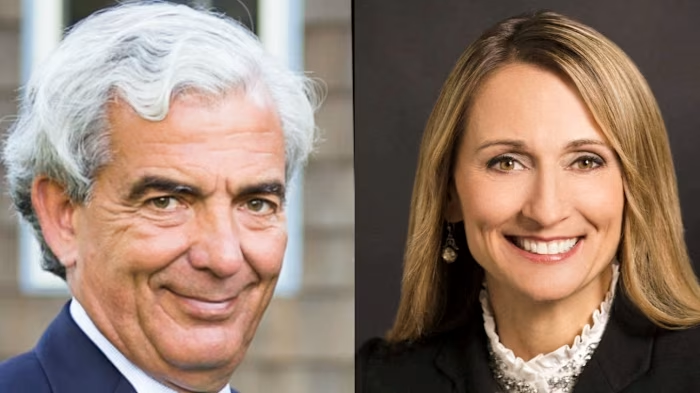
Huang is now facing scrutiny over his ties to China and questions about what he knew about the alleged large-scale smuggling of Nvidia chips into the country, following revelations of an affair with Alice Huang, a Chinese businesswoman whose company was investigated for alleged illicit shipments.
The scandal has sparked growing calls in Washington for an investigation into whether Nvidia’s founder, who resigned as chief executive Thursday, compromised U.S. national security in his dealings with China.
The United States has introduced a blanket ban on sales of Nvidia’s most advanced chips to China in 2022.
But before his dramatic fall, Huang had also discovered the limits of his influence in Beijing. Despite Nvidia’s more than two decades of activity in China, it has not enjoyed the same access to the country’s political leaders as the leaders of other American technology groups, such as Apple, Tesla and Microsoft.
His first publicly recorded meeting with a member of China’s top leadership took place in April 2025, when he met with Vice Premier He Lifeng, one of Beijing’s top economic officials.
The two met again in July, when Huang called their discussions a “wonderful meeting” but said they did not discuss trade restrictions.
Huang insisted that Nvidia’s ability to sell its products in China ultimately serves U.S. interests by making it more likely that America’s big tech rival will still rely on American products.
“That’s probably the most important strategic reason to be in China,” he said in an interview with CNBC in 2025. “Because there are so many developers there and because the world is going to adopt technology from one country or another — and we prefer it to be the American technology stack.”
Despite repeated efforts to secure meetings with senior Chinese officials charged with deciding the fate of Nvidia’s business, Huang has struggled to gain access to policymakers leading Beijing’s drive for semiconductor self-sufficiency, according to people familiar with the matter.
China has been an important market for Nvidia for more than two decades, with demand for chips initially driven by the country’s gaming boom and later by cryptocurrency mining and AI. On average, around a quarter of its sales were made in China each year between 2010 and 2022.
Huang traveled regularly to meet with customers and suppliers and attend Nvidia developer conferences in Shanghai and Beijing.
To secure meetings with He, Huang met with Ren Hongbin, head of the China Council for the Promotion of International Trade (CCPIT) and an important intermediary between foreign business executives and senior Chinese officials.
Later in 2025, Chinese regulators moved to restrict the import and use of less advanced Nvidia chips – a move by Beijing to try to promote its domestic competitors such as Huawei.
The move was led by the National Development and Reform Commission (NDRC), China’s powerful state planner, which has played an increasingly important role in Beijing’s push toward semiconductor self-sufficiency, according to people familiar with the matter.
As Nvidia’s fortunes in China deteriorated, Huang’s team sought to meet with officials from the NDRC and the Ministry of Commerce (Mofcom), submitting requests through Ren, according to people familiar with the matter.
Huang met with Commerce Minister Wang Wentao in July 2025, but failed to secure future interactions after Beijing restricted sales to China. Nvidia has not been granted meetings with the NDRC.
After months of failed attempts to arrange new talks with senior Chinese officials, Huang joined the delegation of U.S. business executives accompanying Trump during his visit in May this year.

During the visit, Huang greeted and spoke briefly with Xi and Premier Li Qiang, the two highest-ranking Chinese leaders he has met publicly.
People familiar with Nvidia’s operations in China said the company’s limited political access partly reflects its modest investment in government relations.
Nvidia hired Tony Jiang from Intel to oversee government affairs in China in late 2025. Before then, the company had not maintained a dedicated local team to engage Chinese officials.
“Nvidia had not invested heavily in government engagement in China until recently. These relationships take years to build and many large U.S. technology companies have persevered over the years and built trust in China,” said a person with knowledge of the matter.
Jiang, a former Mofcom official who worked on antitrust issues, is considered “highly respected” in the US business community in China, they added.
But people close to China’s lobbying industry noted at the time that it faced a nearly impossible task given the sensitivity of the topic and the importance of Beijing’s efforts to create national AI champions.
Nvidia was also grappling with competing internal priorities from Beijing. Mofcom, recognizing that Huawei was not yet capable of completely replacing its advanced chips, favored imports as a way to support China’s AI development while domestic semiconductor makers built up their capabilities.
In contrast, national security officials within the Cyberspace Administration of China (CAC) and the Ministry of State Security viewed reliance on Nvidia as a strategic vulnerability and pushed to accelerate the adoption of domestic alternatives. Over the past year, the latter position has gained ground.
Last summer, Chinese authorities barred the country’s biggest tech companies from buying Nvidia chips designed specifically to comply with U.S. export controls, seeking to encourage greater use of domestic processors.
Despite this, China’s AI labs remain heavily reliant on Nvidia silicon to train their most advanced models, a technically demanding process that requires enormous amounts of computing power.
Some continued to access Nvidia’s most advanced chips through data centers overseas, including in Southeast Asia, or through illicit supply networks. The crackdown by US authorities has made it more difficult to obtain large quantities of restricted processors on the black market.
At the same time, Nvidia continued to provide technical support to Chinese AI labs, including Moonshot AI and MiniMax, to optimize their models to run on Nvidia’s hardware.

There are no publicly verified examples of a leading model trained entirely on Huawei’s hardware, but DeepSeek, perhaps China’s best-known AI lab, has been at the forefront of efforts to use Huawei’s Ascend processors for training.
Huang has repeatedly used the prospect of a stronger Huawei in his lobbying campaign in Washington, arguing that US export controls would only accelerate the development of Chinese competitors.
He described Huawei as “one of the most formidable technology companies in the world” and warned that restrictions on Nvidia’s sales risked giving the Chinese group a large domestic market.
Supporters of greater chip control in Washington have accused Huang of exaggerating Huawei’s abilities to advance Nvidia’s business interests. More restrictive measures are on the way, with a law aimed at preventing Chinese companies from remotely accessing chips overseas already moving through Congress.
George Chen, partner and chair of the digital practice at Asia Group, said Huang’s assessment of Huawei – while premature – would likely prove correct in the end.
“Now that Jensen is gone and Washington will soon impose another total chip ban for China, Huawei will have a dominant market share in China,” Chen said.
Huawei itself has become more confident in its public statements. In September, Rotating Chairman Eric Xu told reporters that he anticipated at least six or seven Chinese AI labs aiming over the next two years to train large models in China using its chips.
“It may seem ironic, but Jensen’s fall helps strengthen Huawei’s leadership position in China,” Chen said.
Nvidia did not immediately respond to a request for comment. Mofcom and CAC did not respond to request for comment.
Gn bussni