James Stewart is one of the most famous classic Hollywood names. An Oscar winner, a war hero, a comeback king who continued to direct films even when he seemed completely unsuccessful. The tall, lanky boy from Pennsylvania made quite an impression on the big screen, and in the biopic about the actor’s life, Jimmyit’s as if the filmmakers are chasing his ghost. They were so desperate to give Stewart a larger-than-life narrative that it didn’t feel real or feel authentic — something Stewart himself avoided with his own audience. By trying to do too much, Jimmy loses sight of the person at the center of their story.
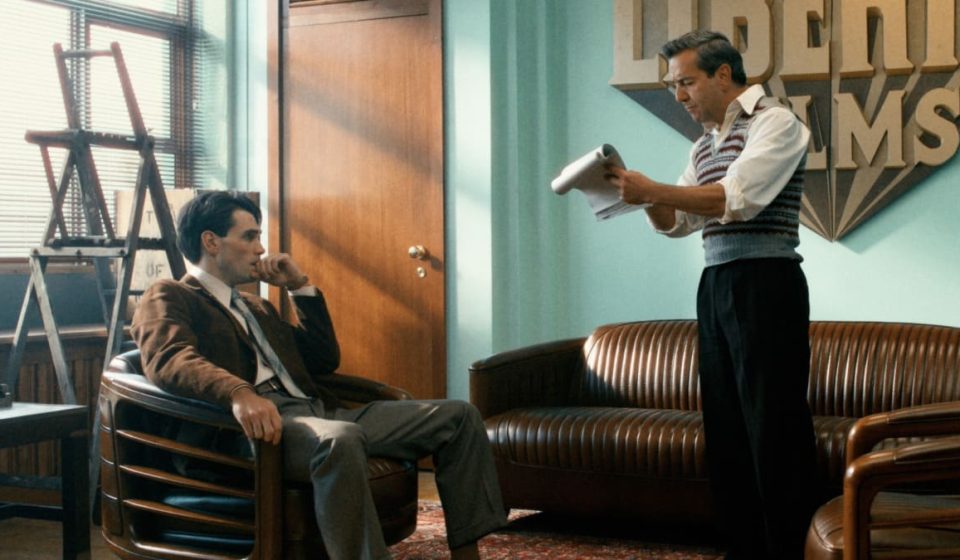
Aaron Burns Jimmy opens with Stewart (KJ Apa) and Frank Capra (Max Casella) discussing a new project, the film that would become It’s a wonderful life. With the Liberty Studios logo hanging behind them (a saccharine motif that ends the film), Capra makes an impassioned speech to his longtime friend and Mr. Smith goes to Washington collaborator, who has not yet returned to cinema since his time in World War II. In flashback, the story goes back five years earlier to a happier time, when Stewart had just won an Oscar and was still trying to convince Ginger Rogers (Jemma Donovan). When Stewart is drafted, he is determined to serve his country just like his father, but Louis B. Mayer (Jason Alexander) insists otherwise. Much to the displeasure of the head of MGM, Stewart went overseas to serve as a pilot.
It’s a patriotic story, but one that Burns struggles to tell without extensive AI backstory and a cast that goes completely overboard. There’s no sense of visual style, as recreated bunkers and the Stewart family home give way to goofy AI-generated renderings of the outside world. The heartfelt moments between the characters are constantly undercut by some of these choppy cinematic decisions, like when Stewart and a character invented for the film, Lady Julia (Kara Killmer), magically slip away from their realistic USO party to dance in front of his bomber as the sun rises over a purple sky, as unreal as that sounds. Other times, the editing and filming actively distract from the emotions at hand: when Stewart jumps on a motorcycle to help downed pilots make an emergency landing, the film is so poorly filmed and composed that the impossible-to-follow scene makes it seem like Stewart was only about five seconds away from them in the first place.
Gn entert