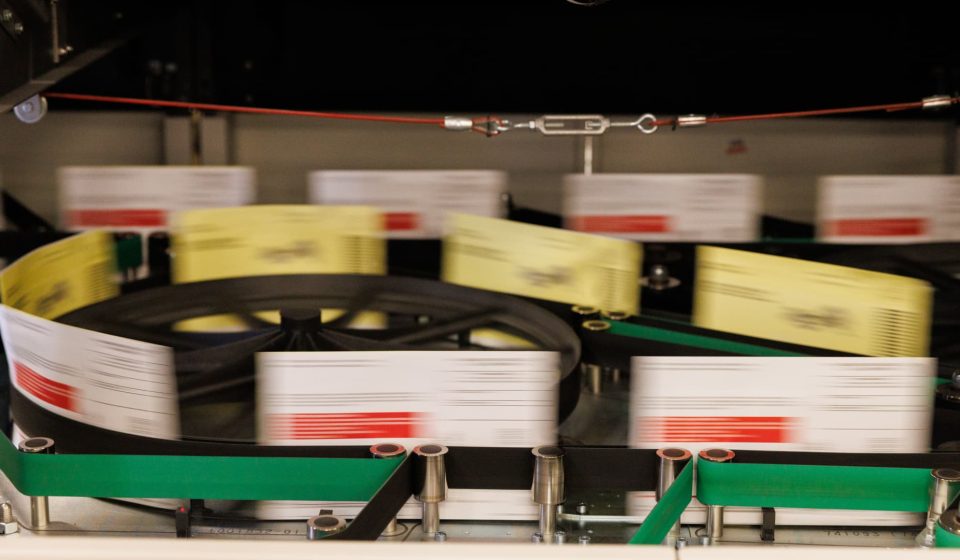
Ballots are scanned and sorted through a machine at the Kearny Mesa Registrar of Voters in San Diego, Calif., Friday, Oct. 23, 2026.
Kristian Carréon | The San Diego Union-Tribune | Media GroupNews | Getty Images
A U.S. judge sharply rebuked the Trump administration on Wednesday in rejecting a Justice Department request to temporarily block California from counting midterm election mail-in ballots from more than 20,000 registered voters who the department says are likely noncitizens.
The move marks the latest setback in President Donald Trump’s efforts to strengthen the federal government’s role in the Nov. 3 midterm elections, as his Republican Party is locked in a tight battle to retain control of both houses of Congress.
U.S. District Judge David Carter issued the ruling after a hearing Tuesday in Los Angeles federal court regarding the Justice Department’s request for a temporary restraining order barring officials from counting the ballots of people he flagged.
The Justice Department’s complaint, filed Oct. 15, constitutes a rare intervention in the voting process weeks before an election and signals the Trump administration’s willingness to challenge the midterm results in court.
“Never before in American history has the federal government, on the eve of an election, sought to force a state and local government to abandon its own constitutional election procedures and bend to the will of the executive branch,” Carter wrote Wednesday.
The judge, appointed by Democratic President Bill Clinton, said the Justice Department’s last-minute request to exclude more than 20,000 ballots went against “long-standing constitutional principles requiring states to control their elections.”
Carter warned that a ruling in favor of the Trump administration “would wreak havoc” and cause “potentially thousands of registered voters to lose the right that generations of Americans have fought for.”
“Eroded trust in our democracy is irreparable,” Carter wrote. “Once a vote is separated, lasting damage occurs. If the Executive Branch can discard votes and threaten ongoing elections because of unproven allegations, then our democracy is in danger.”
The Justice Department quickly appealed the decision to the 9th U.S. Circuit Court of Appeals.
“Every day, more ballots are processed by election officials,” Justice Department attorney Bill Essayli said in a statement. “This ongoing emergency disenfranchises American citizens through dilution.”
California said the state’s safeguards against non-citizen voting were strong. He said the Justice Department’s claims were based on “suspect data” and that complying with its requirements would risk disenfranchising eligible voters.
California is the most populous US state and a Democratic stronghold. It has more seats in the House of Representatives – 52 – than any other state.
Trump has made California a focal point of his sweeping immigration crackdown since returning to the White House, accusing it of undermining public safety through its “sanctuary state” policies that “limit cooperation with federal immigration law enforcement.”
Trump has repeatedly insisted that states are not doing enough to prevent non-citizens from voting, which he says is widespread despite numerous studies and state audits showing it is rare.
The appeals court rejected the emergency request
Carter ruled two days after a federal appeals court on Monday rejected an unusual emergency request from the Justice Department asking the appeals court to temporarily block California from counting ballots before Carter has a chance to rule.
The Justice Department did not say how many of the more than 20,000 people it reported in California had actually submitted an absentee ballot.
He had argued that a restraining order was necessary to ensure California did not hinder prosecutors’ ability to enforce a federal law that bars noncitizens from voting in federal elections.
But Carter said the Justice Department has never explained why counting ballots would harm prosecutions under the law, since states are not required to help the federal government investigate and prosecute crimes.
Besides California, the Trump administration has sought to intervene in elections in two states with competitive races.
In Alaska, the Justice Department last week asked a judge to block the certification of election results if the incumbent Republican senator lost by a narrow margin, alleging that the presence of another candidate with a similar name on the ballot could sow confusion among voters. Alaska requested that the case be dismissed, arguing that it had taken steps to distinguish between the two candidates on the ballot.
In Washington state, the Justice Department sent a letter Monday asking officials not to count ballots received from 400 voters who it said might not be citizens. Washington’s top elections official said the timing of the request indicated it was intended to cast unfounded suspicion on the election results.
California had 23 million registered voters in December 2025, while Washington had 5 million registered voters in 2024, according to state records.
Voting rights activists have expressed concern that the methods the federal government uses to review state voter rolls to identify noncitizen voters risk falsely flagging naturalized citizens for removal from the rolls.
Gn usa