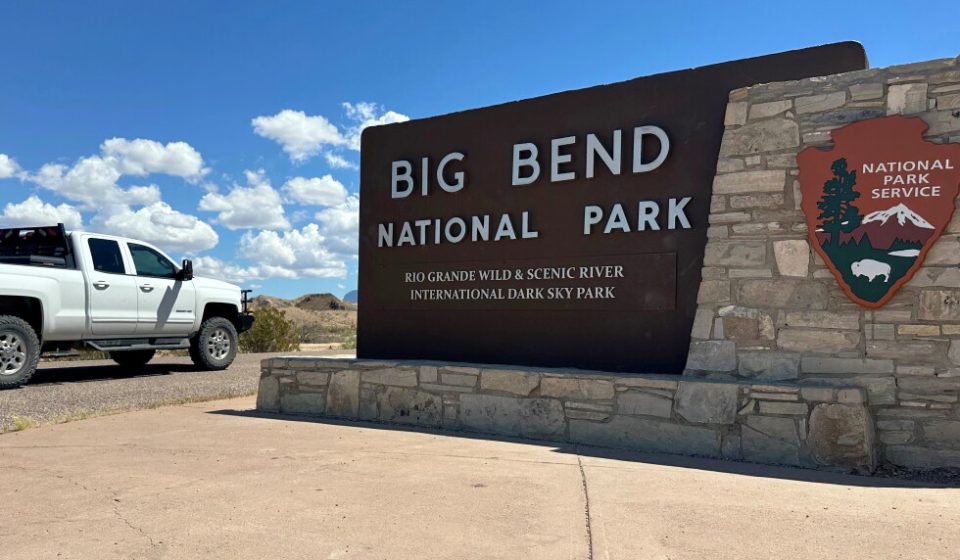

WASHINGTON (AP) — A Texas federal court on Friday temporarily blocked the Trump administration from build a border wall and other infrastructure in the Big Bend region, in a victory for opponents who pushed back on a key campaign promise from President Donald Trump.
Landowners, businesses and environmentalists in the region have united to oppose the planned projects, which are part of a $46 billion project effort by the Trump administration to line the southern border with a mix of 30-foot-high steel walls, vehicle barriers, roads and surveillance technology.
Judge Kathleen Cardone said in her ruling that the plaintiffs were “likely to succeed on the merits of at least one of the lawsuit’s claims, that it is likely that they will suffer serious and irreparable harm without injunctive relief, and that the balance of the actions and the public interest weigh in their favor.”
U.S. Customs and Border Protection defended the plan in a statement Friday.
“We stand by our assessment and remain confident in our legal authorities to secure the border while preserving the unique landscape of the Big Bend region,” the agency said. “We are working with the Department of Justice on next steps.”
The Department of Homeland Security did not immediately respond to a request for comment.
The judge’s ruling includes Big Bend National Park, where opposition to the wall prompted the administration to briefly suspend construction.
Opponents of the proposed border wall have argued that Texas’ 500-mile-long Big Bend region is so isolated and the landscape so rugged that it serves as a deterrent to illegal immigration and that the administration violated the law when it issued a series of waivers allowing it to bypass numerous regulations in order to expedite border wall infrastructure projects.
The lawsuit filed by an environmental organization, defenders of a historic church in Ruidosa and a river guide argued that the Department of Homeland Security was wrong to circumvent regulations intended to protect the environment, culture and archeology of areas like the Big Bend region.
Laiken Jordahl, of the Center for Biological Diversity which filed the lawsuit, called Cardone’s decision a “total victory.”
“The bulldozers are going to be sent back until she rules on the merits,” Jordahl said. “This is such a historic day for Big Bend, for Texas and the Constitution.”
The court’s decision comes just weeks after the administration erected the first border wall panels in the Big Bend sector in mid-September.
The proposed border wall across the Big Bend sector has sparked bipartisan opposition.
Much of the opposition has focused on CBP’s plans for the interior of Big Bend National Park, popular for its beautiful landscapes, limestone cliffs and crystal-clear nighttime views.
When bulldozers were spotted clearing land in the park in August, it sparked widespread opposition, with both Republicans and Democrats calling for an end to the administration. CBP suspended all activities in this sector, but that pause expired earlier this week. The administration has said it is reevaluating its plans for the national park, but has not yet clarified what it will do there.
Park advocates said Friday they were pleased with the judge’s ruling but called on the administration to repair the damage already done to Big Bend National Park and develop alternative plans.
“Big Bend is no place for border fences. It’s time for the administration to come to the table with the border communities who know Big Bend best, undo the damage caused by this ill-conceived project, and find new solutions,” Tiernan Sittenfeld, president and CEO of the National Parks Conservation Association, said in a statement.
The judge’s ruling extends to areas upstream and downstream of the national park, where CBP has planned a series of border infrastructure projects that would largely require construction on private land.
In these areas, the government has worked to obtain permission from local landowners to survey and build on their land, but in a recent court filing it said it was prepared to refer some cases to the Justice Department in which it had been unable to obtain permission from landowners.
Gn headline