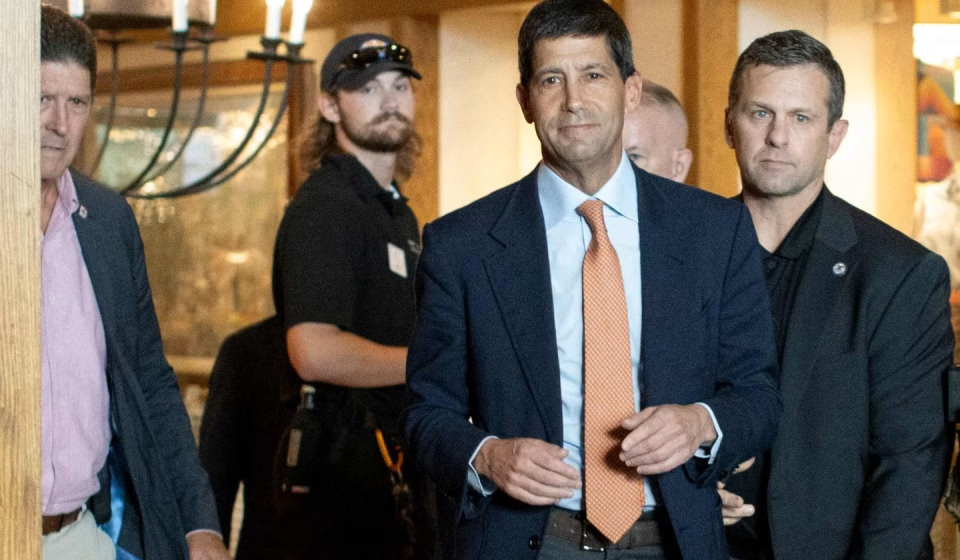

The president of the American Federal Reserve (Fed) estimated, Friday August 28, that inflation was “concerning” in the United States and that he could “with difficulty” qualify monetary policy as “restrictive” ; remarks denoting a certain firmness before the next meeting on interest rates.
“Overall, I would hardly be able to describe the financial conditions as restrictive”declared Kevin Warsh during his first speech at the annual meetings in Jackson Hole, in a national park in Wyoming, in the western United States. “We have work” if underlying inflation (excluding volatile energy and food prices) does not slow down “clearly and quickly enough”he insisted.
His speech was eagerly awaited by investors, frustrated by his sparse communication since taking office in May.
In front of an audience of monetary decision-makers, Kevin Warsh repeated that he was “longstanding” against the idea of communicating on the possible trajectory of American key rates. His statements, however, leave little ambiguity on the fact that the fight against inflation, revived by the war in the Middle East and the surge in energy prices, is ” NOW “ priority. The rise in prices, which he describes as “concerning”was still 3.7% year-on-year in July. The Fed targets 2%; a goal missed for more than five years.
Conversely, Kevin Warsh said to himself “impressed with overall performance” of the world’s largest economy “which seems to have strengthened”. On the labor market side, “our country is doing well”.
Pressure campaign
The American central bank is responsible for controlling inflation without destroying employment: rates are raised to calm price pressures, or lowered to revive the economic machine and prevent people from becoming unemployed.
Such emphasis on inflation generally portends a tightening of monetary policy. This was also the reading of the financial markets: investors, who mostly expected a status quo in key rates at the September meeting, made a shift after the speech. They are now more likely to bet on an increase, according to the CME FedWatch monitoring tool.
Kevin Warsh was appointed by Donald Trump who makes no secret of expecting lower key rates from him to stimulate activity. These are currently between 3.50% and 3.75%.
The American president led a pressure campaign against Kevin Warsh’s predecessor, Jerome Powell, who regularly positioned himself to defend the independence of the institution. Kevin Warsh’s speech did not address this issue.
The next Fed meeting will be held in mid-September. During the previous one, three of the twelve voters showed their disagreement. They were in favor of raising rates. It was the status quo that ultimately won out (rates have not moved since December 2025).