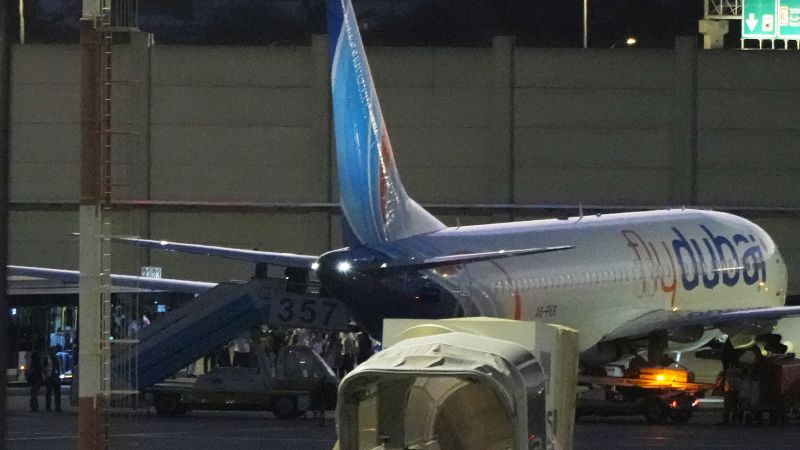
Latest news from Flydubai: identity and motive of pilot who allegedly carried out attack unclear

Questions revolve around how passengers managed to gain access to the cockpit and stop the apparent attempted hijacking of the Flydubai flight on Wednesday.
The alleged attacker, one of the pilots, stabbed his colleague in the cockpit as the plane went down – until the passengers managed to overpower him, restrain him and stabilize the plane.
Israel said injured captain Smit Machchhar unlocked the cockpit from the inside during the attack.
Josh McConkey, a U.S. Air Force reserve colonel and emergency room physician, said the aviation industry overhauled its security measures and protocols after the Sept. 11 attacks, including strengthening the cockpit door to prevent possible hijackings.
“Unless someone is able to open it from the inside, you’re not going to get in there,” said McConkey, who is also running for lieutenant governor of North Carolina.
After 9/11, U.S. airlines were required to install permanent reinforcements on all existing cockpit doors and include them on newly built planes. Many airlines and manufacturers have chosen to use bulletproof materials, composites, reinforced door jambs and locks. The International Civil Aviation Organization, a United Nations agency that oversees global aviation, has a similar code of standards followed by member countries.
Investigators probing the Flydubai incident will likely first explore the flight data recorder and cockpit voice recorder, said Marco Chan, a lecturer in aviation operations at Kingston University in London. They will also interview crew, pilots and off-duty passengers and determine, among other pressing matters, how the cockpit door was opened.
Gn headline