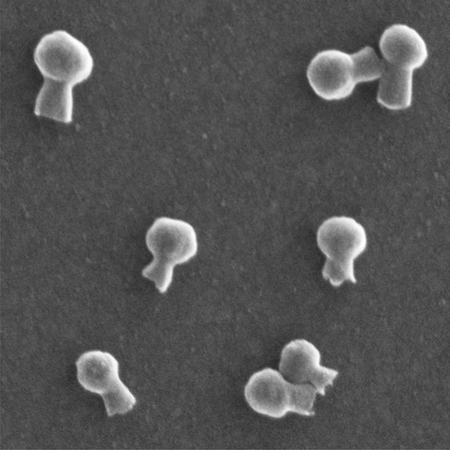

Caltech researchers have developed tiny biodegradable robots that use near-infrared light to help drugs cross the blood-brain barrier, potentially improving the treatment of brain cancer and neurological disorders.
Researchers at the California Institute of Technology (Caltech) have developed light-activated nanorobots that can transport drugs across the blood-brain barrier (BBB), a protective layer that prevents many drugs from reaching the brain.
Called BrainBots, these tiny robots delivered about five times more drugs to the brain than their non-activated counterparts in the experiments, according to the team. The findings could pave the way for new ways to treat brain tumors and neurological disorders that are difficult to treat with conventional drug delivery.
Led by Wei Gao, a professor of medical engineering at Caltech, the researchers published their results online Nov. 25 in Scientific robotics. The study tested the technology in mice, meaning more research is needed before it can be evaluated in humans.
Light activates tiny drug transporters
BrainBots are approximately 250 nanometers in size and made from biocompatible and biodegradable materials. Each capsule contains ammonium bicarbonate, a gas-generating compound, inside a chamber sealed by a temperature-sensitive door. The structure is attached to a drug payload and equipped with DNA molecules called aptamers.
After being injected into the bloodstream, BrainBots are activated using near-infrared light directed through the skull toward the brain. The light generates localized heat, melting the temperature-sensitive grid and triggering gas production.
The resulting propulsion helps the nanorobots move toward cells lining the BBB. Their aptamers recognize and bind to these cells, allowing them to be taken up and transported across the barrier. Once inside the brain, the capsules break down and release their drugs.
This active movement is important because simply injecting drug-carrying nanoparticles into the bloodstream does not guarantee that enough of the payload will reach brain tissue.
Mouse trials are promising
The team tested BrainBots in mouse models of glioblastoma, an aggressive form of brain cancer. The researchers loaded the nanorobots with the chemotherapy drug doxorubicin and assessed whether turning on the light could improve its delivery to the brain.
The activated robots administered approximately five times more medication than their non-activated counterparts. The treatment also slowed tumor growth and prolonged the survival of mice.
Researchers reported no detectable disruption of the blood-brain barrier during treatment. They also observed reduced systemic toxicity compared to conventional administration of doxorubicin alone.
However, only a fraction of the injected BrainBots reached the brain. The remaining particles are expected to degrade after being absorbed by organs such as the liver and spleen, a common route for nanoparticle drug carriers.
The researchers believe this approach could eventually be adapted to provide treatments for other neurological diseases, including Parkinson’s disease. Its potential, however, will depend on improving delivery efficiency and establishing long-term security.
The team is currently working to optimize the emission of near-infrared light and evaluate the stability, degradation and safety of nanorobots inside the body.
The researchers said more work is needed before human studies can begin. The results therefore represent a first demonstration of a possible drug delivery approach, rather than an established treatment for brain cancer or neurological disorders.
Gn Health