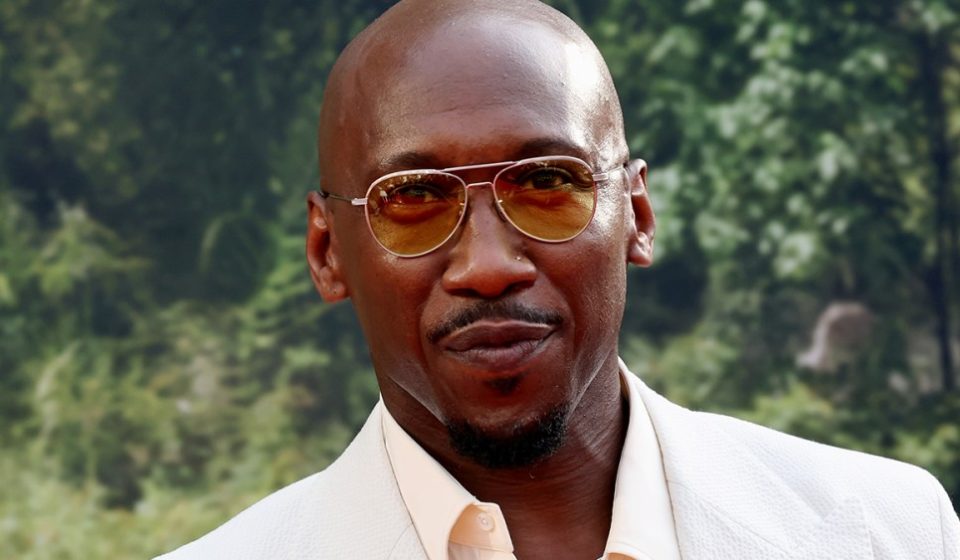
Mahershala Ali got candid about the impact — or lack thereof — of her two Oscars on her Hollywood career during her appearance on a recent episode of Carmelo Anthony and Kazeem “Kaz” Famuyide’s “7PM in Brooklyn” podcast.
The actor, who won best supporting actor trophies for 2018’s “Greenbook” and 2016’s “Moonlight,” asked the hosts about the meaning of an Oscar and whether it really validates whether someone is “a good actor” or not. “There are more good actors than good material,” he said. “It’s not even that all these people are competing for the same spots. It’s just that out of all the material being made, there are only a handful that check certain boxes.”
He continued: “The vast majority of projects that get greenlit don’t feature any roles for me. You have to think that way, you know what I mean? So it doesn’t matter if I have 17 Oscars. If someone doesn’t write something for you or greenlight something with you in mind, you’re like everyone else waiting and watching and searching.”
Although the star noted that actors can produce their own projects, the timeline is usually at least “three to five years.” When asked by Famuyide if an Oscar win validates black actors, Ali replied, “It’s just talk. It doesn’t translate into anything real. You don’t want to find yourself in a situation where, oh, it’s ‘the diversity project’. You just want to make good material as a black person. You don’t think of yourself as this exotic other per se. You just live your life.
Most recently, Ali starred in Bassam Tariq’s “Your Mother Your Mother Your Mother”, released in theaters on September 25. Tariq was also the original director of Marvel’s failed film “Blade,” in which Ali was set to play the title role, which he recently spoke about in an interview with The New Arab.
“It was funny and strange to start casting and building without a proper script,” Tariq told interviewer Hanna Flint of his short career at Marvel. “You sit there and you tell the actors what their role is going to be, and they just have to believe you. It’s also very dangerous because if the text comes in and it doesn’t match what you were saying, your credibility is completely destroyed. All I have is my integrity, and I’ve thought about that a lot.”
“If you’re the bearer of bad news for your actors, but you’re not the one making those decisions — and it’s actually coming from a company — that’s not a good way to be a director,” he continued. “I know some people can accept that and get away with it, but I learned that I was losing credibility with my actors and that wasn’t a healthy way to operate as a filmmaker. Life is too short to make crappy movies, so that was my big lesson: I have to have total control over my script. If we don’t agree, that’s between them and me. It’s pretty sad because we had high hopes for what we wanted to build.”
Speaking about the film’s failure to get made, Marvel Studios president Kevin Feige previously said he felt “like a gigantic loser and a failure,” a statement Ali agreed with in a GQ interview in the months that followed. “To this day, I don’t know why it didn’t happen. I just know it did: Kevin, he said it was the biggest failure of his career and I agree,” Ali said.
Gn entert