
The onset of a heart attack or stroke may come as a surprise to many, but most cases don’t happen out of nowhere.
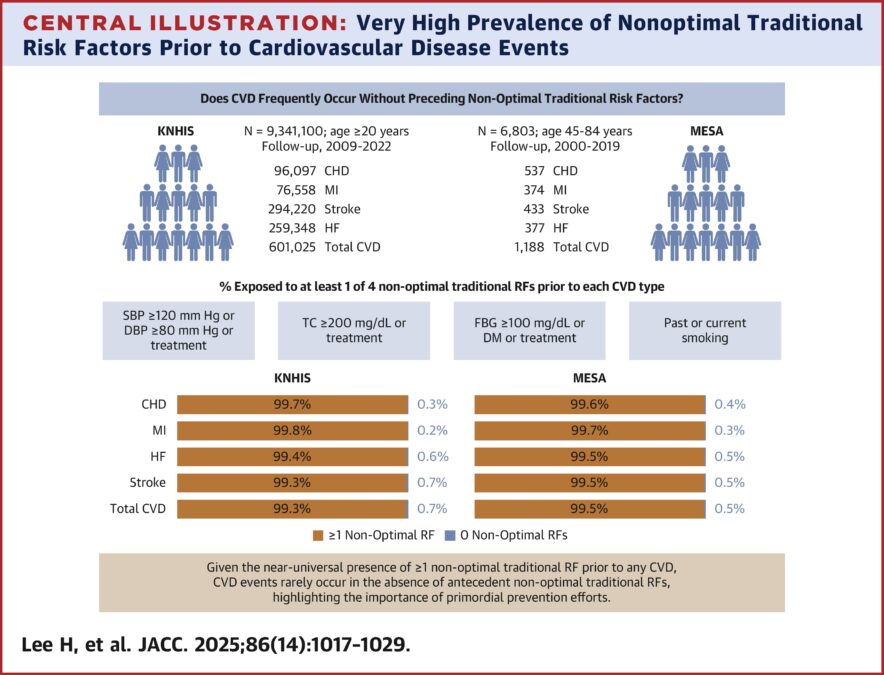
According to a recent study, almost everyone who suffers a major cardiovascular event has at least one of four risk factors.
In a 2025 study of 9 million people in the United States and South Korea, 99% of all cardiovascular events were preceded by either higher than optimal blood pressure, cholesterol or blood sugar levels, or smoking.
High blood pressure was the main cause.
It was present before 93% of heart attacks, strokes or heart failure.
The findings suggest that controlling certain health risks, such as blood pressure, can help patients avoid serious, life-threatening consequences later in life.
This year we saw more evidence of that.
A new meta-analysis of 51 trials has shown that treating hypertension can lead to rapid and lasting cardiovascular benefits.
The video below provides a summary:
In more than 350,000 participants, each 5 mmHg reduction in systolic blood pressure was associated with an approximately 12% lower risk of stroke, ischemic heart disease, or heart failure during the first year of treatment.
Furthermore, this trend was broadly consistent across five major classes of hypertension medications: ACE inhibitors, angiotensin II receptor blockers, beta blockers, calcium channel blockers, and diuretics.
All of these medications seemed to help.
“Our results show that antihypertensive treatment provides substantial cardiovascular benefits early on, which are maintained over time without progressive amplification,” conclude the authors of the meta-analysis.
“These findings have potentially major implications for cardiovascular prevention and clinical decision-making.”
Historically, many heart attacks are attributed to blocked arteries, but the reality is more complicated, especially among young people and women.
Recent data, for example, has shown that more than half of heart attacks in women aged 65 or younger are triggered by causes other than blocked arteries.
If doctors and patients had a clearer idea of what health factors to monitor, certain risks to the heart could be managed, thereby preventing future cardiovascular events.
Decades of randomized trials show, for example, that cholesterol-lowering drugs, such as statins, can significantly reduce the relative risk of a future cardiovascular event.
According to a 2022 analysis, genetic studies suggest that for every mmol/l decrease in “bad cholesterol” levels over a lifetime, the risk of cardiovascular disease decreases by more than 50%.
Additionally, a recent randomized trial in Australia involving nearly 10,000 older adults found that after about six years, those who took statins were 30% less likely to suffer a cardiovascular event.
Treating hypertension and cholesterol levels appears to improve cardiovascular outcomes, but improving glycemic control also shows promise as a potential preventative goal.
Large randomized trials consistently show that GLP-1 mimics, like Ozempic, are associated with a reduction in major cardiovascular events, including myocardial infarction, stroke, cardiovascular death, and heart failure.
Earlier this year, an analysis of data from a randomized trial found that among people with type 2 diabetes and a history of heart failure, those who took a daily semaglutide tablet were 22% less likely than those on placebo to be hospitalized or need urgent care for heart failure, or to die from cardiovascular causes.
This benefit, however, was not observed in people without a history of heart failure.
“Collectively,” the authors of a 2026 review in Traffic conclude, “These results suggest that GLP-1 RAs influence multiple cardiometabolic pathways and may shift the underlying metabolic milieu toward a more favorable physiological state.”
Related: New Drug Significantly Reduces Blood Fats Linked to Heart Disease, Clinical Trial Shows
More studies are needed to confirm how blood sugar, high blood pressure and cholesterol medications might work to protect the heart, but evidence increasingly suggests they have a positive effect.
It is possible that the earlier health factors such as hypertension, cholesterol and glucose levels are managed or treated, the less likely cardiovascular problems will be.
For smoking, this is particularly evident.
This lifestyle factor is linked to many health problems, such as heart failure, and quitting this addictive substance, while notoriously difficult for some, can add years to a person’s life expectancy.
Some recent studies suggest that if a smoker can avoid smoking for a decade, they can expect to live almost as long as someone who has never smoked a cigarette in their life.
Even at age 75, quitting smoking is linked to better health outcomes.
Earlier this year, former American College of Cardiology President Edward Fry argued that the U.S. health care system needs to address health problems like smoking or hypertension before they get worse.
“We spend twice as much as other industrialized countries and get worse results because we focus on fixing the car after a breakdown rather than preventative maintenance,” Fry said.
If patients and doctors know which health factors increase the risk of cardiovascular events, they can take preventative measures before a serious event occurs.
Even small changes can add up.
Related: US cardiologists release new guidelines on how to manage cholesterol
According to the American Heart Association (AHA), a 10 percent reduction in health factors, such as high blood pressure, high cholesterol, diabetes and obesity – combined with a 20 percent improvement in blood pressure, blood sugar and cholesterol control – could reduce cardiovascular events and strokes in women by up to 23 percent.
This is nothing to scoff at.
“These projections highlight how critical it is that we start focusing on how to help all people stay healthy,” cardiologist Karen Joynt Maddox said earlier this year.
“Know your numbers, listen to your body, and advocate for your health.”
You have more control than you think.
The study on the four risk factors preceding cardiovascular events was published in the journal Journal of the American College of Cardiology.
This article was fact-checked by Rebecca Dyer and edited by Rebecca Dyer. Although we are proud of our process, we are only human. If you spot an error, please let us know.
Gn Health