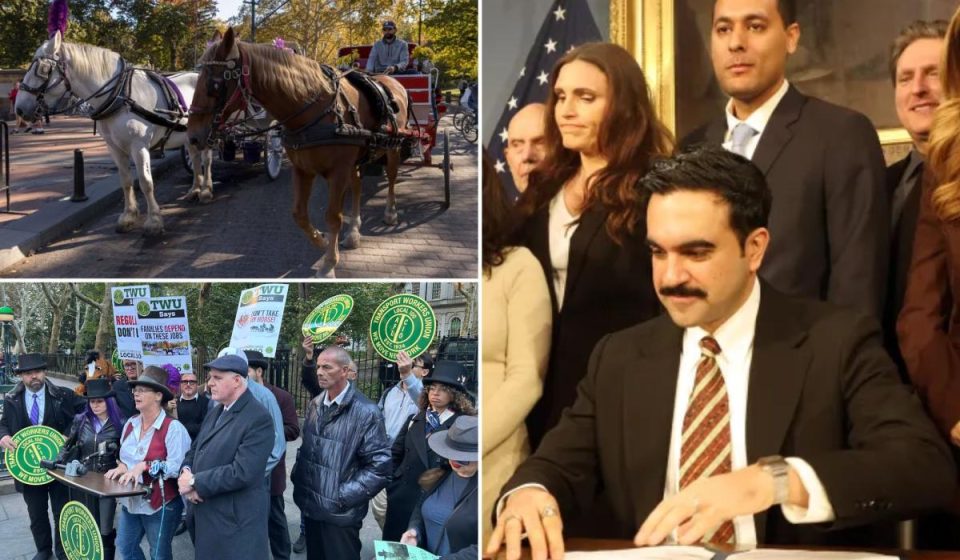
Mamdani officially bans horse-drawn carriages, ending a century-old Central Park tradition

It’s a town without horses.
Mayor Zohran Mamdani signed a controversial bill Thursday banning horse-drawn carriages in the Big Apple, ending a century-old Central Park tradition, as he pledged to use taxpayer money to buy out soon-to-be-unemployed drivers.
Hizzoner signed the law in the Blue Room at City Hall Thursday morning, in what was only his third public signing since taking office — flanked by Council Speaker Julie Menin (D-Manhattan) and former Mayor Bill de Blasio (D), who have advocated for change for years.
The new legislation – named Romanch’s Law after the 18-year-old tourist killed in a car crash in Central Park earlier this year – will end the industry in 2028.
“Our city has changed, and now it’s time for our laws to change too. That’s why I’m signing Romanch’s Law today,” Mamdani said, adding, “legislation that will eliminate horse-drawn carriages from New York City once and for all by June 1, 2028.”
“In signing this bill, I do so with a deep sense of both gratitude and obligation to the more than 200 New Yorkers who make up the horse transportation industry today,” he added.
The influential union representing these workers, the Transportation Workers Union, has vowed to take legal action to stop the new ban from taking effect.
The law stipulated that City Hall would develop a plan with the City Council to help find jobs for the industry’s approximately 200 workers.
However, the Mamdani administrator now announces that he will offer “redemptions” of medallions and other allowances to drivers.
Full details of the plan were not immediately known, with lawmakers setting next April as the deadline for a comprehensive project with the TWU.
“This plan will include medallion buyouts for owners, a stipend for drivers and rank-and-file employees to complete workforce training and career development classes, as well as career counseling and entrepreneurship support,” Mamdani said. “And as we refine the details of the plan, we will work directly with the carriage drivers to incorporate their feedback every step of this process.”
The administrator only released what he called a “framework” of his plan earlier this week, without any information on cash payments to drivers.
The mayor did not answer any questions about the placement of the horses or the cost of the law during the signing.
Speaker Menin, who shepherded the bill in council, said the bill was necessary and that Romanch Mahajan’s death was “not in vain.”
“We will never forget him,” she said. “And that’s why we name this bill after him.”
Gn usa