Maps show where Thanksgiving storms could impact festivities and disrupt travel plans

Various types of severe weather are expected to affect large swaths of the United States this week, potentially disrupting Thanksgiving plans and hampering Americans’ travel along both coasts and into the middle of the country.
A storm system that developed over Florida earlier in the week continued to batter that state and others in the Southeast, causing flooding this has impacted highways and flight schedules.
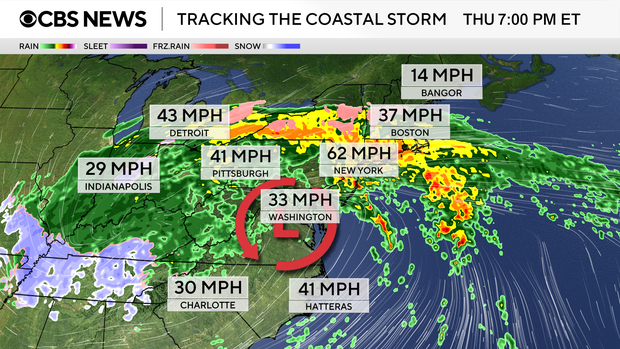
Meteorologists said they expected the storm to move up the coast and move northeast by Thanksgiving, with forecasts showing strong winds and heavy rain across the region. Meanwhile, parts of the Midwest, including Missouri’s capital, St. Louis, could see snow during the holidays.
CBS News 
About 60 million Americans were under severe weather alerts Thursday, which included warnings of high winds, winter storms and flooding, depending on the region.
The weather service warned of powerful wind gusts, potentially as intense as 70 mph, brewing along a huge swath of the East Coast, from South Carolina to Massachusetts. Possible coastal flooding could make roads impassable in some areas, he said.
In New York, organizers of the iconic Macy’s Thanksgiving Day Parade announced that the parade was being postponed until Saturday due to the approaching storm. This is the first time in the parade’s century-old history that it has been postponed, although it was not held at all from 1942 to 1944 due to World War II. In 1971, the balloons were grounded due to high winds, but the parade continued anyway.
CBS News 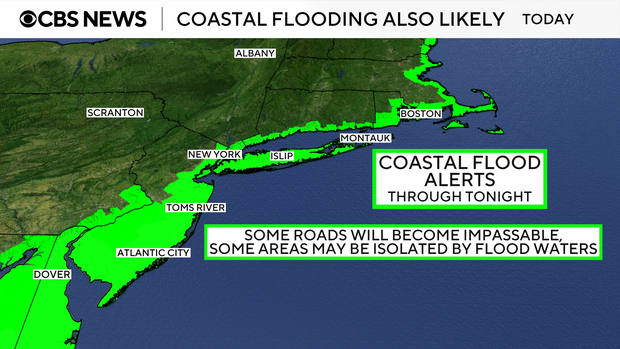
Although the city is not expected to experience excessive rain, a relatively rare strong wind warning has been issued for its five boroughs, as well as neighboring areas of New Jersey. The warning will remain in effect until Friday afternoon, according to the New York Weather Service, which said residents in the warning zone should prepare for destructive winds that will down trees and damage power lines, likely causing widespread outages.
“Travel will be difficult,” the weather service said, “especially for high-end vehicles.”
New York Governor Kathy Hochul declared a state of emergency for New York City, as well as Nassau, Suffolk and Westchester counties, on Wednesday evening.
“We are expecting heavy rain and strong winds which could create dangerous travel conditions,” she wrote on social media.
In another travel advisory, New York City Mayor Zohran Mamdani said forecasts indicated the worst of the storm would likely hit the city Thursday afternoon through Thursday evening.
CBS News 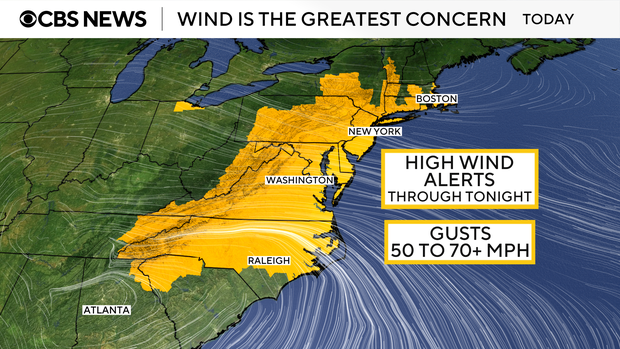
Besides New York, other major cities like BostonPhiladelphia, Pittsburgh and Washington, D.C., are expected to receive cool rains for Thanksgiving, forecasters said, while noting that most metropolitan centers should be spared the highest amounts. They warned that a combination of freezing rain and tremendous winds, up to 75 mph, in Washington, D.C., could make any type of travel difficult over the holidays.
Up to 5 inches of rain, or more, could fall in other locations, especially southeastern states like Florida and the Carolinas. They could also face damaging winds, tornadoes and, potentially, waterspouts as the storm system plays out, forecasters said. The system already brought more than half a foot of rain to Miami Thursday morning, leading to significant flooding for some residents who woke up to find roads and parking lots submerged in water.
At Miami International Airport Wednesday evening, a FedEx cargo plane went off a runway in rainy conditions, which caused a temporary ground stop. No injuries were reported.
CBS News 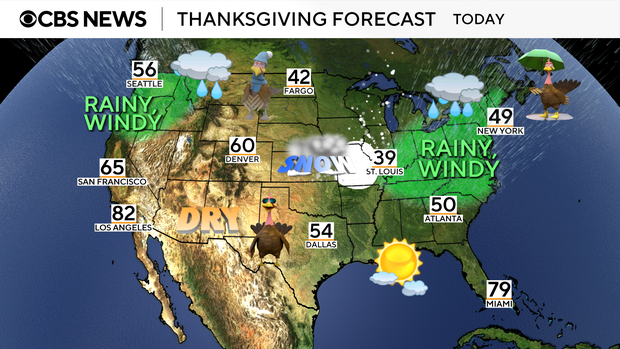
Inland portions of the eastern United States and parts of the Midwest could receive their first measurable snowfall of the season around Thanksgiving. The weather service has issued several winter storm warnings and winter weather advisories for parts of Illinois and Missouri, including St. Louis, through Thursday evening, as sections of both states brace for up to 6 inches, and even 9 inches in some areas, of snow.
“Roads, especially bridges and overpasses, will likely become slippery and hazardous. The weight of snow on tree branches could down power lines and cause sporadic power outages,” the St. Louis Weather Service wrote in an advisory issued Wednesday, recommending people delay travel altogether, if possible.
Gn headline