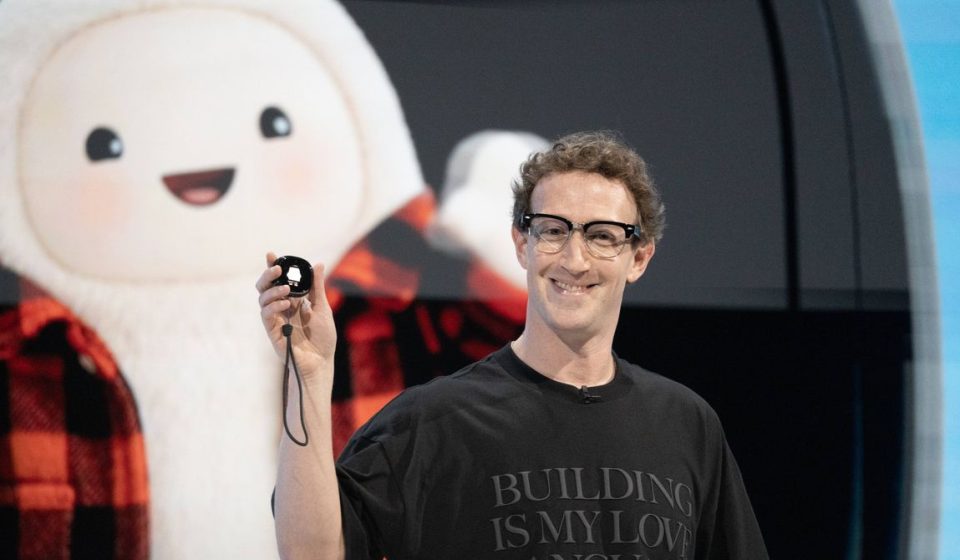

Mascot of the Muse of Meta is called Jolly. It’s an adorable and cuddly representation of Meta’s AI agent that you can dress up however you want, like a doll. At the company’s recent Meta Connect event, CEO Mark Zuckerberg’s furry muse donned a toga and laurel wreath. In the Instagram ads I saw for Muse, the mascot wore workout clothes and bragged about helping me achieve my fitness goals. Later this year, Meta plans to sell a Tamagotchi-style device for your Muse character. Everything is very kawaii coded.
Although Muse’s ability to accomplish digital tasks has propelled it to the top of the app charts, its Labubu-adjacent mascot has cemented this agent in the cultural zeitgeist. Alexandr Wang, head of AI at Meta, recently posted non-stop memes of Jolly, sometimes in suggestive situations. What puzzles me is why a product aimed at adults (Muse is for ages 18 and up) feels like a well-designed children’s toy.
“It’s a story in search of a story,” Meta spokesperson Daniel Roberts told WIRED. “People want to be able to create their own avatar with a unique personality and style, because it’s fun and brings them joy. We ask everyone who uses the Muse app to provide their date of birth, we prevent people we detect as under 18 from creating an account, and we perform additional checks to ensure that people who say they are adults are actually over 18.”
Mona Sarantakos, vice president of product management at Meta Superintelligence Labs, describes Muse’s design process as relying on “feel-good” elements and meant to be less distracting than chatting with “a company logo or entity,” in a blog post she co-wrote around Muse’s release.
Youth advocates are already opposing the Meta’s Muse mascot. “Oh my God, that sounds like a Teletubby,” says Josh Golin, executive director of Fairplay, a nonprofit that previously lobbied against Meta’s targeting of children. “It’s clearly a character that would appeal to very young children,” he says. “People who study children’s media understand that these rounded shapes particularly appeal to preschoolers.”
Jolly’s appeal isn’t limited to those who wear diapers. The adorable aesthetic of Muse’s mascot also appeals to me, a 32-year-old living in San Francisco. This branding could disarm people of all ages, especially as backlash against meta and generative AI continues to resonate with many Americans.
“These types of cute factors can make the product warm and less threatening,” says Julian De Freitas, an associate professor of marketing at Harvard who focuses on AI companions. “There’s a high bar they have to clear here, because attitudes toward Meta are pretty negative after the social drug rulings.” In August, Meta settled claims over social media addiction, agreeing to add restrictive features for teens on Instagram and Facebook and paying up to $16.7 billion.
Some experts I spoke with were less convinced that this design was intended to appeal to children, comparing Muse’s mascot to Japan’s long history of relying heavily on lovable characters to market technology. Meta’s approach isn’t unique either. From the annoying chirping of Microsoft’s Clippy to the newer red-shelled lobster OpenClaw, AI assistants often revolve around anthropomorphized characters.
No matter your age, a stuffed creature representing an AI tool can be disarming, even to the point of making you forget about privacy concerns. For example, Meta trains its AI models on your Muse interactions unless you opt out.
Gn bussni