Mexico eliminates cartel leaders, but criminal groups in Sinaloa and Jalisco adapt and survive

MEXICO CITY (AP) – The arrest of another Mexican drug lord this weekend adds to a series of actions against cartels as Mexico steps up its crackdown on organized crime under growing pressure from US President Donald Trump and with US intelligence support.
The capture of Fausto Isidro Meza Floresknown as “El Chapo Isidro,” was hailed by both governments as a security victory that could shift the balance of power within the Sinaloa cartel. Yet violence persists between rival criminal groups across Mexico, where two powerful organizations – the Sinaloa cartel and the Jalisco Next Generation Cartel – continue to dominate the criminal landscape.
The two groups were designated foreign terrorist organizations by the United States, but experts say it still retains significant power in Mexico and abroad.
Here’s a look at the balance of power between the two groups and how it has evolved under Claudia Sheinbaum’s presidency.
The end of the big bosses: “El Mayo” imprisoned, “El Mencho” dead
At the end of July 2024, two months before Sheinbaum, one of the founders of the Sinaloa cartel, takes office, Ishmaël “El Mayo” Zambadawas arrested in the United States following a Hollywood-style plane kidnapping orchestrated by “Los Chapitos”, the sons of his former partner, Joaquín “El Chapo” Guzmán.
Shortly thereafter, the Sinaloa Cartel plunged into a long-term internal war which continues to ravage the state of Sinaloa, in the north of the country.
A year and a half later, the Mexican army killed Nemesio Oseguera Cervantes, “El Mencho”, leader of the Jalisco New Generation Cartel, or CJNG, one of Mexico’s most powerful criminal groups. His death triggered a violent response in 20 Mexican states, which left more than 70 dead, but which lasted only a few days.
The United States celebrated both operations. Zambada is serving a life sentence there and two of his sons are cooperating with American authorities. Mexico has accused Washington of interference in the Zambada affair, although U.S. officials have denied it.
Once these pillars were excluded, the two groups began to restructure.
Sinaloa: Internal war and the role of “El Chapo Isidro”
Zambada’s arrest caused a split within the Sinaloa cartel – a confederation of criminal groups – and sparked a bloody battle between two factions, “Los Mayos” and “Los Chapitos”. The fighting has increased violence across the state and put Sheinbaum under intense pressure.
The government has strengthened its military presence on several occasions. About 23% of its troops are now deployed in the state and security forces have arrested hundreds of people from both factions.
But violence continued as criminal groups compensated for the arrests by recruiting younger and younger people, said Miguel Calderón of the National Public Security Council, a Sinaloa citizens’ group.
Pressure from Washington increased after he accuses the leaders of the ruling party in Sinaloa of links to drug trafficking and requested their arrest. Sheinbaum refused.
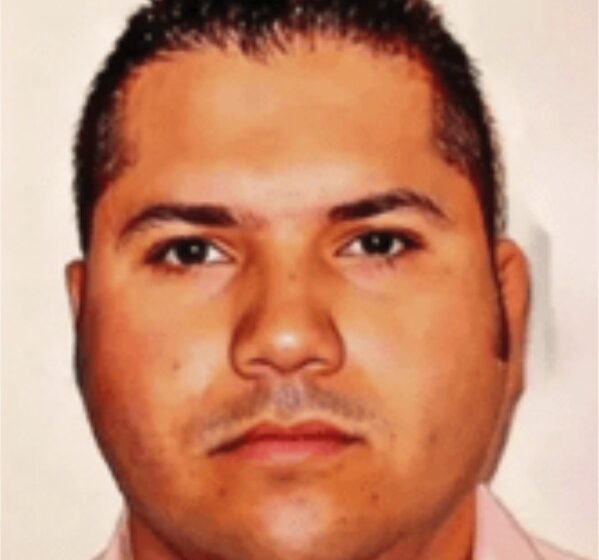
Meza Flores, arrested this weekend, played an important role in this landscape.

This undated image released by the US State Department shows Fausto Isidro Meza-Flores. (US State Department via AP)
License for this photo
He led his own criminal group heavily involved in drug trafficking that tightly controlled northern Sinaloa but also had a presence in southern Mexico. His group first allied itself with “Los Chapitos” and later with Zambada supporters, according to authorities.
Meza Flores was known for his ability to corrupt local authorities, meaning his arrest could provide clues about politicians’ ties to the cartel, said Sinaloa journalist Ismael Bojórquez.
Meanwhile, the United States is offering rewards of up to $10 million each to two Sinaloa cartel figures, Iván Archivaldo and Jesús Alfredo Guzmán Salazar. These “Chapitos” are described as members of a new generation of drug traffickers experiment to produce the most potent fentanyl in the world.
CJNG: A peaceful succession after the assassination of “El Mencho”
CJNG, which has a pyramid command structure, has experienced a leadership transition without the internal conflicts seen in Sinaloa, allowing the group to take advantage of its enemy’s weakness and continue its activities despite pressure from authorities, said security analyst David Saucedo.
There was a time when there was fear that two potential successors would clash. But two months after killing Oseguera Cervantes, Mexico arrested one of them, Audias Flores Silva, leaving the cartel leader Mexican-American stepson, Juan Carlos González Valenciaas a leader. The United States offers a $25 million reward for González Valencia.
Mexico continued to arrest regional leaders, including members of a cell responsible for widespread violence in Michoacanwhich, according to Saucedo, indirectly strengthened González Valencia.
Among the figures most sought after by both countries are Julio Alberto Castillo Rodríguez, the son-in-law of “El Mencho”; Hugo Gonzalo Mendoza Gaytán, who was linked to a ranch that exposed the horrors of the cartel; and Ricardo Ruiz Velasco, considered a member of the CJNG special forces and responsible for propaganda.

Soldiers walk past a burned cargo truck on a highway between Guamuchil and Guasave in Sinaloa state, Mexico, Saturday, Nov. 21, 2026, following overnight violence after Mexican authorities captured cartel leader Fausto Isidro Meza Flores, better known as “El Chapo Isidro,” in Guasave. (AP Photo/Martin Urista) Photo taken with a smartphone.
License for this photo
Mixed assessment of the strategy against cartels
Sheinbaum’s strategy marks a departure from “hugs, not balls” approach of his political mentor and predecessor, Andrés Manuel López Obrador, which meant avoiding direct confrontations with the cartels.
But Vanda Felbab-Brown, a researcher at the Brookings Institution, says it is still too early to know whether this strategy will succeed.
This approach helped Mexico defuse Trump’s threats of military intervention, while allowing Washington to claim its successes and receive nearly 100 criminals for prosecution.
But the violence was not brought under control, Felbab-Brown added. Homicides have decreasedbut not the disappearances and extortions. Authorities have also failed to regain territory captured by the cartels, break their hold on businesses or politicians, or cut off the flow of drugs to the north.
She nonetheless praised U.S. efforts, in cooperation with Mexico, to begin targeting the middle operational ranks of criminal groups, particularly along the border. The capture of Meza Flores fits that approach, she said.
“It’s a much more effective and much more comprehensive strategy than just going after the capos,” she said.
Gn usa