The problem in intercollegiate athletics has never been about the student-athletes.
The problem is with the adults in the room who, for decades, have run a multibillion-dollar for-profit business on the backs of mostly African-American football and basketball players at some of the nation’s most prestigious universities.
Under the guise of amateurism, the adults in the room made mind-boggling decisions: paying exorbitant salaries to head coaches, eating contracts, and exercising poor judgment that cost universities millions.
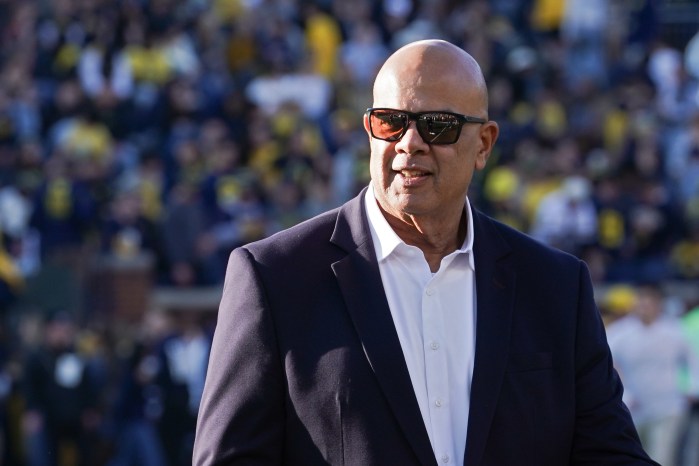
The most recent example of ineptitude came earlier this month when the University of Michigan, still recovering from a sex scandal involving former football coach Sherrone Moore, offered its vacant athletic director position to Texas A&M AD Trev Alberts. Alberts was expected to replace Warde Manuel, one of the university’s top athletic directors in terms of on-field success, a victim of the Moore scandal.
On November 17, Alberts signed a memorandum of understanding to succeed Manuel. Six days later, a representative from the Michigan search company called Alberts and told him he would not get the job.
This turnaround occurred because of the university’s zeal to hire a replacement and move on. No one vetted Albert – not the board, not the president, not the president’s advisors – or vetted his performance as athletic director at the University of Nebraska.
During Alberts’ tenure in Lincoln, a women’s basketball player had a sexual relationship with an assistant coach. The player was kicked off the team and the coach was fired. In February 2024, the player sued the Nebraska Board of Regents, the Nebraska women’s basketball coach and Alberts. The lawsuit accuses Alberts of violating the player’s civil rights by approving her removal from the team, refusing to order an investigation and encouraging her to leave the school.
What was damning were Alberts’ responses to deposition questions about relationships between supervisors and subordinates. During a deposition, Alberts was shown Nebraska’s policy on consensual relationships, which clearly states: “It is prohibited for faculty or staff members to engage in a romantic relationship with an undergraduate student.” »
Alberts agreed the policy applied to coaches and student-athletes. Yet when asked, “College coaches should never have sexual relations with the student-athletes they coach.” TRUE ? He said, “I don’t know how to answer that. I mean, you know, it depends.” In his deposition, Albert said COVID-19 eligibility rules led to older players being closer in age to coaches, which he said made the hypothetical situation “nuanced.”
What?
If the board, search firm or anyone else had done their due diligence, they would have concluded that, given the scandal Michigan was trying to escape, there was no way Alberts could be offered the job.
The clumsiness of the adults in the room could cost Michigan $17.2 million, according to the memorandum signed by Alberts. The school already owes Texas A&M $4 million to cover its buyout. The university asked Manuel to stay on board and steady the ship until they found his replacement.
Jaime Crawford/Getty Images
The larger and persistent problem remains the hypocrisy of the intercollegiate enterprise, where young student-athletes risk their lives on the fields and courts while adults make stupid, money-motivated decisions in the boardrooms.
Intercollegiate athletics exists in the fantasy wing of the academy, where athletes are governed like chattel. These are products that fuel a semi-professional campus entertainment industry. Through lucrative television contracts and sponsorships, football and basketball fund the NCAA headquarters and a staff charged with policing overzealous coaches and keeping players in their place.
How did we get here?
Ed O’Bannon, the former UCLA basketball star, began to change the equation in 2009, when he filed a class-action lawsuit against the NCAA. O’Bannon’s landmark lawsuit challenged the NCAA’s rule regarding using the name, image and likeness (NIL) of former student-athletes for its own commercial purposes without compensating the athletes. It was the beginning.
In 2014, a judge ruled that the NCAA’s longstanding practice of preventing payments to student-athletes violated antitrust laws. The NCAA reluctantly saw the writing on the wall and announced in 2021 that its board had agreed to new rules that removed several key restrictions: College athletes could enter into paid endorsement and sponsorship deals and use agents to handle their advertising.
The dam broke in 2024, following a settlement that permanently relaxed the NCAA’s transfer eligibility rule, allowing Division I athletes who transferred multiple times to compete immediately after changing schools.
Easier transfer rules have turned smaller schools into minor leagues for larger ones, but they have been a boon for talented student-athletes who can move around more freely.
These new level playing field upset a number of coaches, fans and administrators who were used to the old model, where athletes were just grateful to be there. They competed for room, board and tuition in the name of amateurism, while head coaches and athletic directors were richly compensated and television rights raked in millions.
Indeed, even as the scales have shifted, the undercurrent of resistance to progress has never lessened, with forces trying to drag the system back to the good old days.
Politicians have become increasingly involved in college sports, with politically connected coaches complaining about rosters being reshuffled every year. For many, headlines about young athletes earning hundreds of thousands of dollars from NIL contracts were disconcerting.
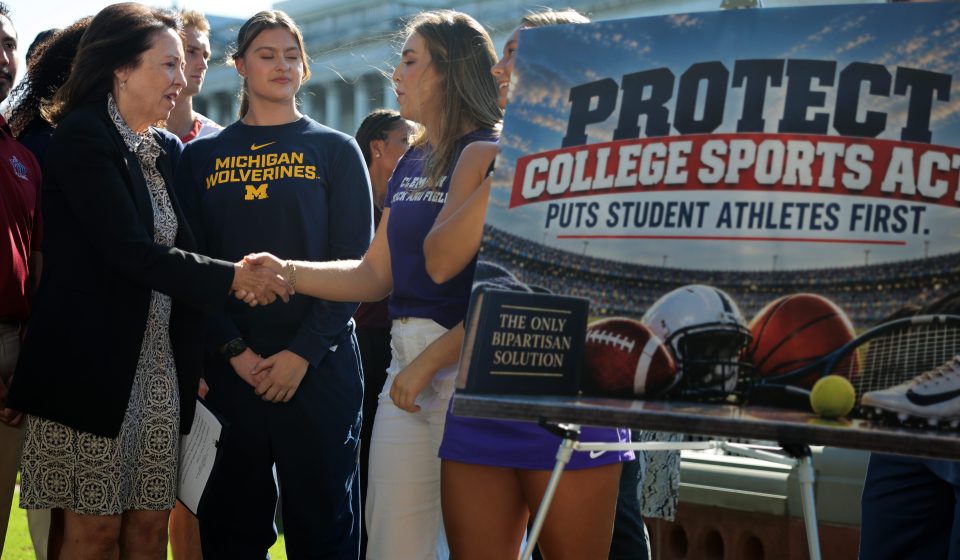
The result of resistance to this change was the Protect College Sports Act of 2026. The bipartisan Senate bill seeks to regulate NIL income, restrict transfers, and strengthen eligibility controls. Essentially, the proposed bill brings together adults trying to turn the clock back to a time when coaches were free to chase opportunities and money, while unpaid athletes were kept in place.
The reality is that while the bill — which passed the Senate in September but whose future is uncertain in this lame-duck House — claims it protects college sports, it is decidedly not designed to protect athletes. It is designed to allow the adults in the room to have their way.
They want to keep making billions and billions of dollars, keep paying astronomical salaries to coaches, and bury their hiring mistakes in buyouts, knowing that TV revenue will bail them out.
What the adults in the room really want to do is put the athlete back into gratitude mode. Let’s be clear: football and basketball players at top programs are the basis of profits.
The adults in the room want to place this genie as far into the bottle as possible.
Scott W. Grau/Icon Sportswire via Getty Images
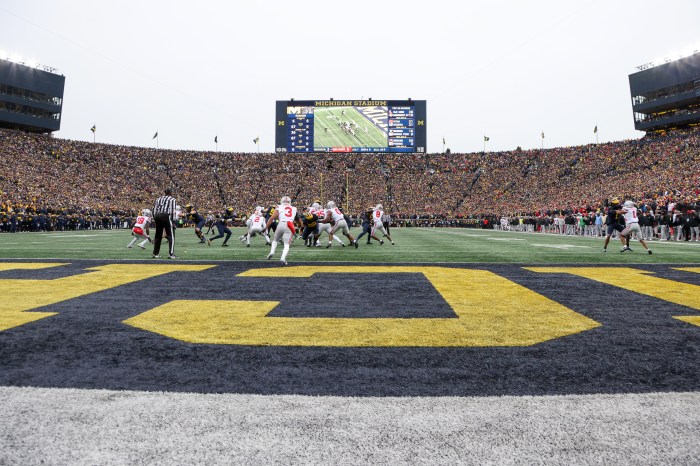
On Saturday, more than 100,000 fans will gather at Ohio Stadium in Columbus to watch Michigan take on Ohio State in an old and lucrative rivalry. This confrontation underscores the promise of college sports and its continued hypocrisy.
Ohio State head coach Ryan Day is looking to keep his job after a disappointing season. The stakes for Michigan are much higher. The school would like to distract attention, at least temporarily, from a blunder that could cost it more than $20 million. Perhaps the revenue Michigan earns from football on the backs of student-athletes running, passing and jumping will help make up for its mistake. The hypocrisy continues.
When you take a closer look at the Protect College Sports Act, you realize that it is the student-athletes who need to be protected from the adults in the room.
Gn sports