ZDNET Key Takeaways
- Microsoft revealed three new AI models at Ignite 2026.
- It claims 96% of the performance of Claude Opus at 5% of the cost.
- Cheaper models could save Microsoft hundreds of millions.
During today’s Microsoft Ignite 2026 keynote, the company introduced two new cutting-edge AI models designed for what the company describes as “everyday” coding tasks. But there’s a bigger story: what these models could mean for Microsoft’s AI costs and its reliance on OpenAI.
Microsoft claims that its MAI Code 2 model displays 96% of the performance of Claude Opus 5.5 at 5% of the price of Opus 5.5.
Also: Microsoft wants to put a monetary value on AI work – but can you trust the math?
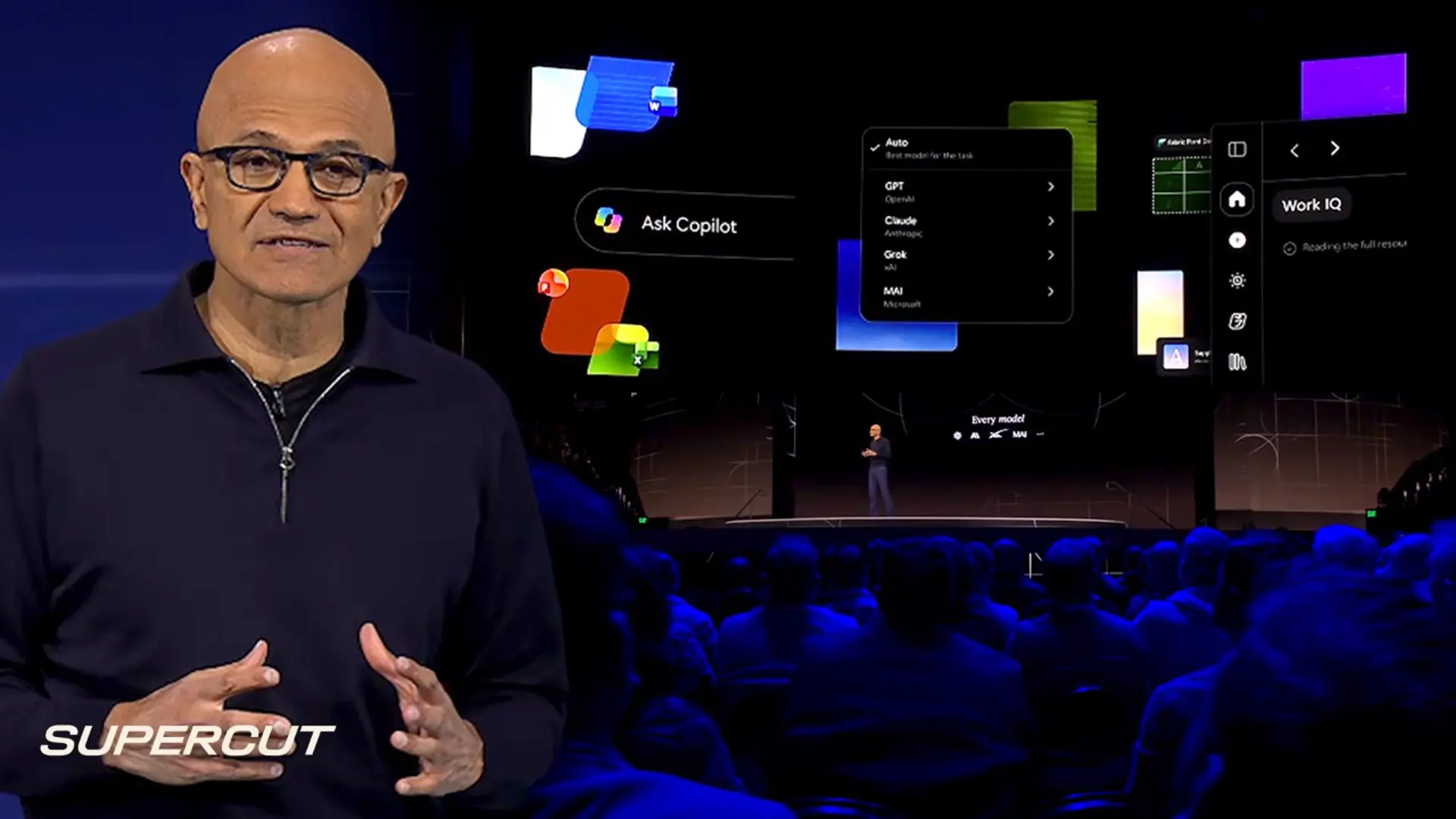
Microsoft claims that MAI Code 2 delivers performance comparable to GPT-6.1 Sol or Opus 5.5 at a fraction of the cost. Microsoft’s Code 2 Flash model is comparable to the lower-end GPT-6 Luna and Claude Haiku 5.5, also at a considerably lower cost.
This doesn’t mean that those of us paying $100/month subscriptions will suddenly get the equivalent of five dollars. Rather, these are metrics based on API usage.
AI models developed by Microsoft could reduce its dependence on OpenAI and Anthropic
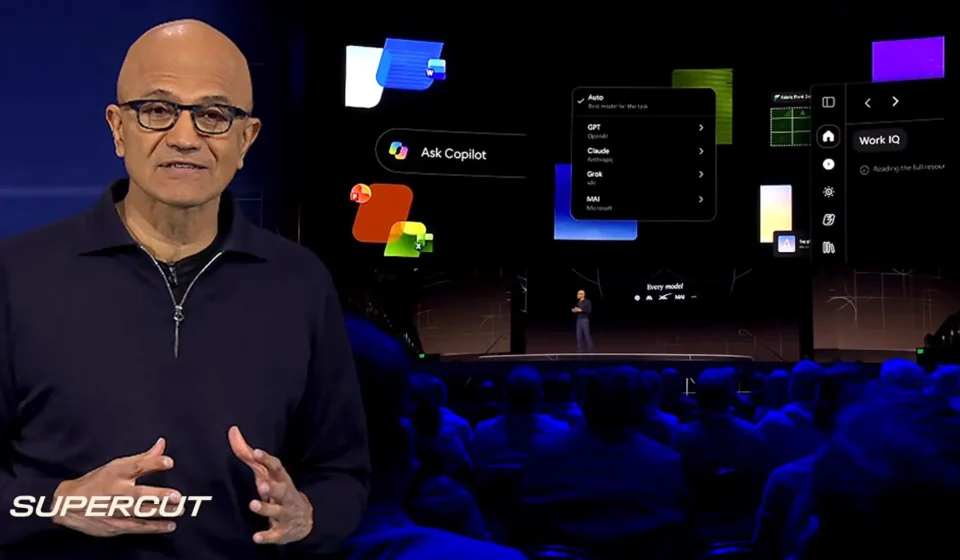
Throughout Satya Nadella’s keynote, Microsoft showed slides referencing a wide range of base models intended to work with Copilot and other Microsoft offerings. Microsoft has invested several billion dollars in OpenAI since 2023 and has built many of its products and services around OpenAI intellectual property.
But now Redmond is comparing its in-house built models to the Anthropic and OpenAI offerings, and also touting that it’s integrating these new models as optional choices for GitHub Copilot, Microsoft 365, and Fabric.
Also: 75% of developers surveyed prefer Claude Code to Codex
One thing Nadella made clear in his speech today is how central AI is becoming to everything Microsoft does. Almost all of these AI deals previously involved the company reimbursing nominal fees to frontier model providers or customers doing the same thing.
But with its own highly capable models, Microsoft could become much less reliant on external model providers, especially for the incredible volume of fairly basic and routine AI requests that arise across the company’s vast product line.
Microsoft turned its coding model into an AI tool for Office
If you think back to the history of agentic work models like ChatGPT Work and Claude Cowork, you might remember that they are the originators of agentic coding tools. As users adopted Claude Code and OpenAI Codex coding bundles for off-label productivity applications, AI companies noticed and integrated work-centric agent tools that were less programmer-friendly.
Also: I let ChatGPT Work and Claude Cowork run wild on my files – only one made me nervous
There are many similarities between a coding agent and a work agent, including understanding a complex environment, using tools to make changes, and producing reliable results. Coding turns out to be a very good environment for developing and testing these abilities, particularly because the output of the code is highly measurable. Coding agents are effective training grounds for non-coding work agents.
This gets really interesting in today’s announcement. Alongside Code 2 and Code 2 Flash, Microsoft announced MAI Work Flash, which it describes as being derived from Code 2 Flash. Work Flash can help generate formulas in Excel, work with documents and instructions in Word, track decisions and extract useful information from Teams, and much more.
Microsoft’s biggest AI model customer could be Microsoft itself
Think about the level of intelligence these tasks require from AI models. Not so much. As long as the models are good enough, they will be good enough.
If Microsoft can reduce its expenses and use reliable models at a much lower price, the company itself will be able to save quite a bit of money across its entire software economy, while maintaining a deeper level of vertical integration and, therefore, control.
Let’s look at some hypothetical numbers. Let’s say a company spends $0.01 per AI query, which with these new models can go down to $0.001 per query.
Also: Want to try the ChatGPT wallet? First read the OpenAI disclaimer very carefully
A company with a daily inference cost of $1 million (a company like Microsoft, for example) could reduce that daily cost to around $100,000. If you add that up over a year, the model change could save $325 million per year.
A million here, a million there. Soon you will be talking about real money.
There is no direct evidence that Microsoft is attempting to produce replacement models for the pioneering vendors’ offerings. But it’s an interesting and compelling story when you consider that Microsoft develops its own engines for the software it sells.
Microsoft’s claims are impressive, but important questions remain
Microsoft says the figures shown use a 50% launch discount. This is why I measured $0.001 per request instead of $0.0005 per request above.
The selection of references could be a selective selection. The numbers are impressive. But as we all know, there are lies, damn lies, and benchmark results. I’m pretty sure Microsoft isn’t padding these numbers too much, as it profits more from the new models than its own customers, but still. It’s an open question.
The company also made it clear that these new models are not designed to handle the most difficult agent and search workloads. You’re probably not going to use them to solve a decades-old math challenge. But you’ll most likely use them to reformat your PowerPoint.
Speaking of reformatting your PowerPoint, Microsoft also highlighted that these new templates perform exceptionally well in visualization tasks. It is a very good choice not only for UI design challenges but also for producing graphics and slides.
You can follow the daily news of my project on social networks. Be sure to subscribe to my weekly update newsletterand follow me on Twitter/X at @DavidGewirtzon Facebook at Facebook.com/DavidGewirtzon Instagram at Instagram.com/DavidGewirtzon Bluesky at @DavidGewirtz.comand on YouTube at YouTube.com/DavidGewirtzTV.

See full bio
Gn bussni