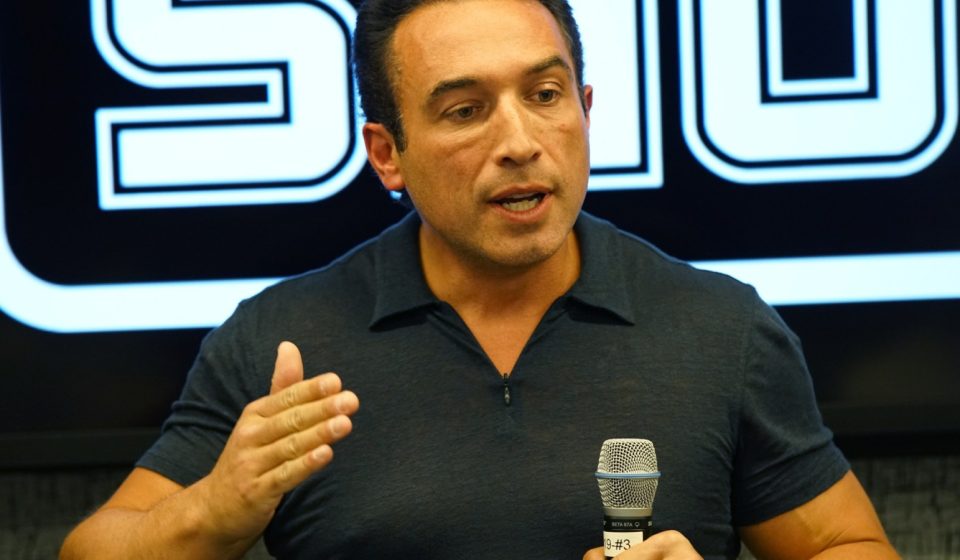

Mike Smith, the first person to face federal charges related to music streaming fraud, was sentenced to 18 months in prison after pleading guilty earlier this year.
Smith, a musician and business owner from North Carolina, appeared in Manhattan federal court Tuesday afternoon, October 6. He nodded heavily as John G. Koeltl handed down the sentence of one and a half years in prison, to be followed by two years of supervised release. Smith also previously agreed to forfeit $8 million as part of his plea deal.
When asked if he would like to say anything after his sentencing, Smith told the judge, “Thank you for your consideration on everything, Your Honor.” »
The sentence was significantly less than the 46 months in prison prosecutors had sought, although Smith’s lawyers had hoped to get their client fair probation.
Smith was also given the opportunity to address the court before receiving his sentence. Choking up at times, the father of six said all he ever wanted in life was to be a good husband, a good father, an honest member of society and to succeed in music. By “committing this crime,” he said, “I failed miserably.”
“I betrayed the music community that I care so much about,” Smith added, admitting that he had turned his love of music into an “evil business model.” At the end of his statement, he said: “I have wasted what was an honorable life. »
Smith pleaded guilty to one count of conspiracy to commit wire fraud in March, a charge that carries a maximum sentence of five years in prison. In their initial complaint, prosecutors claimed that between 2017 and 2024, Smith used an army of bots to inappropriately stream his music millions of times. While Smith, an aspiring musician, had a catalog of his own music, he also allegedly generated additional royalties through bot feeds of AI-generated songs that he purchased and uploaded.
In their proposed sentencing, prosecutors pointed to the novelty of the streaming fraud case, as well as the $8 million in unearned royalties that Smith earned. They argued that an extended stay in prison was necessary “to inflict just punishment” and deter other potential fraudsters.
“If the public follows this case, as the defendant claims, a lenient sentence will send precisely the wrong message: streaming fraud will not result in meaningful punishment,” Assistant U.S. Attorneys Nicholas W. Chiuchiolo and Kevin B. Mead wrote.
Meanwhile, Smith’s lawyers, in their own filing, said their client was “deeply sorry” for his conduct, but claimed he “did not intend to commit a federal crime” and “believed his initial efforts were lawful.”
They said he spoke with a “well-known music lawyer” and came to believe that “his conduct began at a time when the legal parameters (around artificially inflated streams) were disrupted.” Nonetheless, they acknowledged, Smith “eventually rationalized conduct he knew was wrong,” such as when he made “false statements to distributors” who contacted him about possible streaming manipulation.
While addressing the court Tuesday, one of Smith’s attorneys, Justine Harris, attempted to walk a tightrope between acknowledging that Smith had admitted to committing a serious crime and arguing that there were various factors that should mitigate the sentence. For example, she pointed to the fact that when Smith launched her project, many streaming platforms did not specifically prohibit the use of bots to artificially inflate streams in their terms of service.
She also highlighted how streaming fraud is rampant and argued that while Smith’s scheme effectively took millions of dollars out of the streaming royalty pool, from which all artists are paid, the actual damage to others was difficult to calculate and likely minuscule. A message about the seriousness of the case and the fight against streaming had already been sent by charging and arresting Smith, Harris argued. And the only way to truly deter streaming fraud was not individual prison sentences, but structural reforms to the music streaming ecosystem.
In turn, Chiuchiolo countered that while most artists received small royalties, those checks were meaningful and sometimes the “only recognition” they got for their work. The prosecutor also pointed out that although there were no specific rules prohibiting the use of bots to stream songs in a platform’s terms of service, Smith knew from the start that what he was doing was wrong and that he was lying to get money.
Smith’s sentencing proposal further featured a plethora of statements from friends and family members, many of whom argued that Smith should avoid prison time so that he would not be separated from his children, particularly a teenage son. Some of Smith’s music industry peers have even submitted letters on his behalf, including Wu-Tang Clan’s RZA.
As rolling stone As previously noted, Smith developed extensive contacts in the music industry during the 2010s, with RZA being one of the most well-known figures he interacted with. They released music together; RZA has been a guest judge on A blowthe rap reality competition Smith funded and starred in; and in 2024, Smith and RZA both served as executive producers on a horror film called Nyctophobia.
“Mike has always dealt honestly with me and with the artists and business partners we have worked with,” RZA wrote. “I have seen him use his connections and resources to help people who might not have had these opportunities otherwise. I know the matter before the Court is serious and I do not write this letter to take it lightly. I respectfully ask the Court to consider the person I have come to know through my own experience with Mike: someone who can contribute to his community, support others and continue to make responsible choices.”
Gn entert