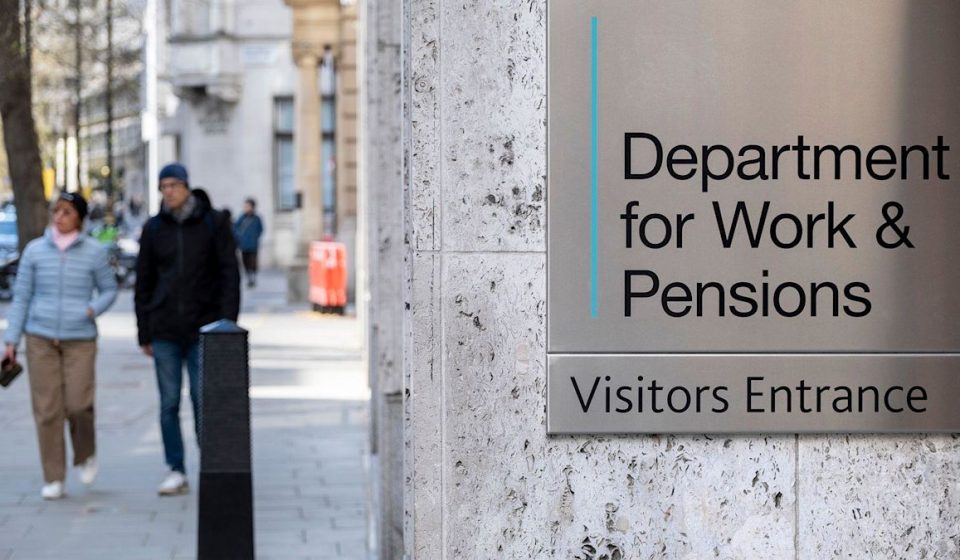
Millions of people have been left without access to online benefits and pension services after the government said its system had been hit by a “cyber incident”.
Downing Street did not rule out a hacking attempt but said there was “currently no evidence” that personal data had been lost, adding that an investigation was underway.
The Department for Work and Pensions (DWP) said it had removed digital services as a “precautionary” measure and assured claimants that regular benefits and pensions would be paid.
But a number of benefit recipients say the money they are counting on has still not arrived – and they fear they will be penalized for not being able to complete an online diary proving they are looking for work.
The UK’s former chief technology officer, David Knott, told BBC Newsnight he “strongly suspected” the incident was an attack.
“They have removed some of the services for citizens, which implies to me that some sort of attack could be staged through the front door,” he said.
Mother-of-four Samantha Reah, from Cardiff, told the BBC that the technological disruption meant she was missing £1,600: “I’m counting on getting paid today – it’s my payday.
“I have just enough money in my account to go grocery shopping. I’m panicking: it’s going to be a long and stressful weekend.”
Georgina Howarth, 30, from Plymouth, said she had to ask her mother for money to help buy food after not receiving her Universal Credit payment.
“I’ve been ringing them (DWP staff) every hour since 8am. They said they couldn’t even get into the system.”
Claimants are also unable to complete an online log showing which DWP they applied for a job at, a condition of their benefits.
Gemma Barnes, from St Neots in Cambridgeshire, told the BBC she feared her payments would be reduced as a result.
She said she had been trying to access the Universal Credit website “all day and since last night as well” but was unable to access the site.
“Since Christmas is so close, I need (the money) right now,” she said, explaining that she often has to rely on products from the discounted food aisle to make ends meet.
The DWP says regular payments are not affected and if customers have problems with their payments they should call their benefits telephone line. They say they will not be disciplined for missing log entries during the incident.
There are also problems with Healthy Start, an NHS scheme for women who are pregnant or have young children to help them buy milk or fruit.
A spokesperson told the BBC the online application service was unavailable but there had been no interruption to payments.
By around midday GMT on Friday, online systems for pensions, universal credit and Pip applications, as well as the “Tell Us Once” system for informing the government of a person’s death, were no longer accessible.
It was not clear when the government expected services to be operational again.
A DWP spokesperson said: “We are working closely with the National Cyber Security Center and the Government Cyber Security Coordination Center to investigate and bring services back online as quickly as possible and minimize any disruption. »
A statement continues: “As always, we will never message you asking for banking details or asking you to click on links.”
Technological disruptions affecting major services around the world have repeatedly made headlines in recent months.
There was a major outage of Microsoft services, the grounding of all US flights, problems at the US National Security Agency and disruptions at major US banks.
The causes of these incidents are varied. Many were linked to failed upgrades, but experts also cited factors like outdated IT systems and the use of AI to potentially exploit technology vulnerabilities.
While the nature of the DWP incident was unclear, officials could not rule out the involvement of a “malicious actor”, but added that there was “no evidence” that other government departments had been targeted in this way.
The DWP’s outage follows warnings that AI technology could fuel attacks on the UK’s digital infrastructure.
Earlier this month, a report from the National Cyber Security Center urged organizations to strengthen their defenses against hackers as technology becomes more complex and capable.
Its CEO, Richard Horne, said there was a “real prospect of an unprecedented increase in the number of cyber incidents”.
Last month, the government conducted inspections of several websites after a flaw was identified in a programming language used around the world.
The PHP security flaw sparked a global race for organizations to identify whether they were affected and patch it before it could be exploited.
UK government websites have been hit by other cyber incidents in recent years.
In April 2025, the government reported that cyber attackers had hacked the Legal Aid Agency’s online services.
The group responsible had access to a “significant amount” of personal data going back decades, including contact details of people who had sought legal aid.
The agency took some services offline while responding to the incident.
Gn bussni