Negotiations on the Israeli unity government have stalled: what happens now? | Israel Elections 2026 News

The future of Israel’s government remains uncertain following October elections that produced no clear winner.
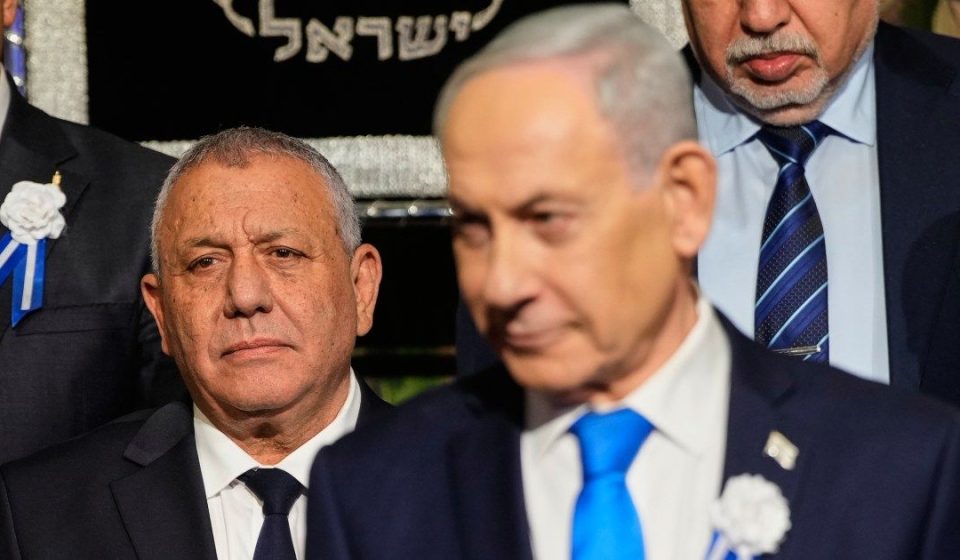
The leader of the centrist Yashar party, Gadi Eisenkot, and his main rival, outgoing Prime Minister Benjamin Netanyahu’s Likud party, have met for rounds of negotiations with the aim of establishing a “unity government”.
Recommended Stories
list of 4 elementsend of list
But talks ended on Sunday without a conclusive agreement, with both sides announcing a “follow-up” meeting would take place soon.
So, what’s the latest on the discussions? And what happens if they can’t reach an agreement?
Here’s what we know.
Why are Eisenkot and Netanyahu in talks?
After the October 27 general election, Israeli President Isaac Herzog held consultations with political parties to decide who he would appoint to form a government after neither side secured a majority. Eisenkot and his alleged partners won 48 seats between them, while Netanyahu’s alliance won 53.
Some 67 MPs, including from Arab parties, backed Eisenkot to form the next government, while only 46 backed Netanyahu.
In November, Eisenkot was instructed by the Israeli president to form a new government by December 6, with a deadline that could be extended by 14 days.
To form a government, a party, alliance or coalition must hold a minimum of 61 seats out of the 120 seats in the Knesset. This means that Eisenkot must ally with other parties or legislators to compensate for the number of seats.
Arab parties, representing Palestinian citizens of Israel, won a record 19 seats in these elections. But Eisenkot ruled out forming a government with them, which would have given him a bloc of 67 seats. Winning Israel’s two ultra-Orthodox parties, United Torah Judaism and Shas, would give it exactly 61 seats.
He could also form a government with fewer than 61 seats if he wins the parliamentary vote of confidence.
Until this week, Eisenkot had reached firm coalition deals with only the Democrats and Yisrael Beiteinu, bringing his total to 36 seats out of a potential 48 – still far from any majority.
So Eisenkot has been talking with Netanyahu’s right-wing Likud party in hopes of establishing a unity government, but Likud wants a rotation deal that would run counter to Eisenkot’s promise to replace Netanyahu.
The talks also led to other complications. The left-wing Democrats, which won eight seats in parliament, separately said it was suspending negotiations with Eisenkot this week to protest the prospect of Netanyahu’s party remaining in government.
How current are the discussions?
On Tuesday, the Yashar party announced that it had agreed to sign a coalition pact with the Yisrael Beiteinu party, after meeting with its leader Avigdor Lieberman, marking the first confirmed alliance since the elections.
Israeli media also reported Friday that Netanyahu is “preparing” to announce that he is willing to become second in a prime ministerial rotation with Eisenkot as part of a unity government deal.
Israeli public broadcaster Kan reported that the offer had already been proposed unofficially, so Likud could assume “plausible deniability” as the party remains conflicted over the terms of the offer.
The rotation agreement would mean that Eisenkot would serve the first two years as prime minister, and Netanyahu would serve the final two years.
But in a statement released Friday, Eisenkot accused the Likud party of blocking coalition negotiations in a bid to provoke new elections. He said Likud was “unwilling to compromise and, for two weeks, refused to put a single concrete proposal on the table.”
Eisenkot said both sides are “approaching a moment of decision,” but the question is “whether Likud will engage in serious negotiations and engage in a partnership that requires compromise or whether it will keep up appearances and continue to stagnate.”
Meanwhile, Eisenkot is grappling with divisions within his own camp, as the options of forging alliances with ultra-Orthodox parties or with the Arab-majority parties, which are willing to support him, have proven controversial.
Arab parties could give Yashar 19 seats, but Lieberman said he would not support any government including those parties.
Why is Eisenkot accusing Netanyahu of “waffling”?
Eisenkot said the Likud negotiating team had refused to meet more frequently over the past two weeks. The two sides have met five times.
He said their team was uncooperative and rejected three proposals, including one for a state investigation into the “failures” of October 7, the removal of “extremists” from government and a law making military or national service compulsory for all.
Instead, Eisenkot claimed that Likud had proposed “the worst” proposal for a unity government with “the same government, the same partners, no changes, no conscription law.”
Eisenkot said Netanyahu’s strategy is to “slow down time until the mandate expires,” attempting to “drag Israel into new elections under the outgoing government.”
“I have no intention of cooperating with such a charade,” he added.
What happens if no agreement is reached?
One of Eisenkot’s options is to reach an agreement with the country’s two ultra-Orthodox parties, United Torah Judaism and Shas. But if negotiations with them fail, analysts say Eisenkot could ask his allies to choose between keeping Netanyahu in power or accepting support from Arab parties.
The Joint List, an alliance of three Arab parties, holds 11 seats in the Knesset, while Raam holds eight.
Daniel Levy, a former Israeli peace negotiator and chairman of the US/Middle East Project, told Al Jazeera that if that were to happen, Eisenkot could tell his allies to “form a government for a few months, just to remove Bibi (Netanyahu) from power and prepare for new elections.”
Analysts say that if Eisenkot meets his Dec. 6 deadline to form a government without a decision, Israeli President Herzog could assign that task to another Knesset member, including Netanyahu, and give them a 28-day deadline to form a government without an extension.
If no government is formed, Israel could head into another round of elections, with Netanyahu remaining as interim prime minister until a government is formed.
This happened in 2019, after the April elections, when Netanyahu failed to form a government. As a result, the Knesset was dissolved and a second election was held in September of the same year. Again, no majority was achieved, leading to a third vote in March 2020. A government was finally formed later that month when Netanyahu reached a unity government deal with Benny Gantz’s Blue and White alliance.
Gn headline