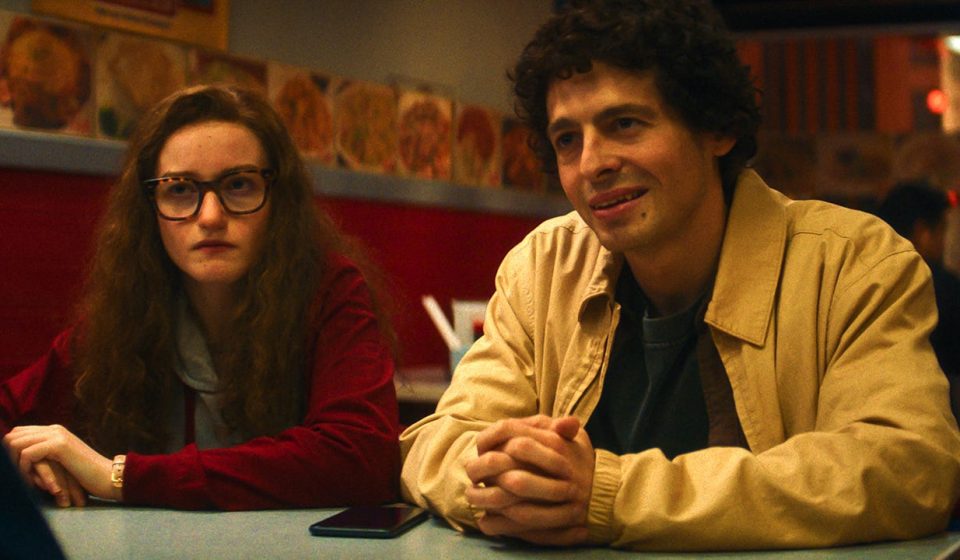
This is a spoiler-free review of The altruists (but can you really ruin real life?). The eight-episode series is now streaming on Netflix.
2022 was a banner year for TV shows based on true stories of misbehaving tech CEOs, fraudsters, and sometimes both: The Dropout, WeCrashed, Inventing Anna, Super Pumped. It was also the same year that crypto exchange FTX and crypto hedge fund Alameda Research filed for bankruptcy, revealing that the two companies founded by Sam Bankman-Fried, “the JP Morgan of crypto,” and his math-savvy business partner/on-and-off girlfriend Caroline Ellison were not only closely affiliated; Alameda financed transactions with FTX client money to the tune of $8 billion.
2026 is another great year for similar entertainment: You Can See Everything, The Social Reckoning, Musk, Artificial. Once again, FTX is in on the action, this time via The Altruists, an eight-episode Netflix series that charts the rise and fall of “Bank scam-fraud” and Ellison, nicknamed the Bonnie and Clyde of crypto. While at times perhaps more sentimental than it should be to humanize the two, The Altruists does not hold back in its assessment of Bankman-Fried and Ellison as two obnoxious weirdos who knew how to get the worst out of each other.

Created by Graham Moore, who won the 2015 Adapted Screenplay Oscar for The Imitation Game, and based on a New York Magazine report, The Altruists begins with the end. Audio clips about the FTX and Alameda bankruptcy scandal play on Anthony Boyle’s Bankman-Fried seconds after his arrest, playing a call from Ellison (an unrecognizable Julia Garner). Before deciding whether to respond, it goes back to 2016, as Bankman-Fried practiced human reactions in the mirror during his early days as a money-making savant at quantitative trading firm Jane Street, where he met Ellison.
The Altruists cross timelines throughout, and it’s largely effective. Shifting between the contrasting, rosy beginnings and the tension that preceded FTX’s collapse, the parallel edits provide a useful tool for observing the extent to which Bankman-Fried and Ellison sold their souls to keep their companies afloat. From the start, they were up to risky and sketchy things, but it was in an effort to follow the ethos of effective altruism, a popular philosophical movement in tech spaces that, as The Altruists describes it, boils down to the idea of making as much money as possible to donate to charitable causes. But as the director of the Center for Effective Altruism says told New York Magazine in 2022: “There has not been a bad actor in history who was not capable of basing his conduct behind a meaningful and generally positive ideology.” (The cover of this issue featured a portrait of Bankman-Fried and the headline “Virtue Was Stupid.”)
Like its approach to explaining EA, The Altruists maintains a fairly narrow scope, seemingly out of necessity; how easy it would be to go down the rabbit hole explaining every connection, decision and detail. It largely ignores the curiosity of outside media to focus on the relationship between Bankman-Fried and Ellison. What the series loses as a result is an overview of the scale of FTX at its peak – although it still floats in the background, telegraphed through the amount of wealth on display on the yachts and posh homes of the Bahamas.
Bankman-Fried was hailed as a visionary, the “next Warren Buffet” who would democratize money, as he crossed meetings while playing League of Legends. He was invited to Met Gala and formed relationships with politicians and celebrities. The Altruists, on the other hand, portray him less flatteringly: he was a socially awkward idiot whose best ideas seemed to come from other people. The show isn’t very kind to Ellison either: she was an outspoken person who liked to write dirty fanfiction about Harry Potter, LARPing, and polyamory. Boyle and Garner are both excellent as Bankman-Fried and Ellison, each doing an affected and perfectly squeaky character voice. But Garner — who played another con artist, Anna Delvey, in Netflix’s Inventing Anna — is the highlight, sinking into her role to the point that the prosthetics began to look like natural extensions of her face.
The main flaw of the script is that there isn’t really an alternative, more elegant workaround. Despite attempting to simplify a complicated story, The Altruists still has to explain financial and economic concepts to Netflix audiences. He explains these things by putting two of his (very intelligent!) characters in conversations where one brings up a concept, i.e. the prisoner’s dilemma, the other chastises them by saying that they “know what it is”, and then the first person continues to explain it anyway. Again, this is a difficult problem to get around if jargon, industry-style, is not the goal. Even though it’s presented in a broader way, The Altruists wants the audience to understand who these people are and what they’ve done.
Gn entert