Officials at the Centers for Disease Control and Prevention reportedly refused to issue an alert to doctors about the risks of measles during pregnancy, according to a Washington Post report.
The report on the disease was published this week in the New England Journal of Medicine Evidence. However, CDC scientists told the Post they hope to share this data in September through the CDC’s Health Action Network alert. They said they were denied by CDC officials.
This news comes as measles cases reach a 35-year high in the United States and just as the country officially loses its measles elimination status. The report finds that measles during pregnancy is associated with high rates of pneumonia, premature birth and congenital measles, which is when a baby is born with measles infection; 98% of people with measles during pregnancy were not vaccinated or had unknown vaccination status.
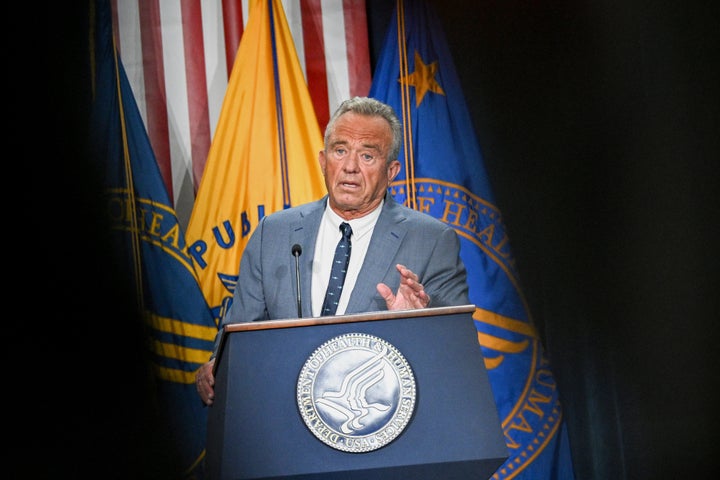
When asked for comment, a CDC spokesperson told HuffPost that “under the leadership of Secretary (Robert F.) Kennedy and CDC Director Dr. Erica Schwartz, CDC is taking aggressive action to combat measles outbreaks and ensure clinicians have rapid access to critical public health information. CDC researchers selected an external journal for this study early in the publication process to reach clinicians as quickly as possible.”
On the CDC website, Health Action Network alerts are described as “CDC’s primary method for sharing clear information about urgent public health incidents,” which “provides vital health information.”
HuffPost spoke with scientific and medical professionals who have thoughts on this CDC decision. Here’s what you need to know:
By not issuing a health alert, doctors did not receive useful and urgent information about treatment.
“By not issuing this health alert, you have missed opportunities to educate doctors who care for vulnerable people, namely pregnant women, as well as the babies who are born to these women,” said Dr. Anita Patel, a pediatric critical care physician in Washington, DC.
These alerts help doctors understand the best treatments available.
“It was a missed opportunity to teach these doctors how to treat women who are exposed to measles, who have contracted measles, or who give birth with measles,” Patel added.
Most doctors don’t even know how to treat measles, because the disease was eradicated in the United States until recently. “These health alerts from the CDC are absolutely critical to getting this information out to clinicians,” Patel said.
Measles treatment is time sensitive, with some treatments needing to be administered quickly after exposure. You have days to administer immunoglobulin after a person is exposed to measles, not weeks, Patel added.
This is part of a broader trend of government trying to make things look better than they are.
-Dr. Anita Patel
“I’m not in the minds of the people on the Hill who made these decisions, but what I can say is that this is part of a larger trend of government trying to make things look better than they are,” Patel said. “But it doesn’t work with medicine because people are going to get sick whether they want to talk about it or not,” Patel added.
The incident is an example of “unhealthy normalization of the disease,” experts said.
“I just feel like right now, honestly… there’s an unhealthy normalization of disease that’s happening,” said Jessica Malaty Rivera, executive director of the Infodemiology Initiative at The Public Good Projects.
Health and Human Services Secretary Robert F. Kennedy Jr. and CDC professionals all know — and admit — that the only way to prevent measles is the MMR vaccine, Malaty Rivera said.
However, “what is not said, or sometimes said on the sidelines, is that they think it’s normal to catch measles. They think it’s mild. They think it’s good,” she added. “They allow people to suffer preventable illness, preventable disability, and preventable death because they think illness is not serious.”
People will look back to the 1950s, before the measles, mumps and rubella vaccine came along, and say that “everyone got measles” and they were “fine.” This is simply not true.
In the 1950s, 500 children died of measles each year, according to Malaty Rivera. “This is not normal.”
“But when I share this statistic of a pre-MMR America and how that affected children, then people would say, ‘Well, 500 children isn’t that many.’ This is where, once again, we have normalized death and disability in such a disgusting way,” she explained. “We are okay with the deaths of children. We’re OK with mothers dying, and that reflects how we communicate about ways to prevent the horrific complications of a preventable disease.”
People often say that “most children survive measles,” which is a loaded statement.
“I’m like, ‘OK, so what kids? Privileged children who have access to health care, privileged children whose parents have jobs that allow them to take time off work to receive treatment and supportive care, children who do not live in communities where they are not physically close to a medical facility? What children?” she added. “It reveals the racism, the eugenics, the white supremacy, honestly, of this type of prejudice, because ‘most children’ are not all children.”

Bloomberg via Getty Images
Not broadcasting this alert masks the seriousness of measles.
Measles is dangerous for mother and baby, Malaty Rivera said. The report reveals that 13 babies were born with congenital measles. “We haven’t seen congenital measles in this country in decades, and doctors are now having to treat diseases they’ve never seen before.”
Congenital measles is associated with a higher risk of a serious type of neurological impairment known as subacute sclerosing panencephalitis, “which is a rare but 100% fatal complication that can occur years after a person has recovered from a measles infection,” Malaty Rivera said.
This complication can occur six to 10 years after recovery from measles, she said. Although it can also occur during regular measles infections, it is more common in cases of congenital measles, Malaty Rivera added.
“What is concerning is this increase in the severity of this type of infection, especially in pregnant mothers who can die, have premature labor, have babies who are born with all kinds of disabilities – and all of this is preventable,” Malaty Rivera said.
The only way to prevent measles is to get the MMR vaccine. Pregnant people and babies younger than 6 months cannot get the vaccine, however, as it is a live vaccine, Patel noted.
“I’ve told every one of my friends who are trying to conceive right now, those who are in the pre-pregnancy period, that if they’re in a measles-affected area, please check your measles titers,” which measures anti-measles antibodies, Patel said.
If you don’t have antibodies to measles or haven’t been vaccinated in the past, Patel recommends getting the MMR vaccine before getting pregnant. By doing this, you protect yourself and your baby, who will benefit from maternal antibodies during the first months of life.
Timing of measles treatment and prevention is crucial, especially in babies and pregnant women. “It’s not a disease that you can treat and monitor casually. You have a window of treatment, and after that you’ve lost your window,” Patel said.
Referring to the CDC’s decision not to issue the alert, Patel added: “I really don’t want to call it a missed opportunity. I want to call it an intentional decision.”
Gn Health